

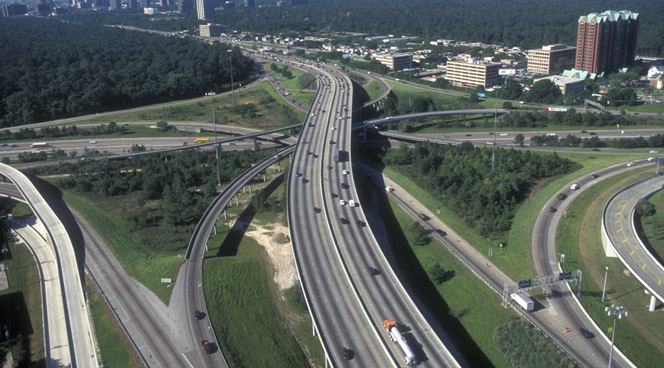
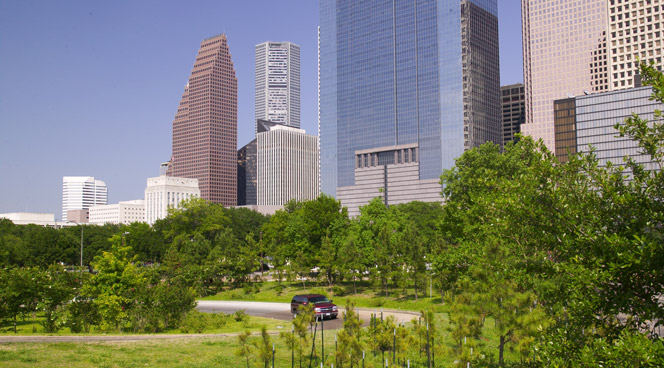
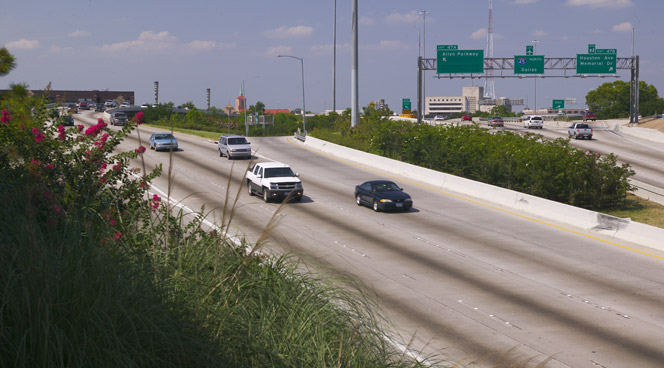
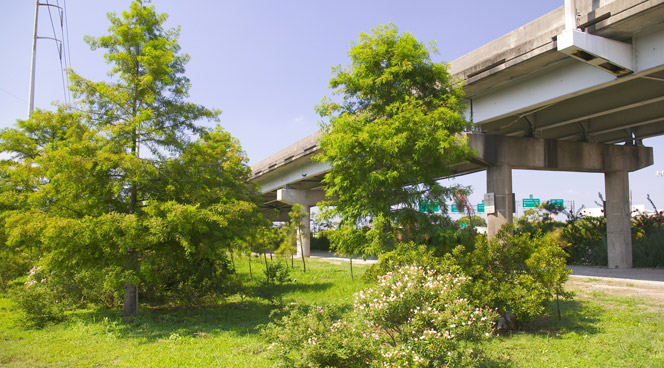
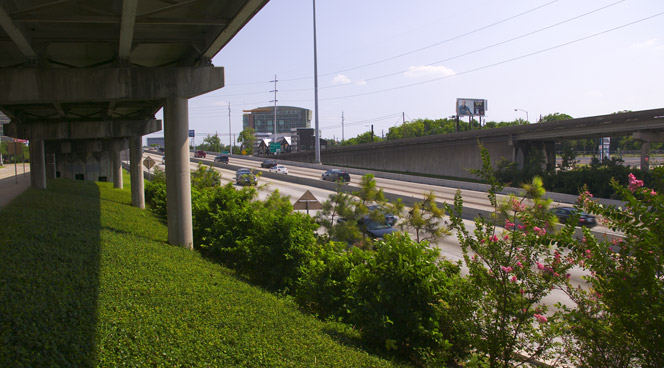
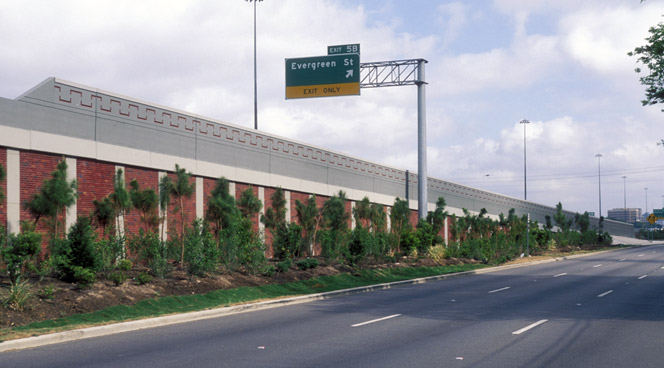
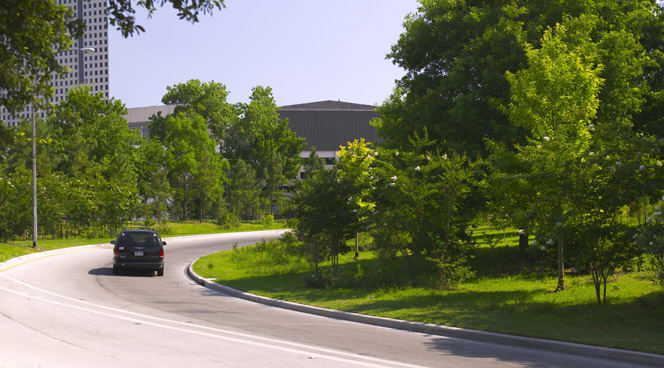
The Green Ribbon establishes strategies for corridor aesthetics and landscape enhancements along Texas highways surrounding Houston. This plan addresses existing infrastructure and future expansion needs of the growing urban area.
The project focuses on intensive landscape plantings and architectural treatments, improving aesthetics while addressing air quality and stormwater management concerns. The framework allows for large-scale improvements across a regional transect, accommodating local variation while maintaining cohesive standards.
A key achievement is the planting of over 2 million trees, enhancing the urban canopy. The plan’s flexibility enables local sub-districts to implement further enhancements through funding agreements with partners. The master plan serves as a living document, providing TxDOT with a foundation to incorporate evolving standards for Houston’s transportation infrastructure needs.
Greening Houston’s Freeways
As Houston’s Downtown has developed and expanded over many decades, public green space has been increasingly constrained by several interstate routes: primarily I-59, -45, and -69. These thoroughfares, while essential for commuters, have left little room for workers and nearby residents to enjoy unimpeded access to their locale’s adjacent trailways and bayous,...
Houston Warehouse District Vision Plan
The Houston Warehouse District is home to numerous cultural attractions and has established itself as an arts community over the past 40 years. Its diversity and distinct character make it a valuable cultural asset to downtown and to the City of Houston. The district’s fabric includes light industry, residences, mixed-use development, and higher educatio...
Guangzhou Axis District Planning
The Guangzhou Green Axis District Urban Design paved the way for new growth in one of China’s major metropolitan areas by bringing nature into the city, connecting people to the river and CBD, and providing a major park and open space for all ages. In the early 2000s, when the project commenced, Guangzhou was a rapidly growing city of approximately 8 million. ...
Wuhan East Lake Greenway
PHASE 1: Wuhan, known as the land of one thousand lakes, is one of the most ancient cities in China, and is the third largest technological and education center in China, only behind Beijing and Shanghai. Now home to over 8 million people, Wuhan has become the dominant transportation hub in Central China and holds the distinguished role of capital of Hubei Pro...