

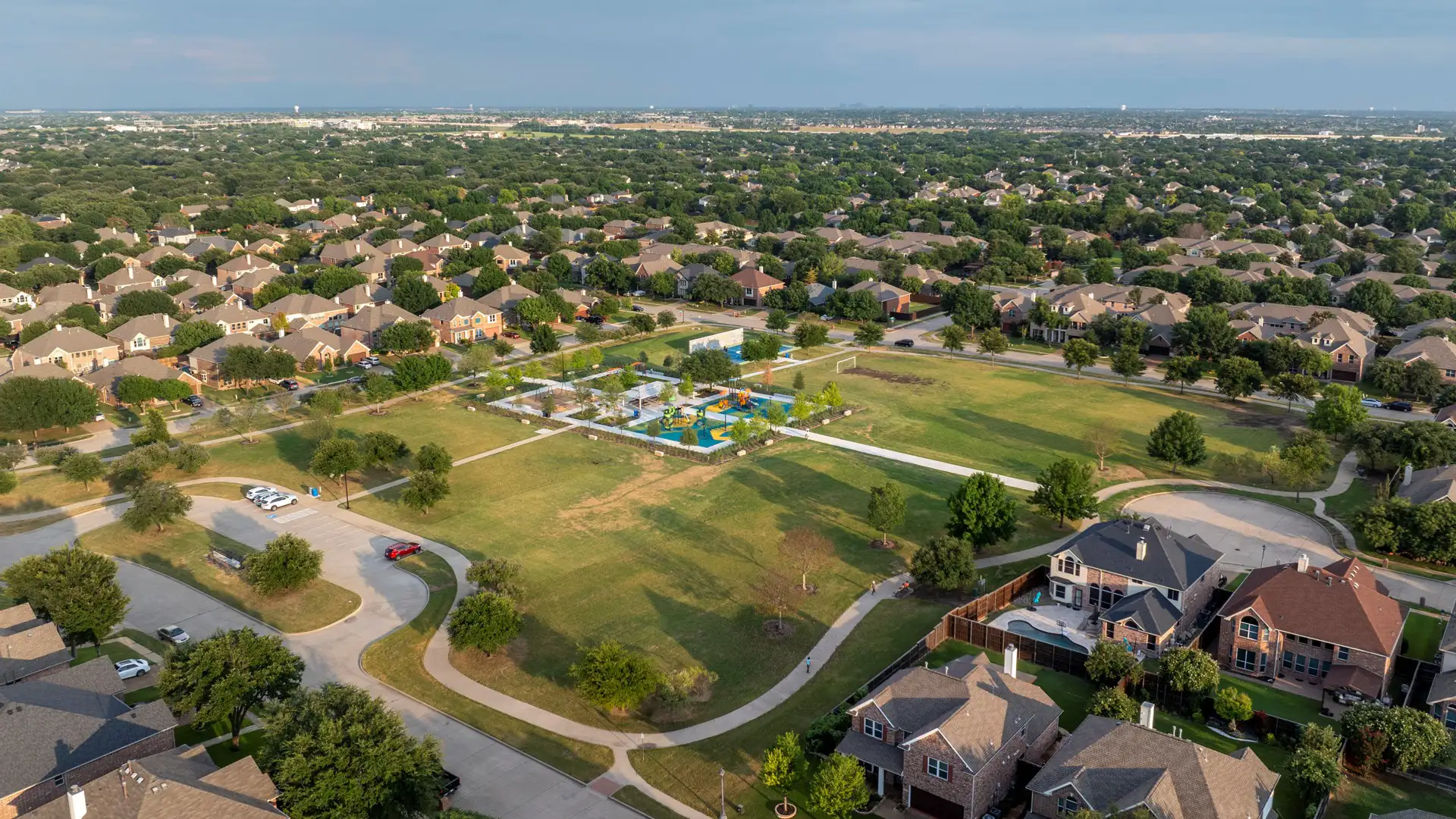
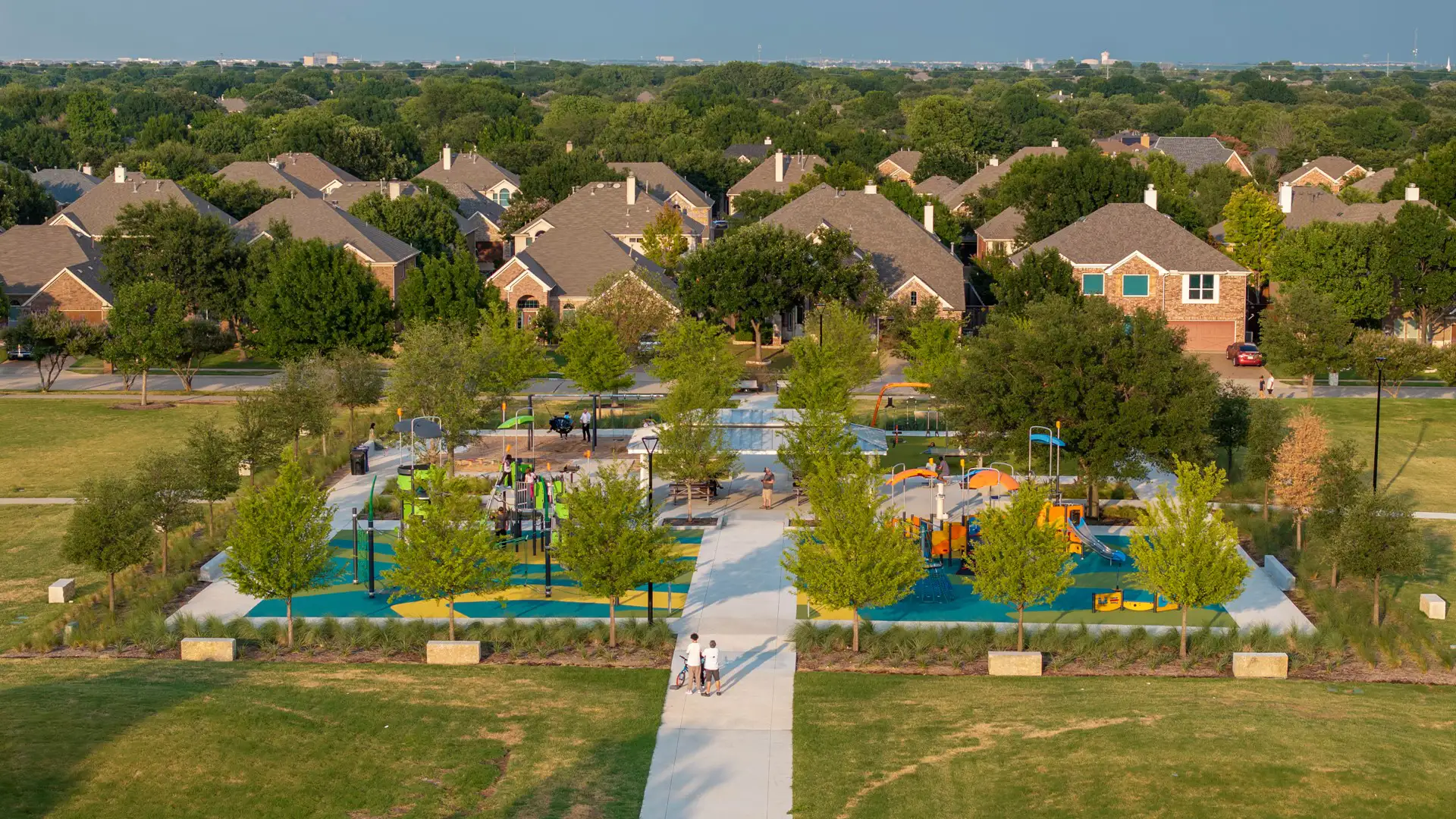
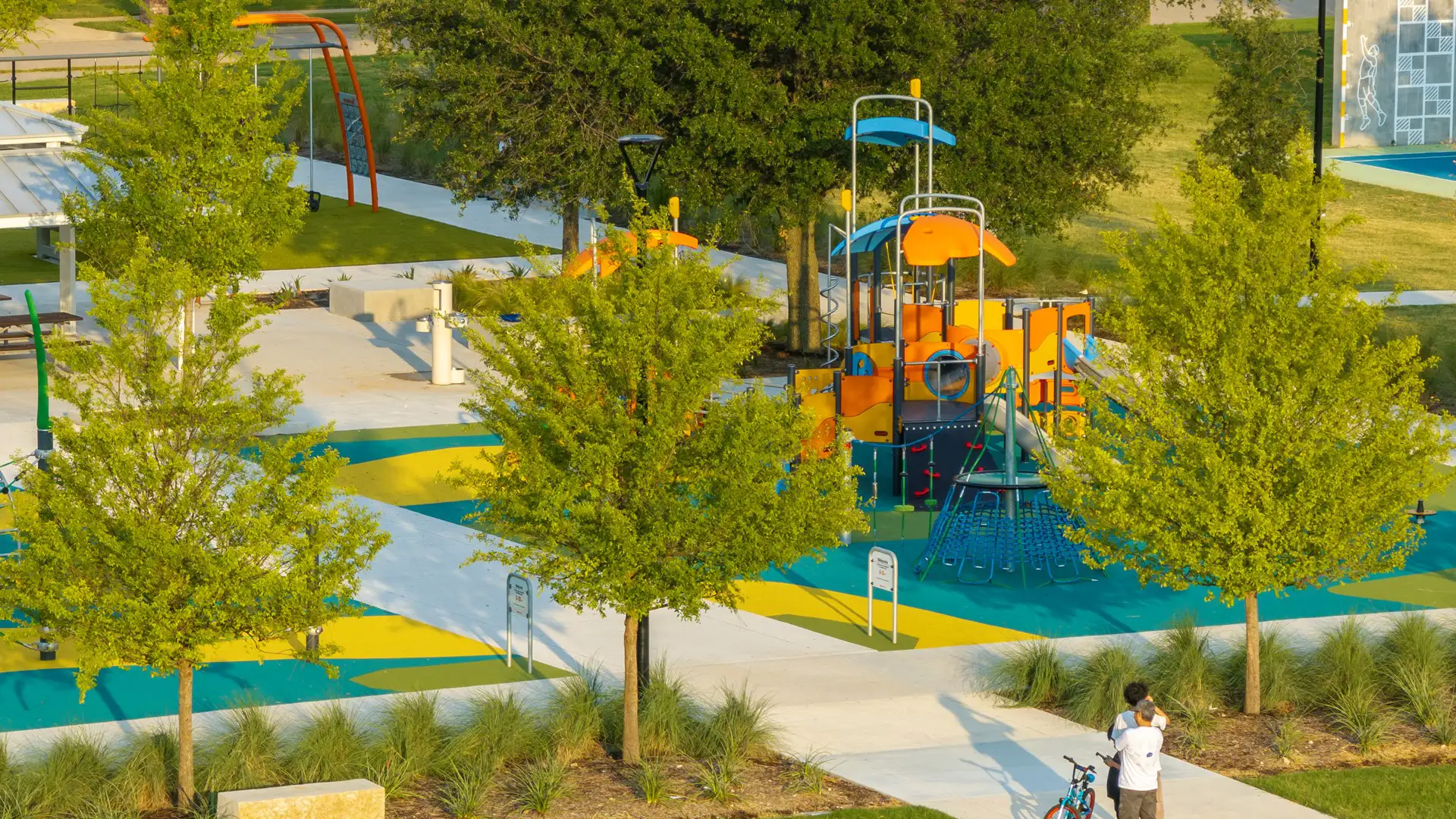
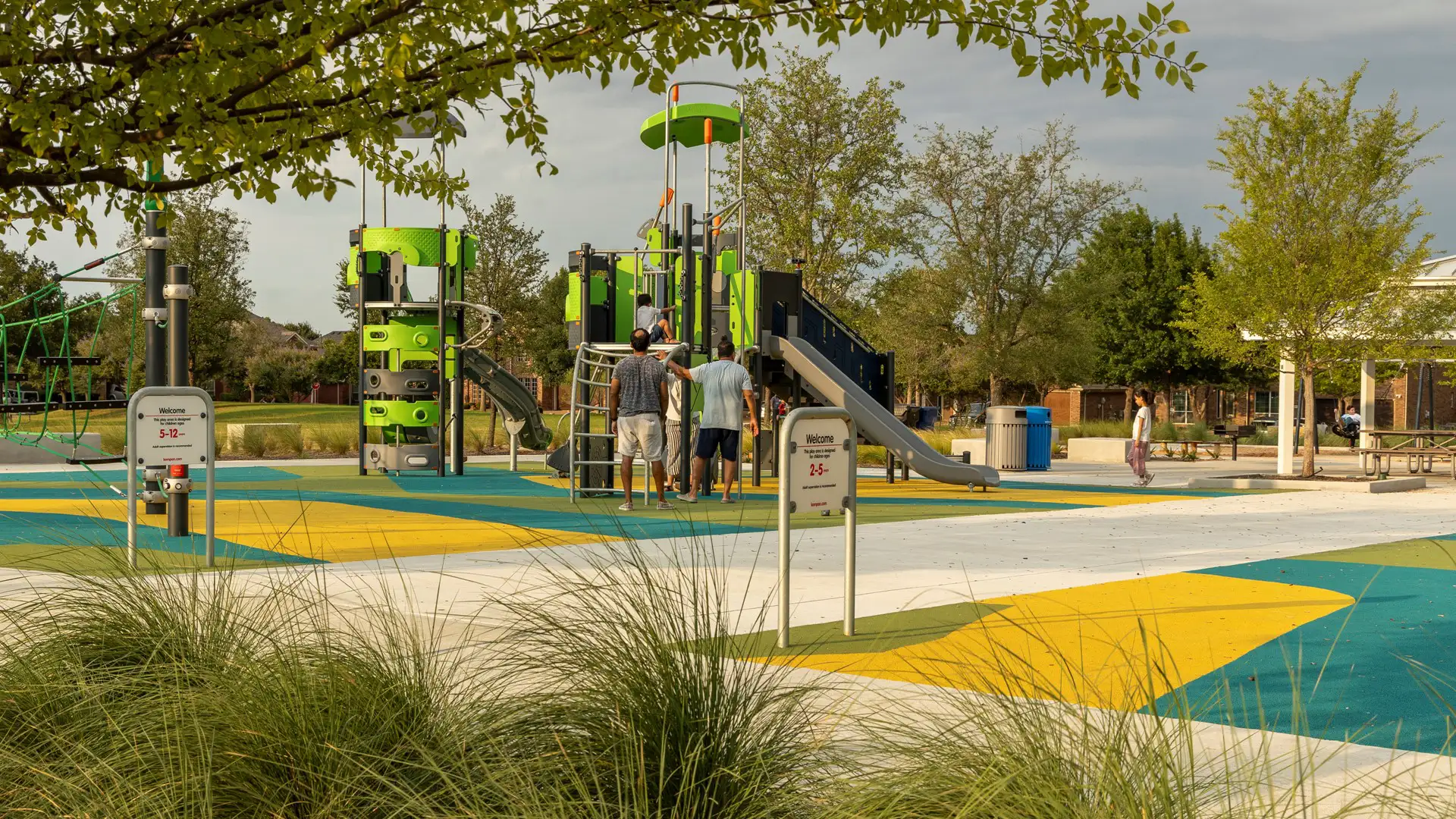
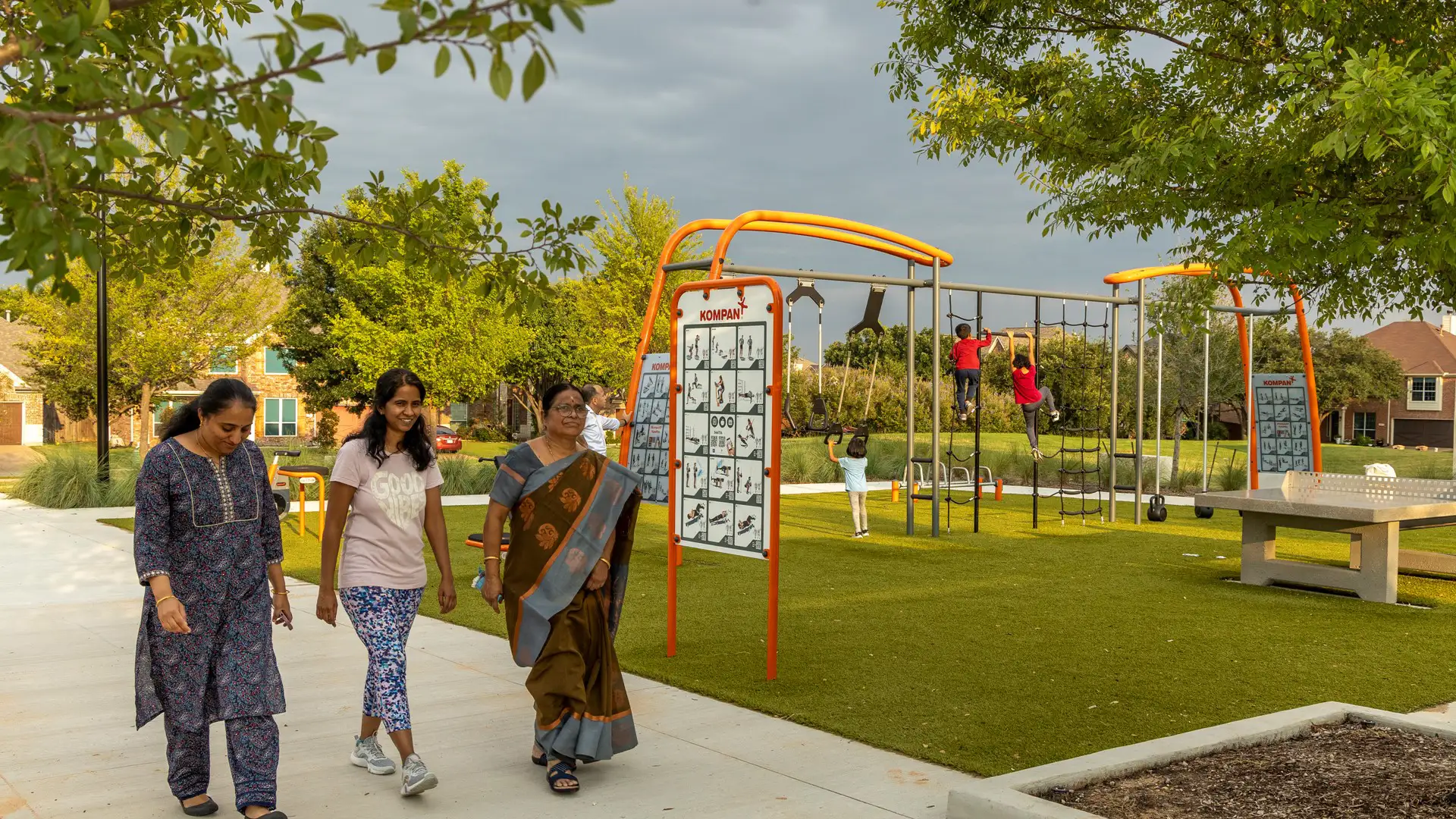
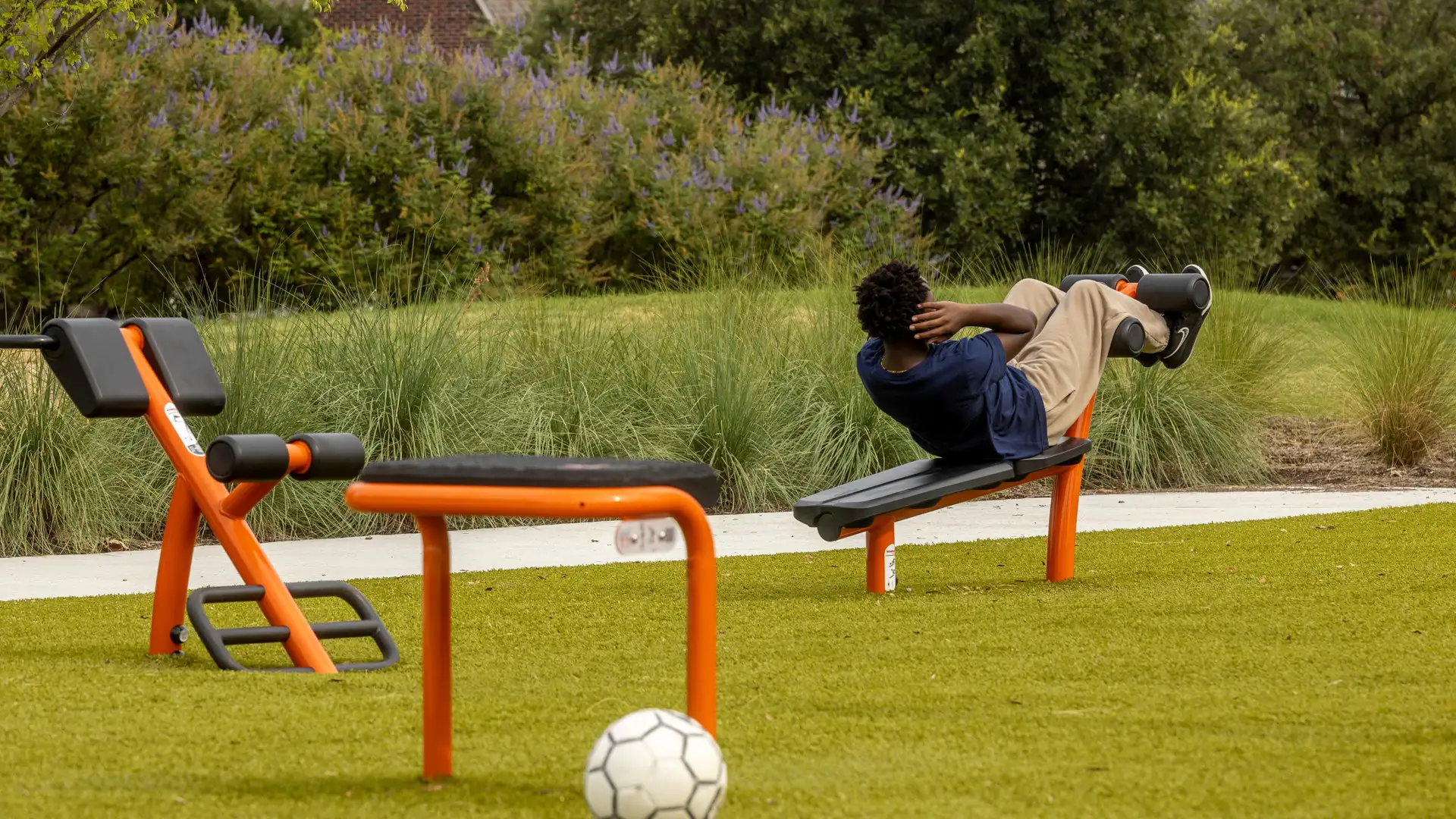
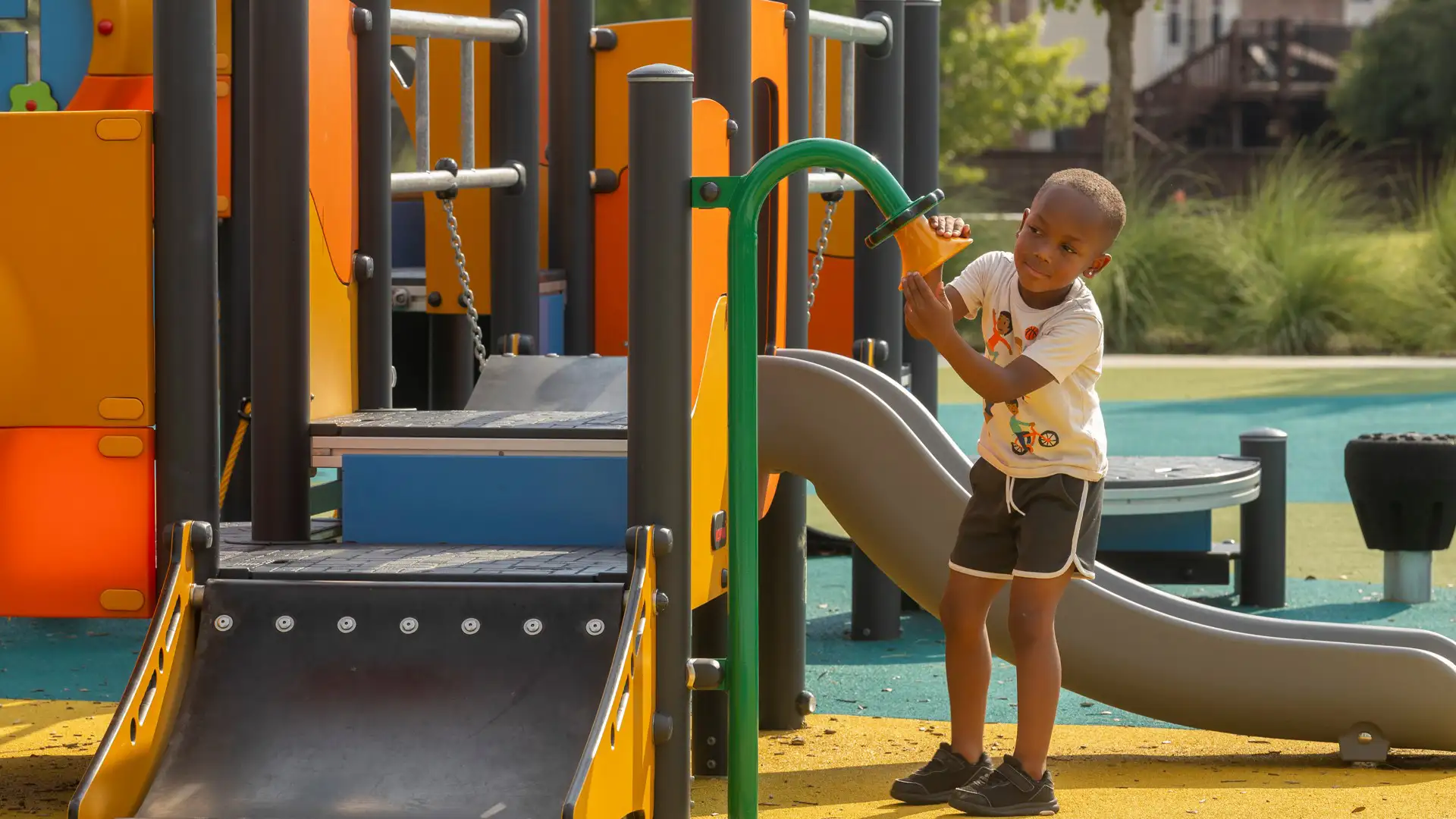
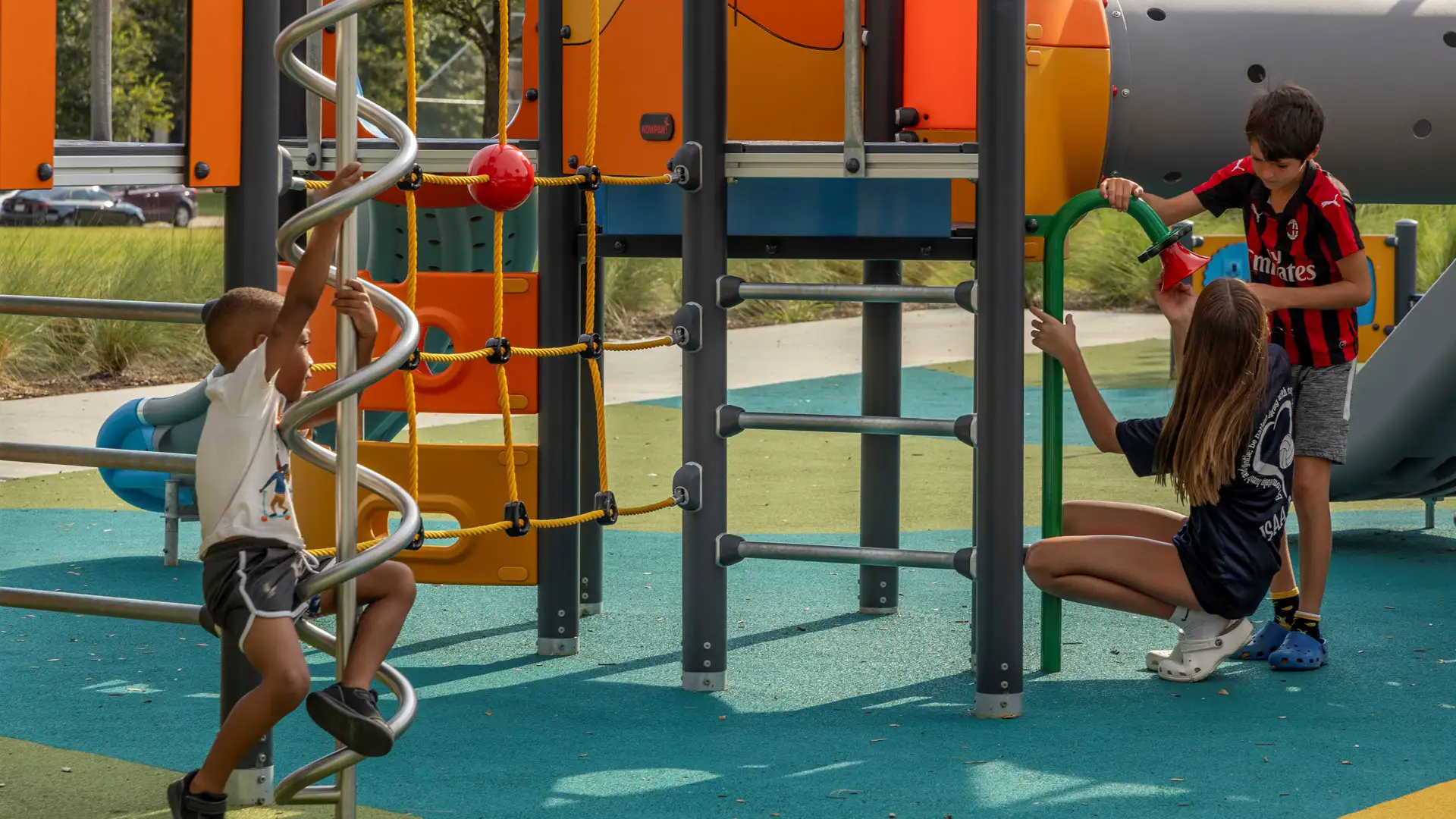
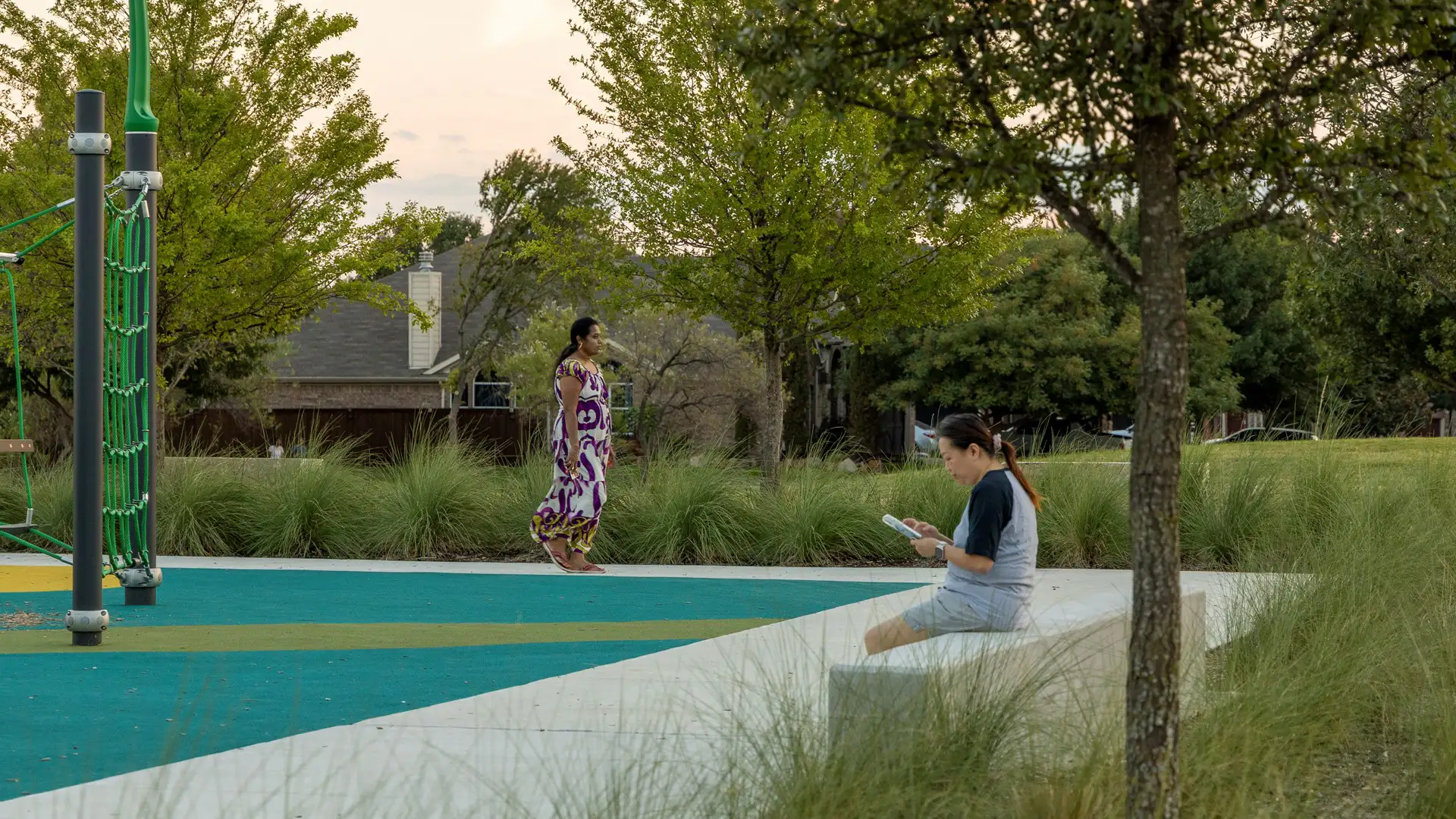
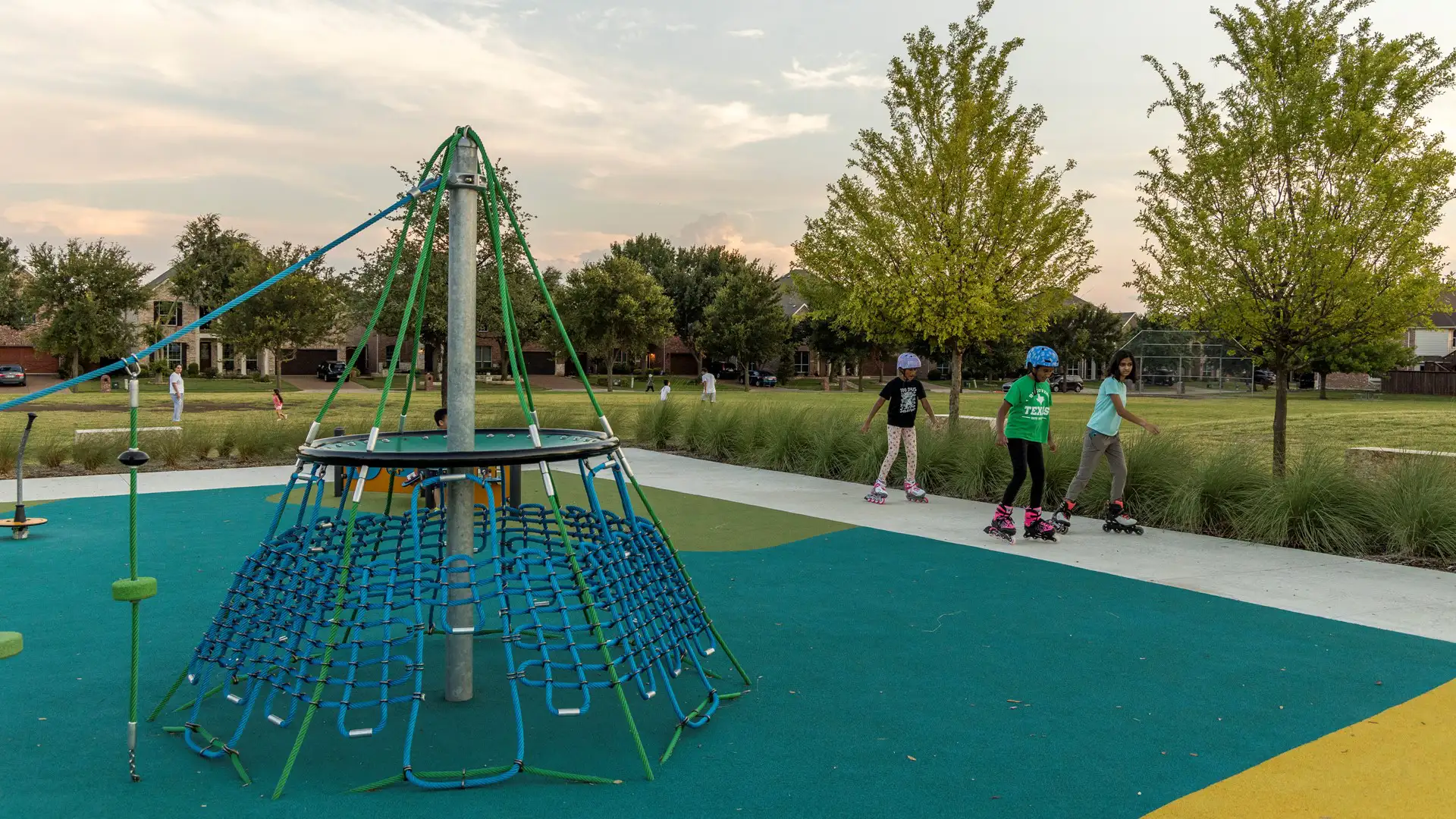
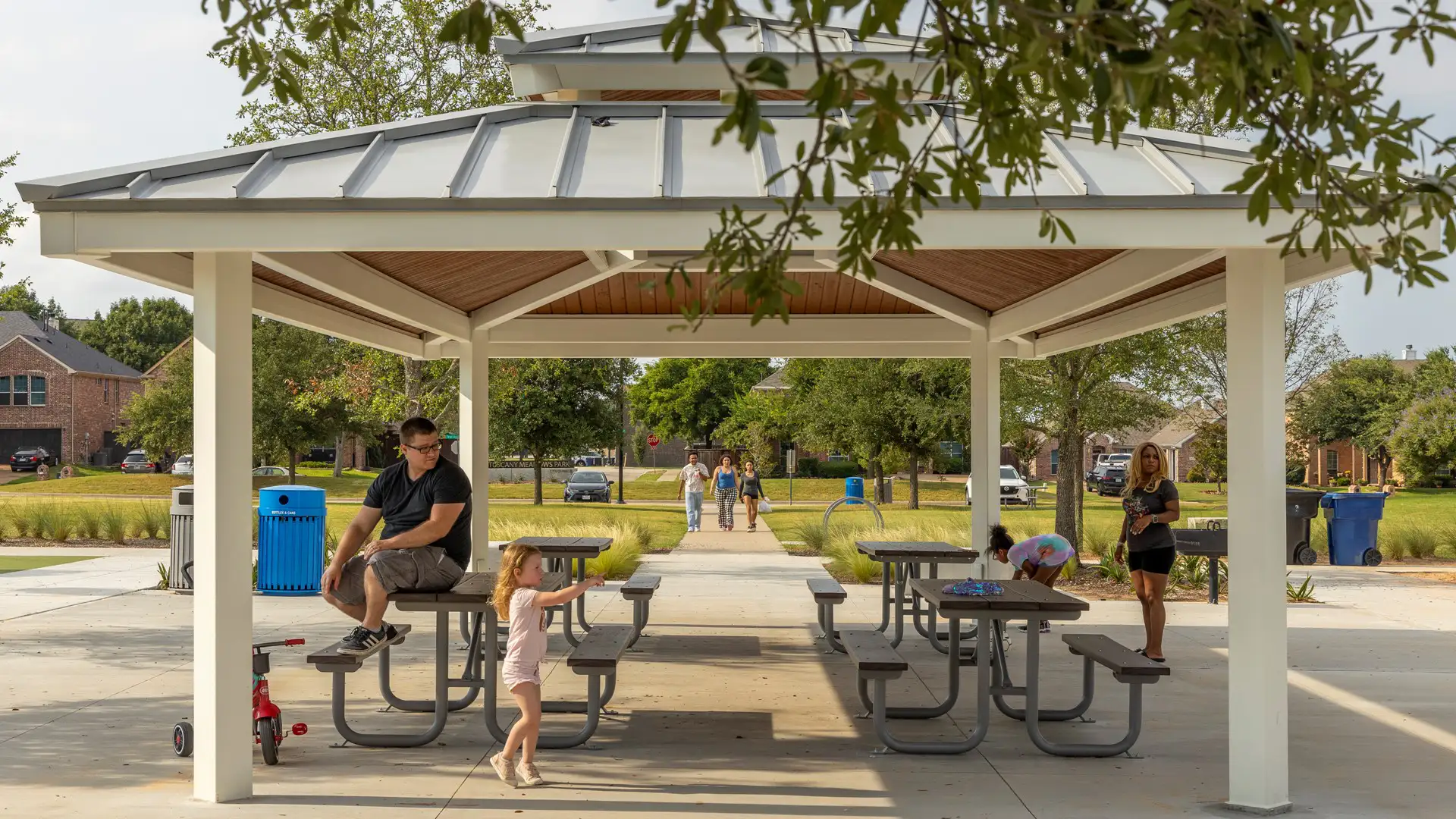
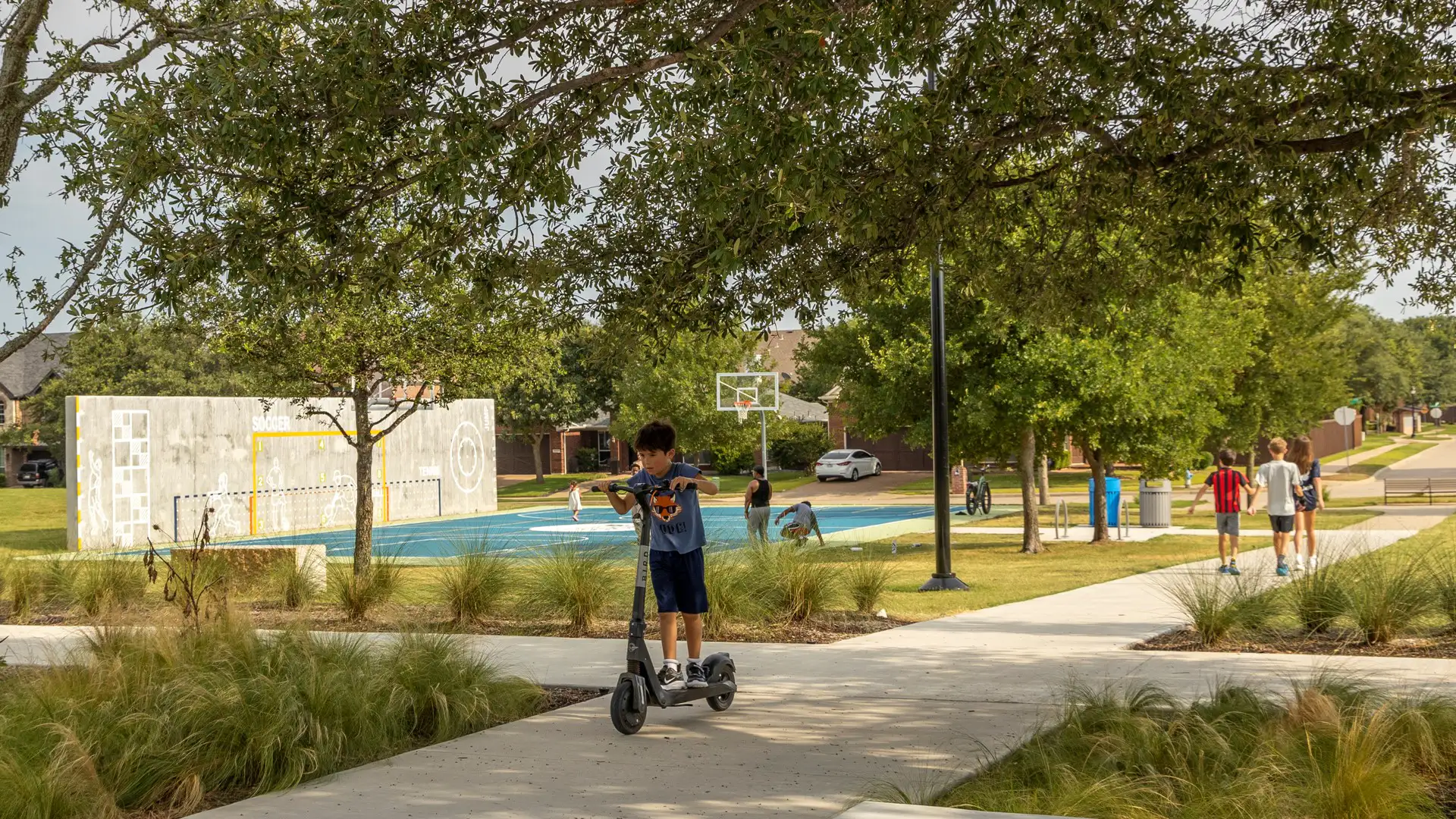

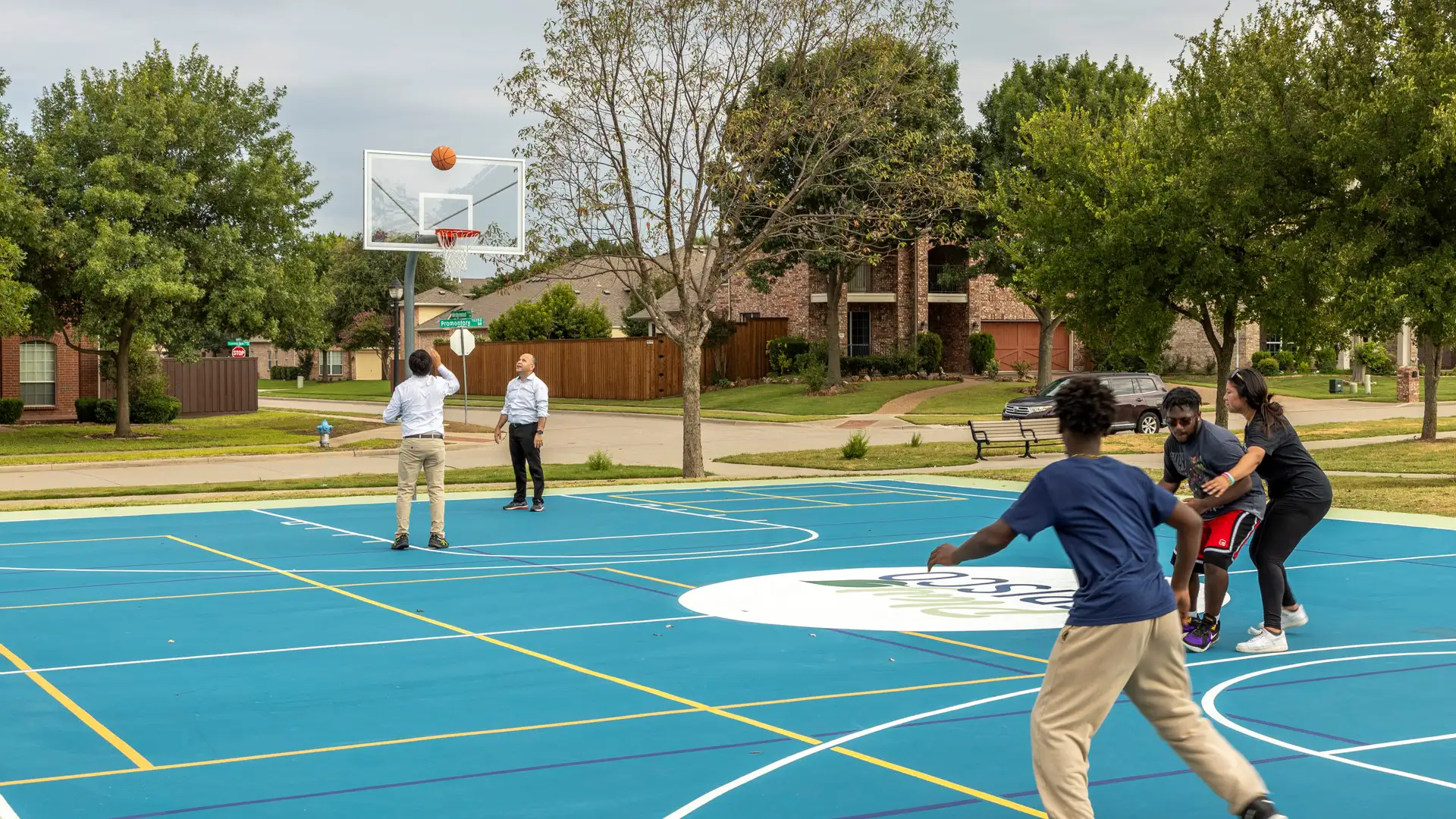
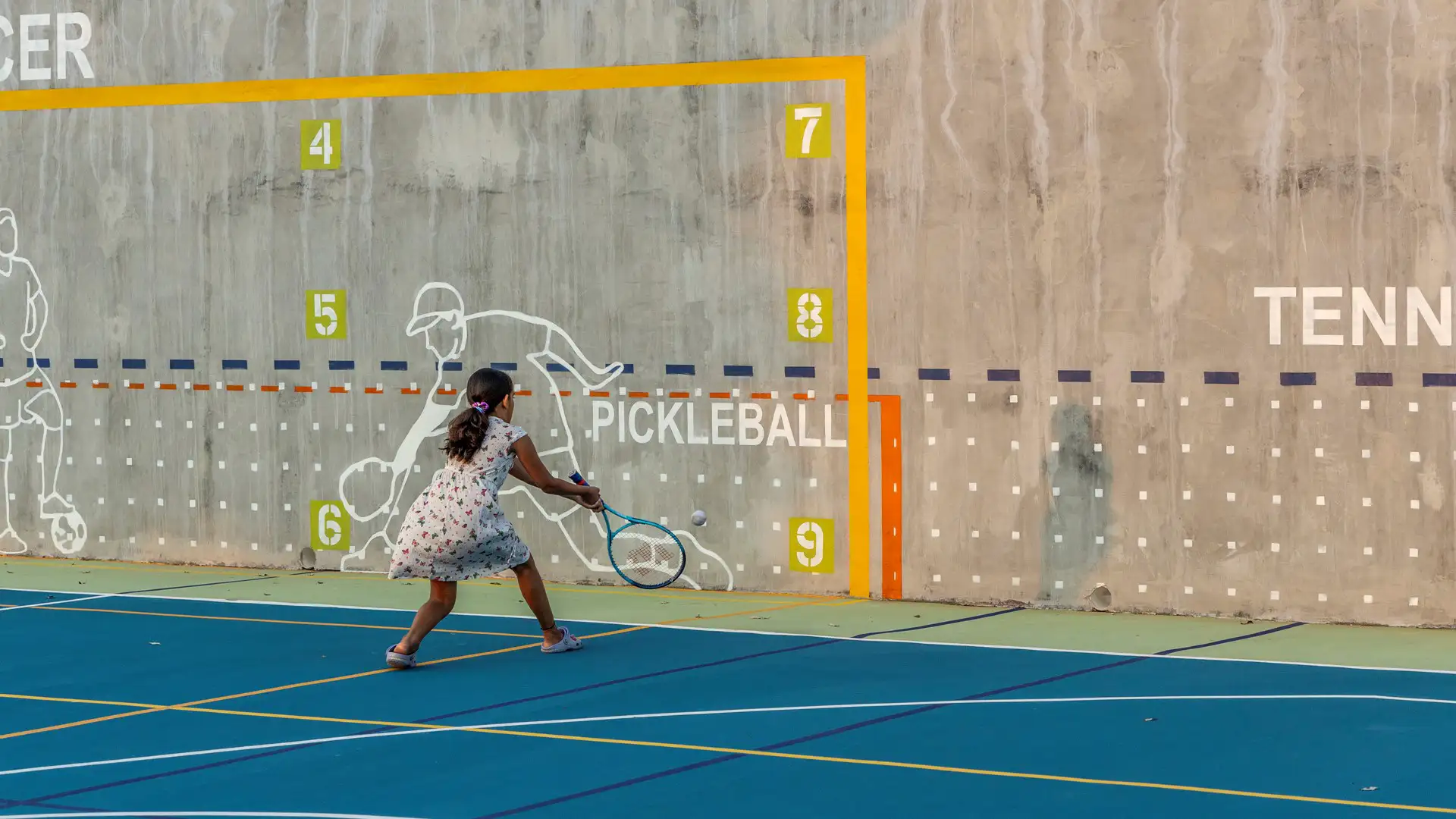
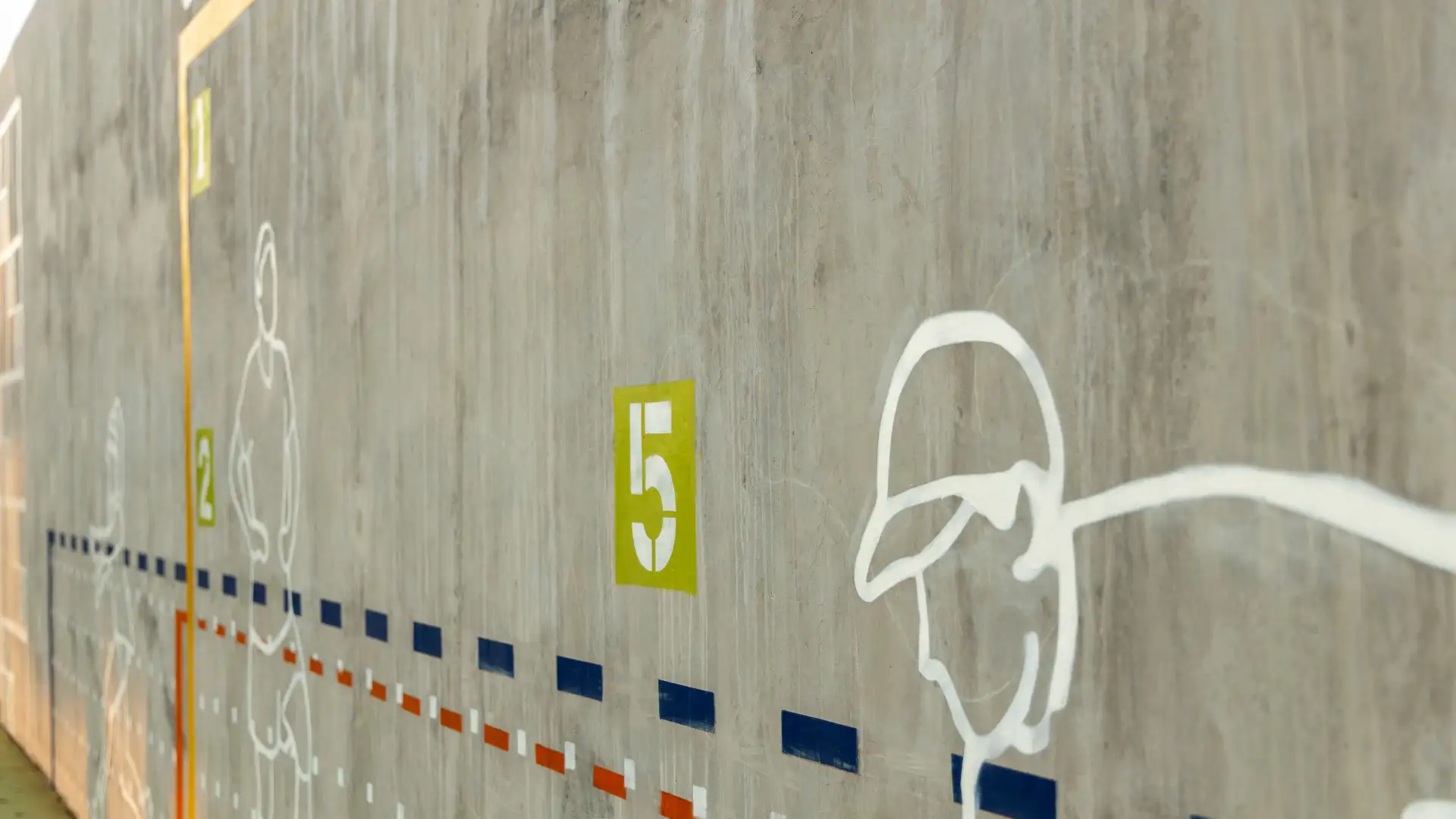
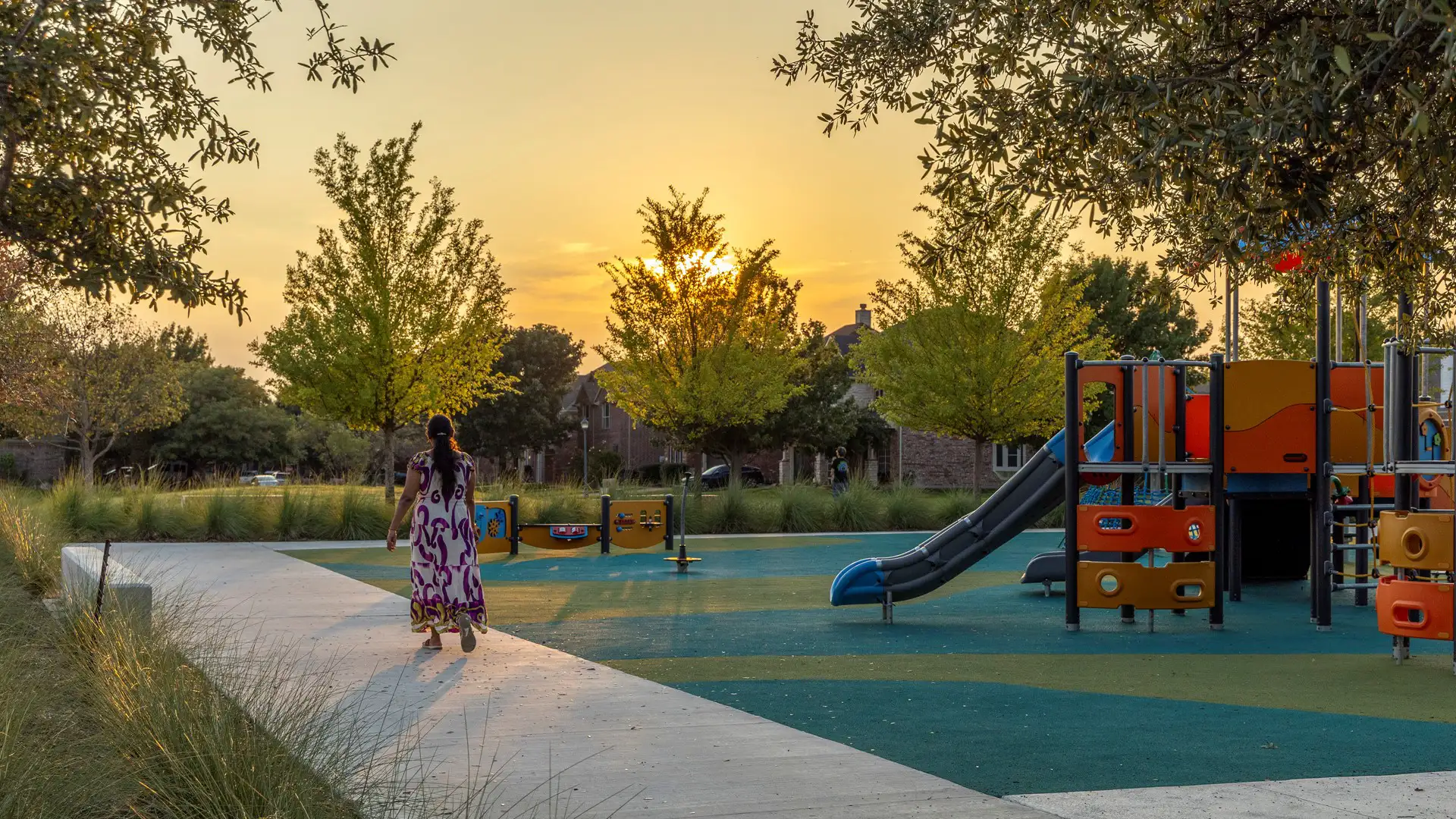
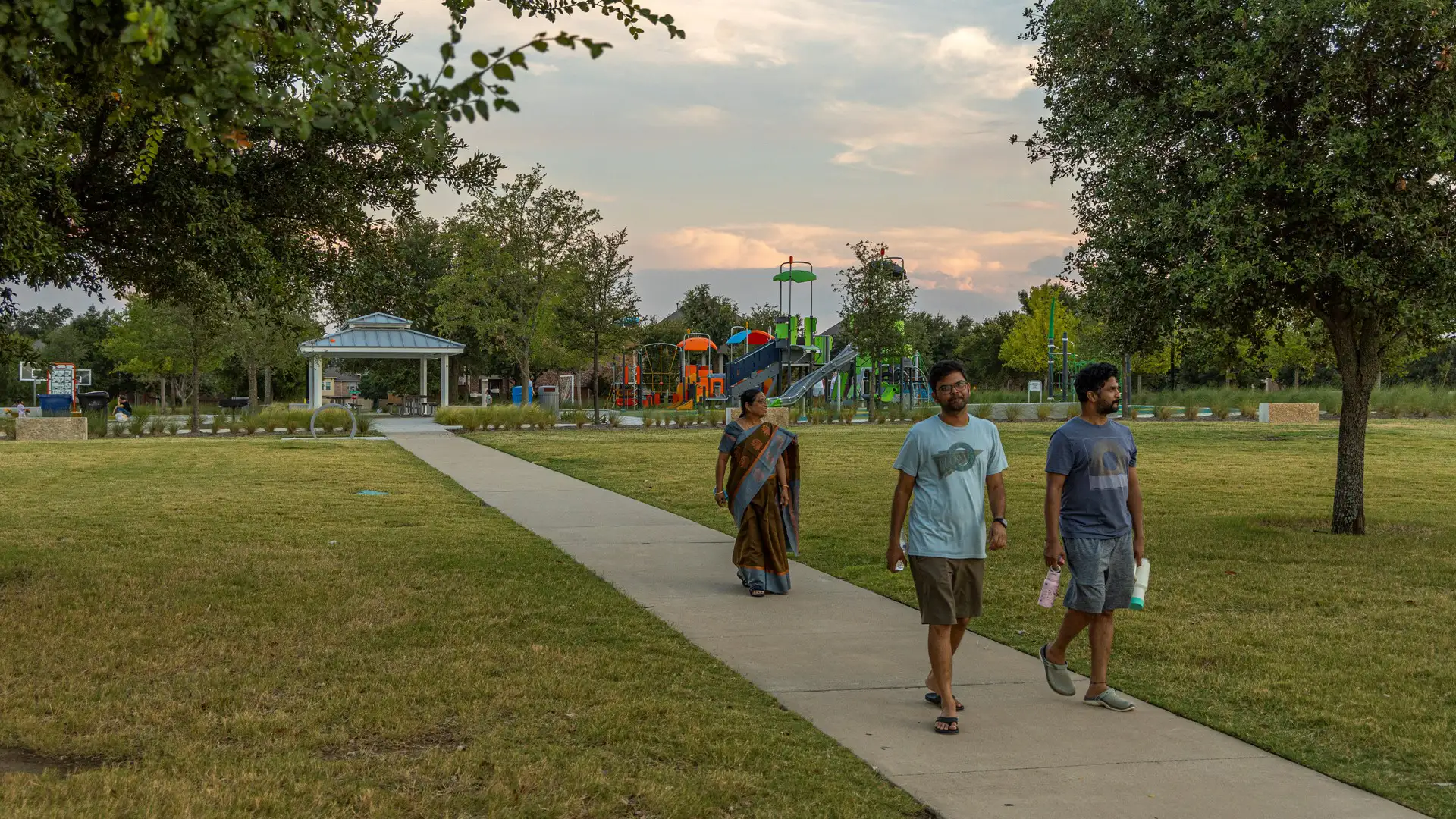
This neighborhood park renovation was a collaborative effort with the city and neighborhood to create a welcoming space. The new vision sought to make the site more universally accessible and attractive for multi-generational community members. Four new “play rooms” include an outdoor fitness facility, sensory play zones, a new multisport court and play wall, and a new baseball backstop. The entire park was designed to be inclusive and accessible for children on the autism spectrum and those with additional special needs, providing a safe and engaging environment for all. New signage and wayfinding were included in the design and new roofing on an existing shade structure ensures the environment is comfortable year-round.
Since the project finished, both on schedule and within budget, it has gained local popularity as a hot spot destination for community members and visitors from around the area.
Halperin Park
In the 1950s, I-35E was routed through the South Dallas community of Oak Cliff, demolishing a thriving Black commercial corridor and one of the first Freedmen’s towns established after the Civil War. In the decades that followed, as in so many cities across the U.S., freeway construction severed long-standing social and economic ties and set in motion decades ...
Ricardo Lara Park
Ricardo Lara Park is a vibrant city park and a case study in landscape infrastructure. It demonstrates how a small investment and creative thinking about landscape can transform the very infrastructure that has long divided and isolated a community into an amenity that unites it, offering much-needed environmental and recreational benefits.
Here, more ...
Canvas Park
Canvas Park is an activity-packed recreation center at the heart of Regions North, the latest addition to the growing New Haven community in Ontario. Centering on sports, family play, and social activities, the park offers a 5,000-square-foot lap pool, flexible lawn spaces, sport courts, and reservable outdoor spaces that residents can use for private gatherin...
Buffalo Bend Park
Houston’s East End is a bifurcated community, with heavy industry brushing up against a vibrant and culturally diverse residential area. Answering residents’ call for more park space, SWA created Buffalo Bayou Bend Nature Park by converting a formerly neglected industrial site into a wetland ecosystem and public green space.
Three interconnected ponds, ...