


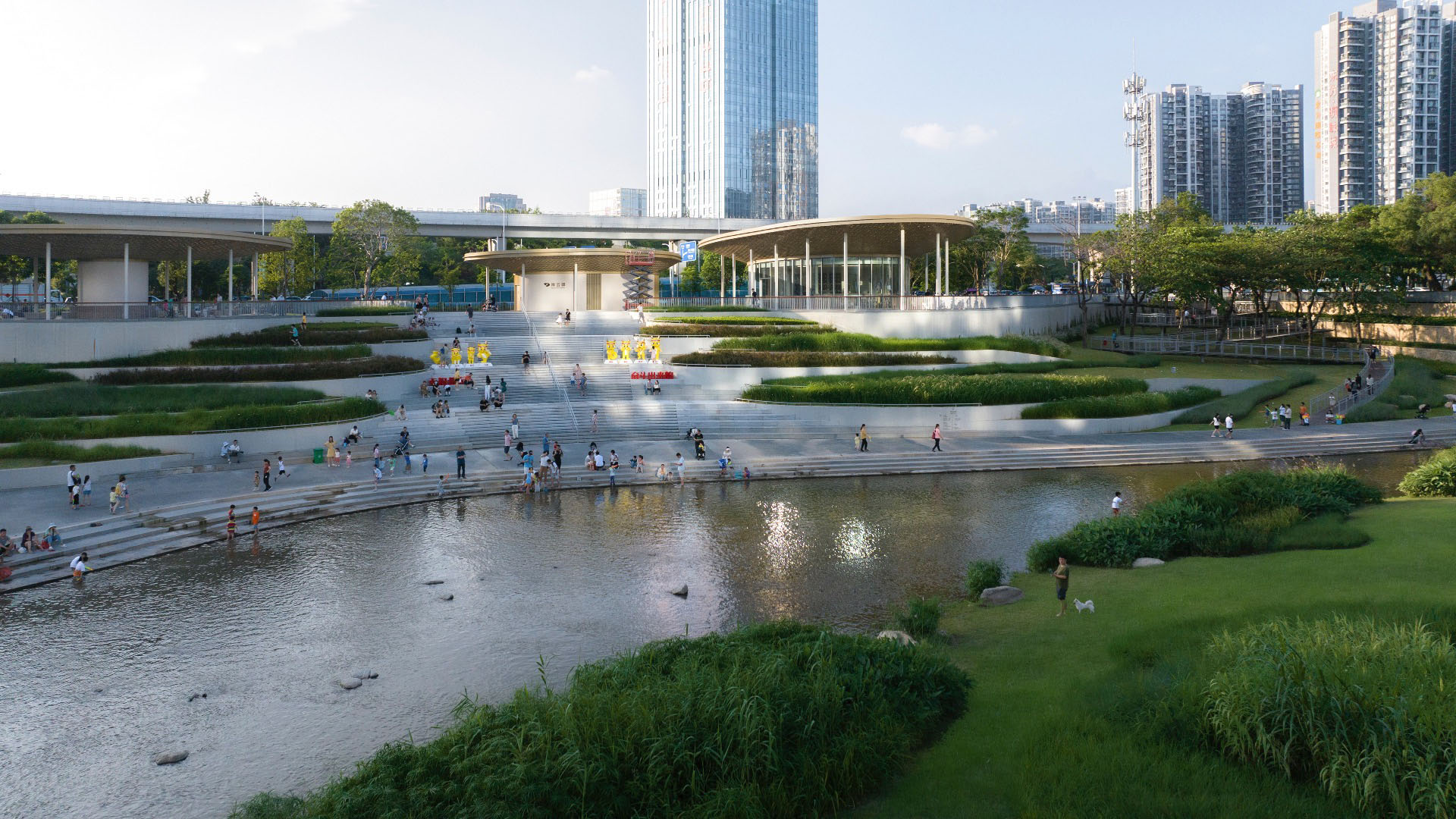
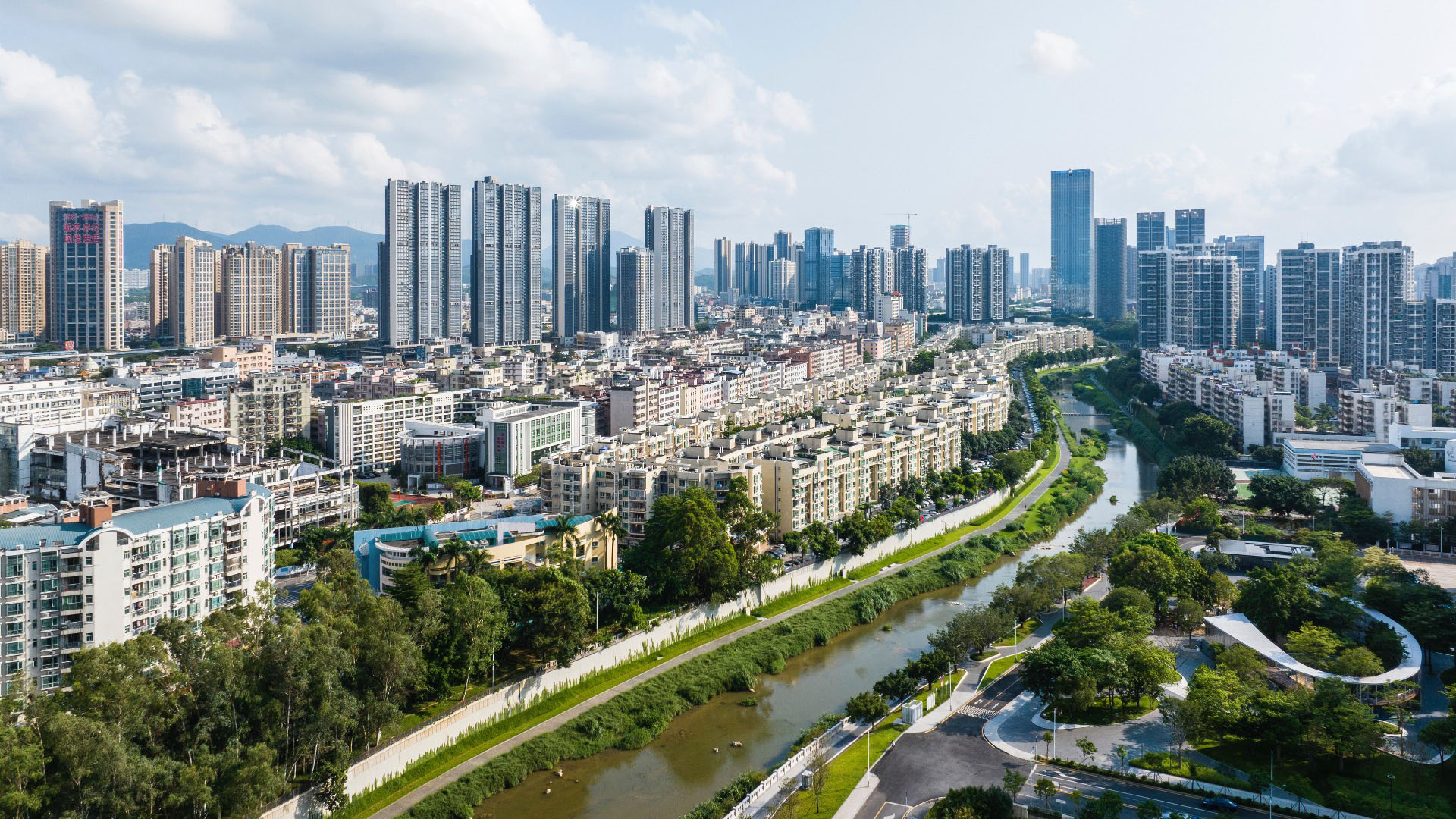

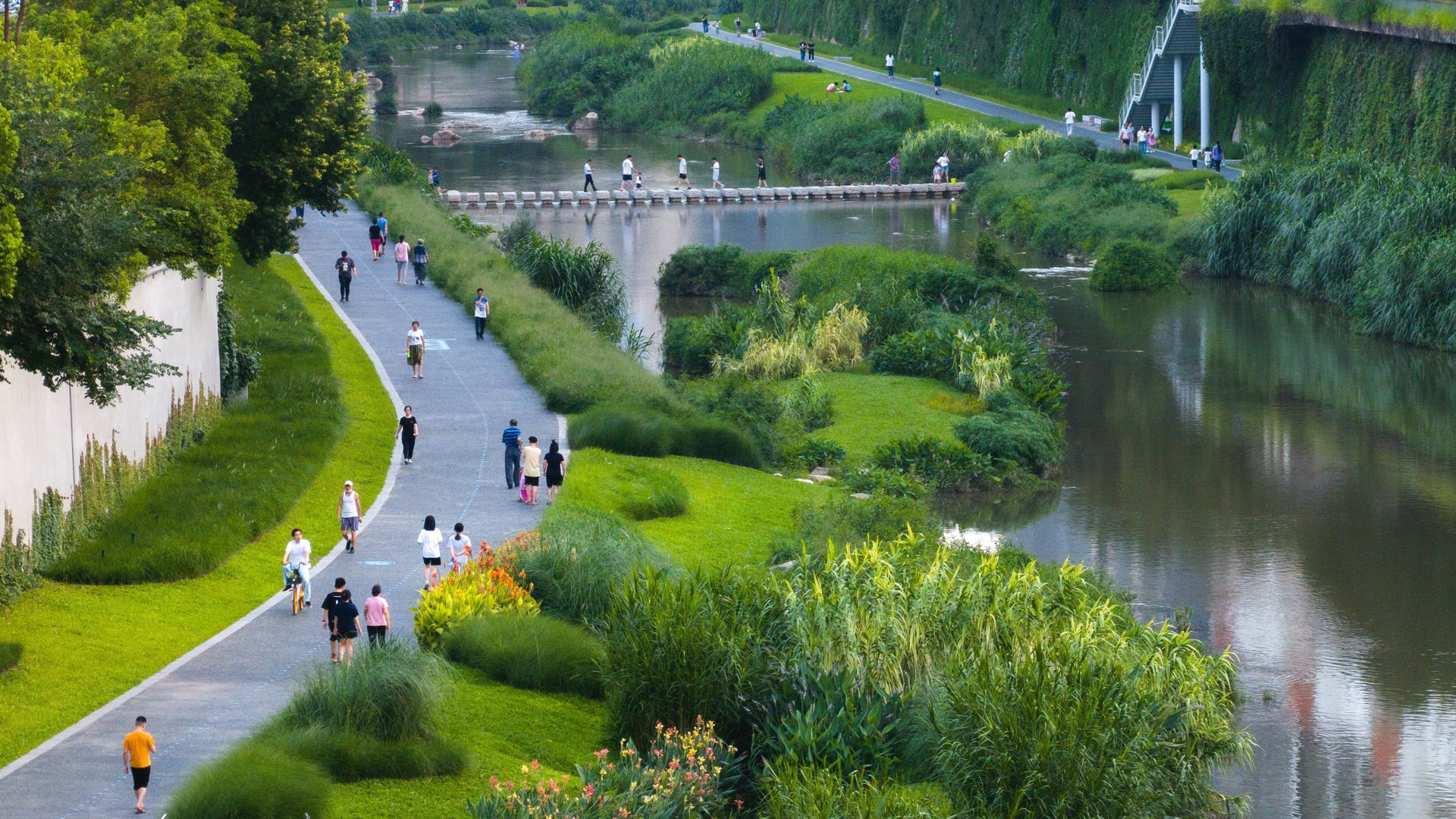


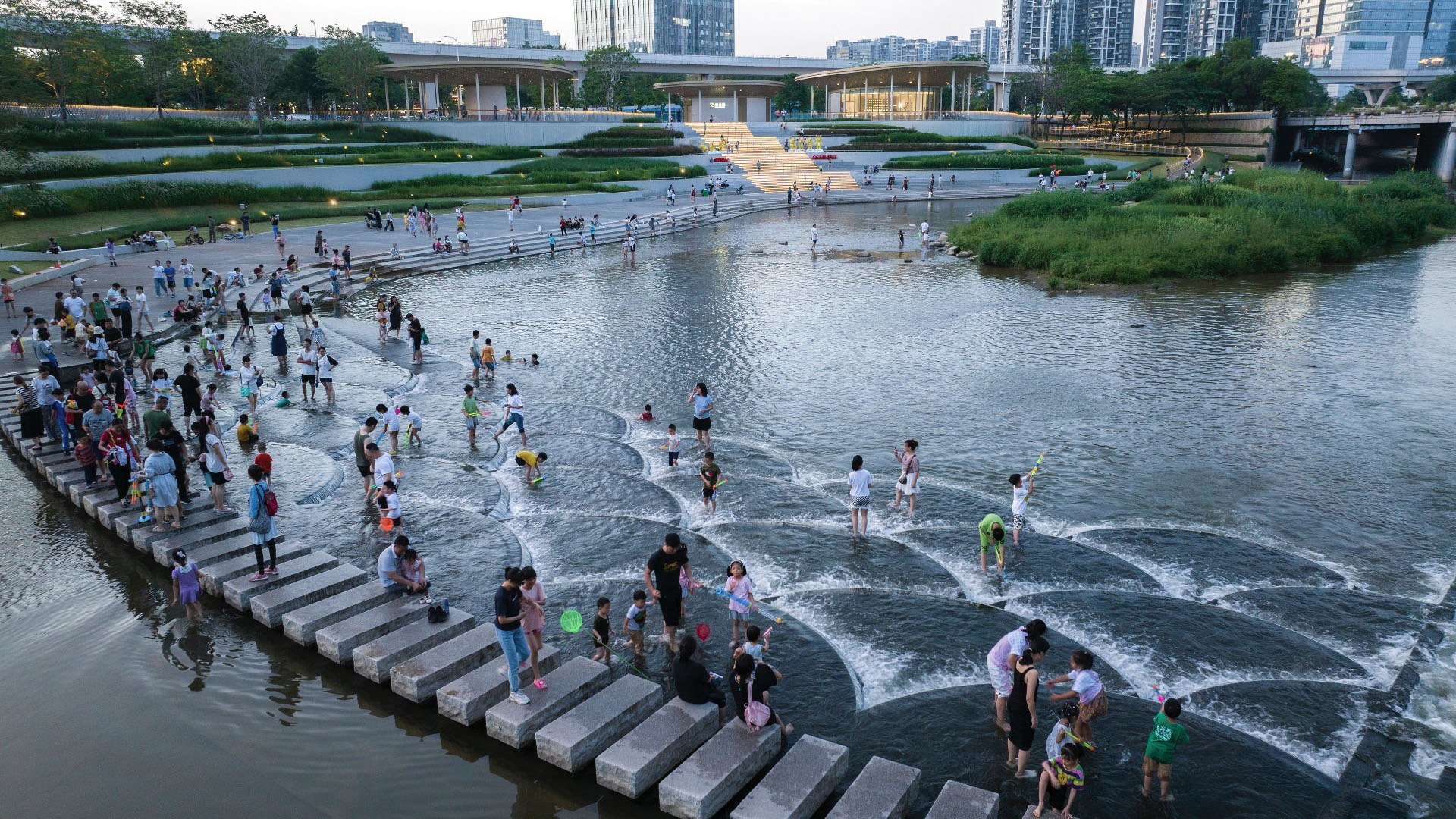


The Shenzhen Longgang River Blueway System is envisioned to unlock the tremendous land value of this 13-mile-long suburban watershed and galvanize the city’s future growth. SWA’s proposal addresses urbanization issues pertaining to water, the environment, and open space shortage, while also activating industrial and cultural revitalization in the surrounding district. The design builds riverside ecological corridors at a regional scale while guaranteeing water quality and quantity; by incorporating pockets of native planting and habitat that extend deep into the adjacent urban areas via rain gardens and bioswales, streets move water as well as people and vehicles. Striking murals line the riverside walls and punctuate urban villages and new developments, conveying the history of Longgang and the Hakka people who inhabited these lands centuries ago.
Residents and visitors are offered a rich variety of outdoor pursuits: art, craft, and food markets; music events, and fascinating evening light shows. Unique developments engage the river as a new recreational resource. Sporting opportunities for young adults, adventure play for children and families, and birdwatching for seniors define the new open spaces along the river.
Halperin Park
In the 1950s, I-35E was routed through the South Dallas community of Oak Cliff, demolishing a thriving Black commercial corridor and one of the first Freedmen’s towns established after the Civil War. In the decades that followed, as in so many cities across the U.S., freeway construction severed long-standing social and economic ties and set in motion decades ...
Hi Line Connector
The Hi Line Connector spans one mile through Dallas’ Design District, linking two of the city’s most valuable urban core public assets: the Katy and Trinity Strand Trails. This transformative project introduces raised bike lanes and enhances the pedestrian experience by improving and realigning existing roadways. Beyond the physical infrastructure,...
Xili Lake Greenway
Encircling one of Shenzhen’s four major reservoirs, Xili Lake Greenway is the third segment of the 200-kilometer Kunpeng Trail to be completed under the city’s Mountain-Sea-City corridor initiative. Navigating over 16 kilometers of diverse terrain across upland, densely forested, and urban landscapes, the trail connects Xili Science and Education City, 18 tech...
Changsha Baxizhou Island
Over many decades, public agencies in China have sought to solve growing flooding issues in a defensive way: fortifying and hardening river edges, raising levee heights, and ultimately separating the people from historical connections to the water. With an understanding of river flow processes and volumes and of wetland and native forest ecology, this separati...