


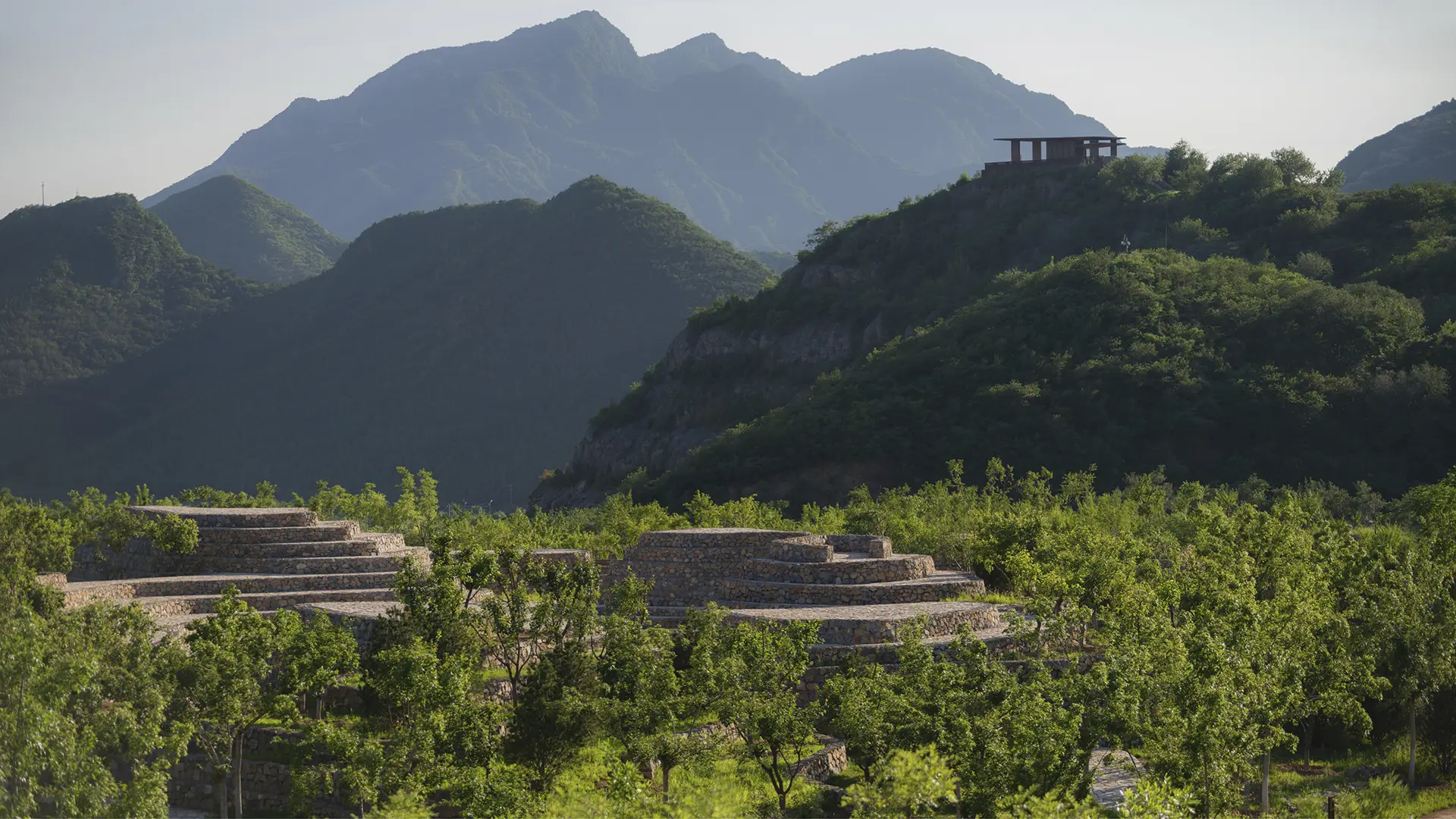
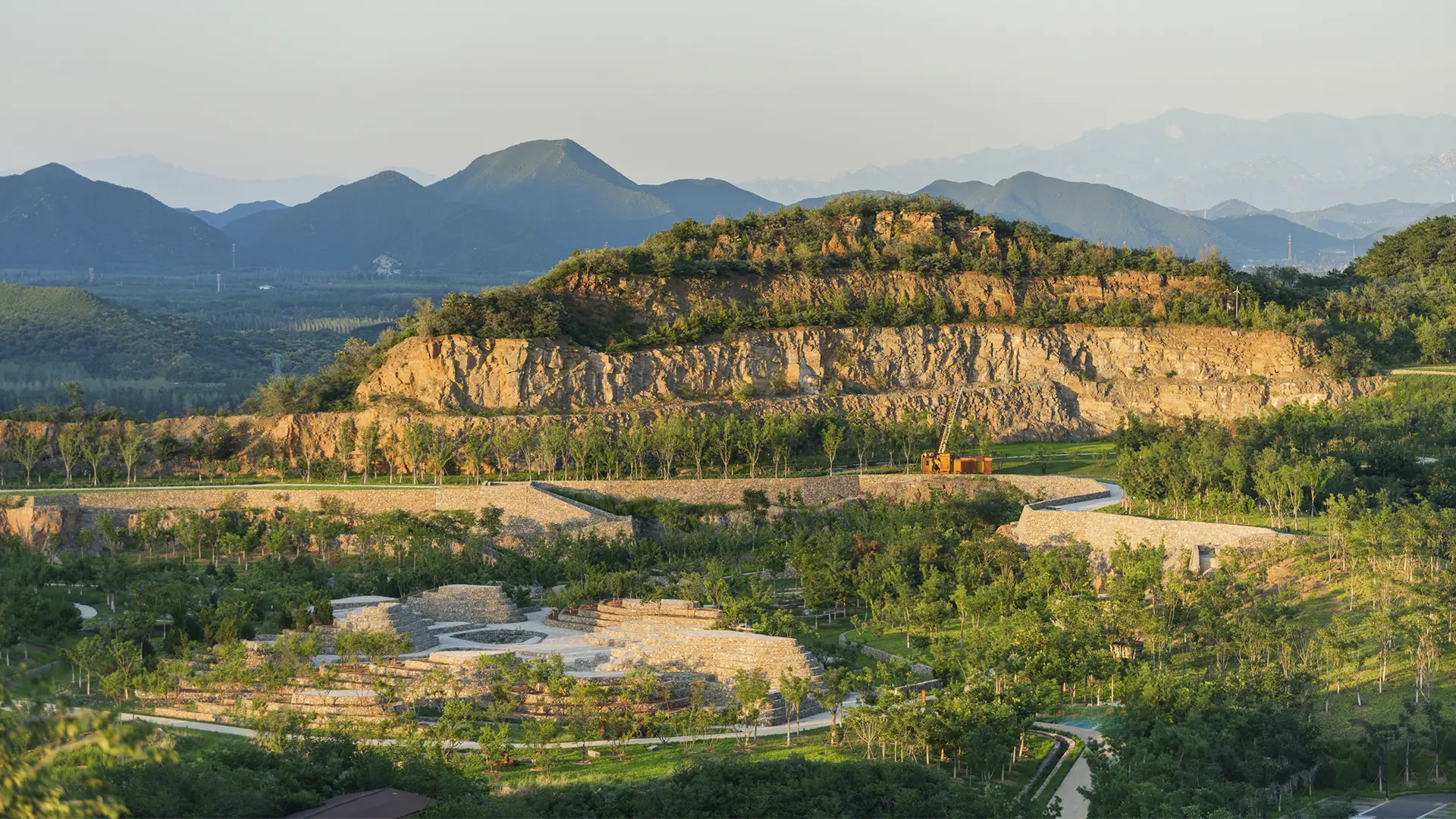
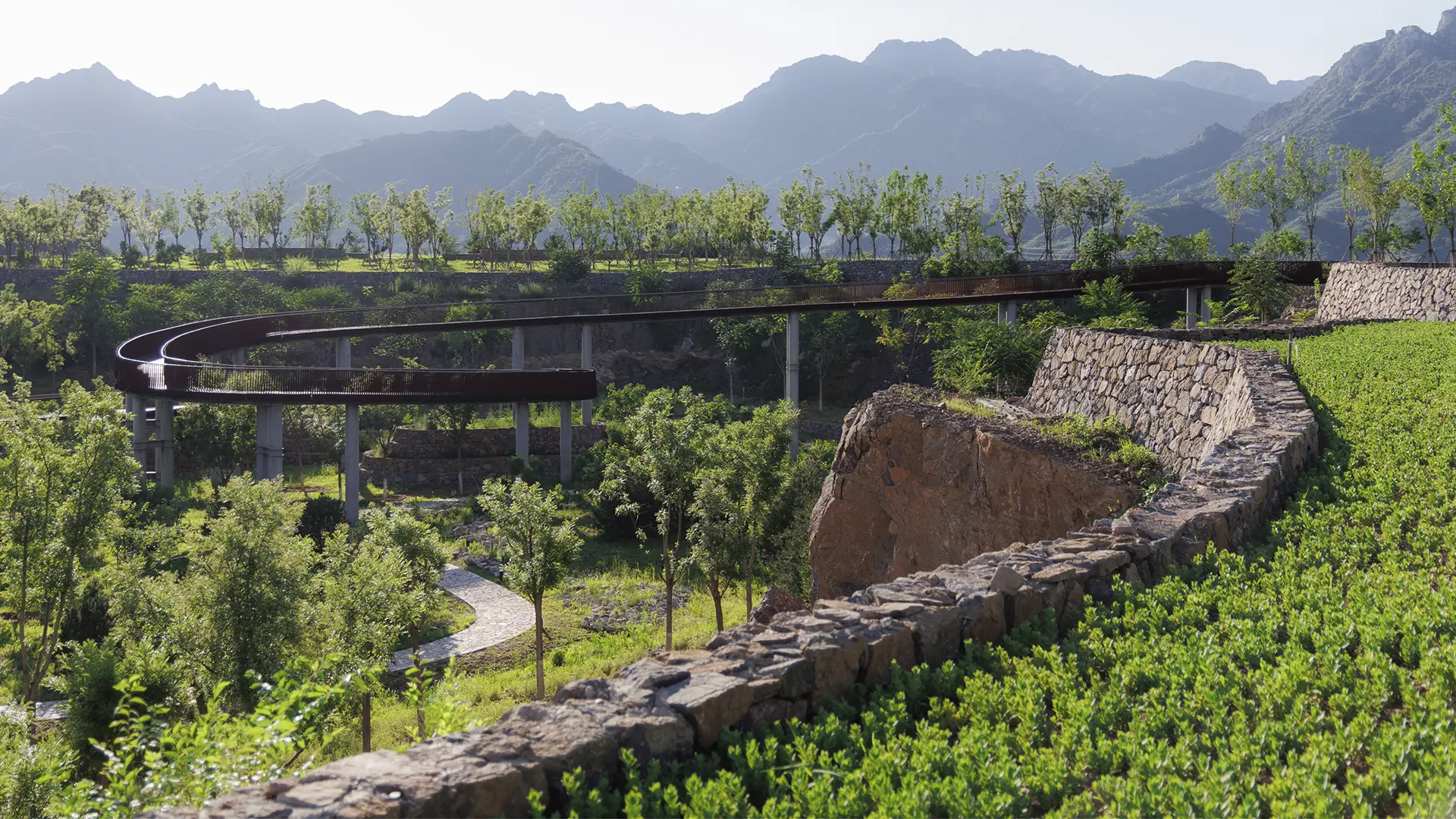


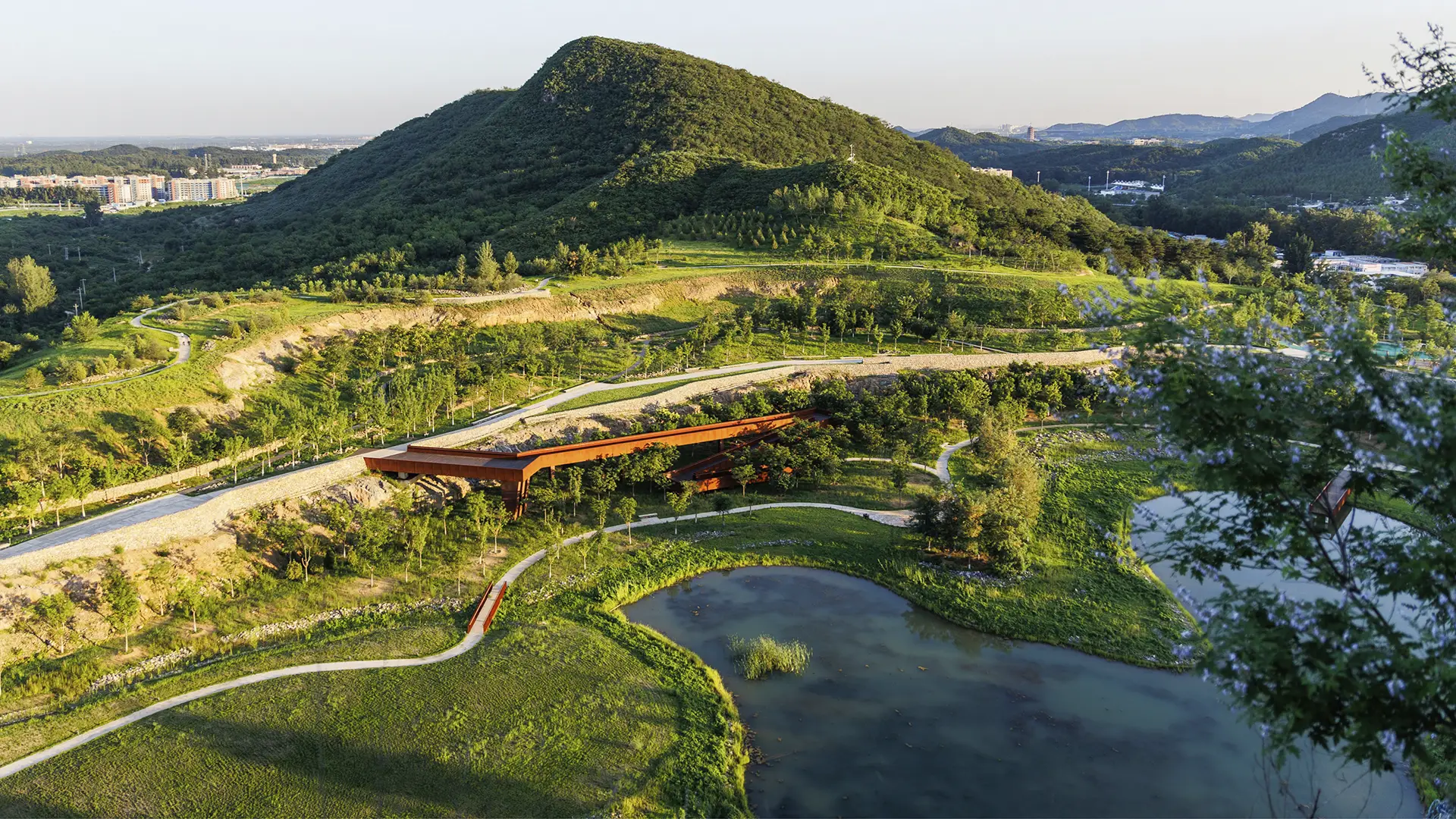


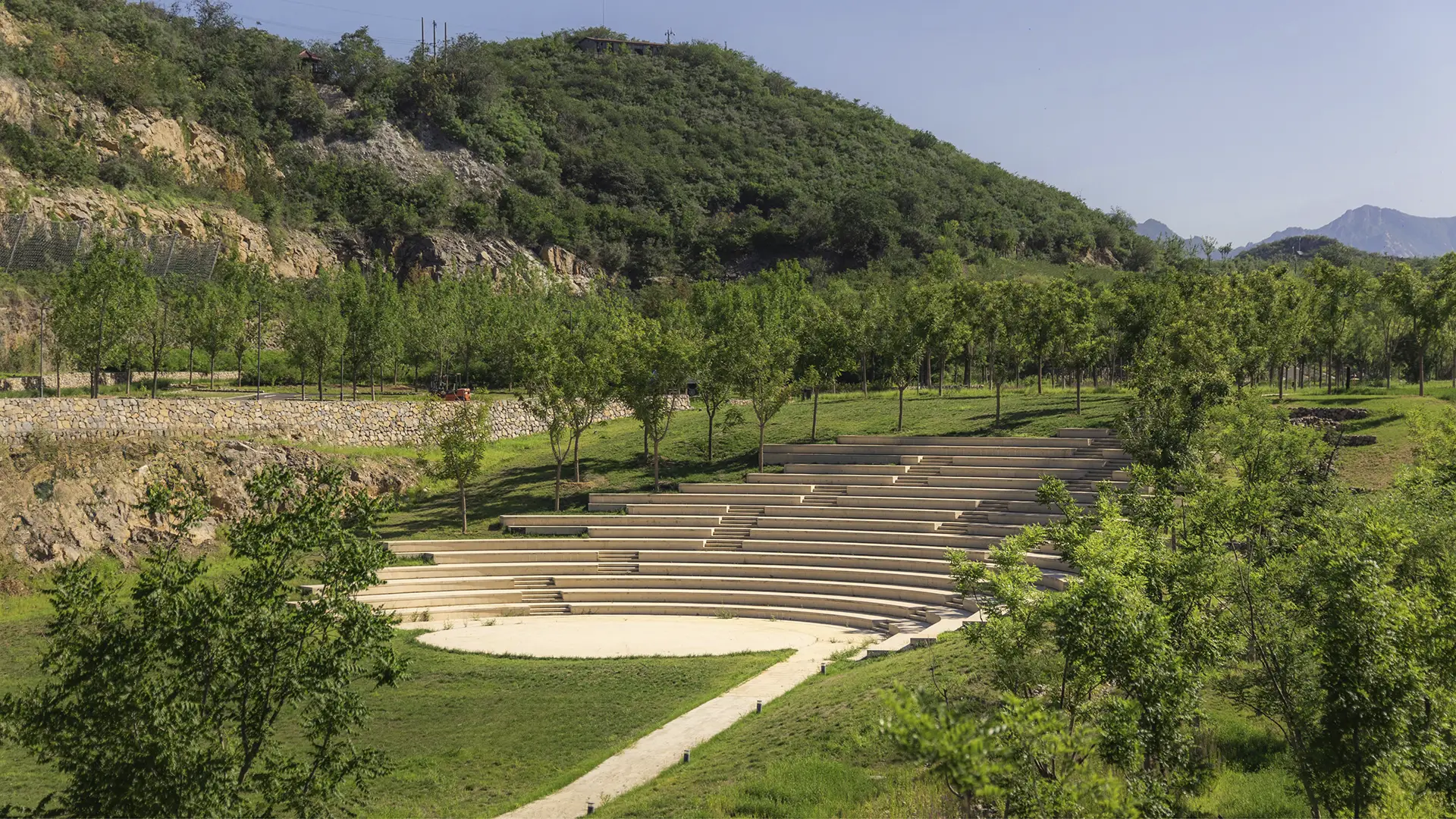
Just north of Beijing, between the Great Wall and Yanqi Lake, the Xingfa Cement Plant once fueled China’s construction boom, operating for over two decades before its 2015 closure under the National Air Quality Action Plan. Today, an adjacent quarry that once provided raw materials has been remediated as a 107.5-hectare terraced park that anchors an accompanying 17-acre research campus on the site of the plant.
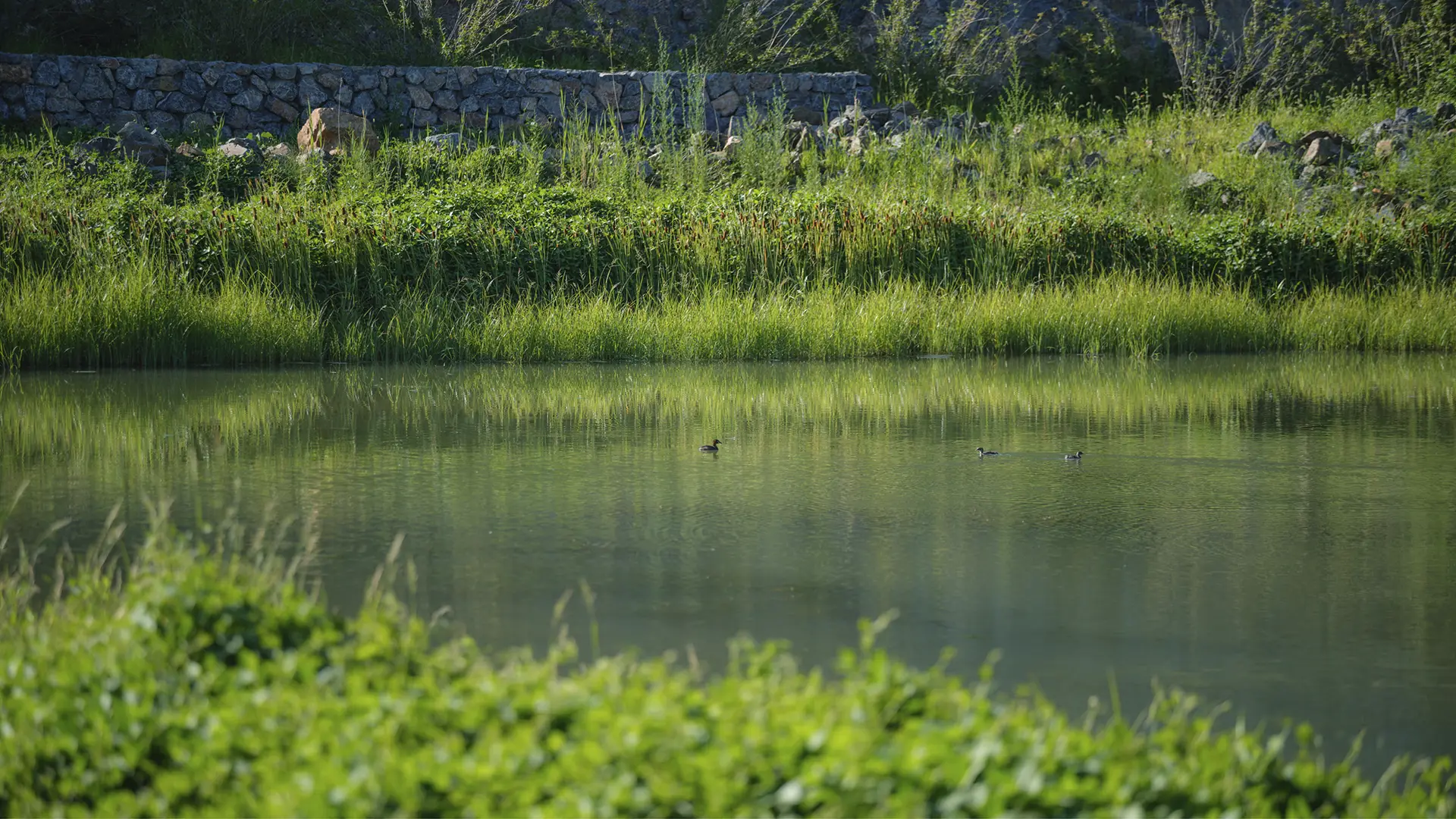
Where a single willow tree once stood, the valley now supports a vast, layered network of emergent plant communities selected to adapt in rocky, alkaline soils. Native arborvitae stabilize slopes and retain moisture through summer droughts. Legume-producing species enrich the thin soil, while seasonal stands of smoke tree, mulberry, and elm provide canopy and seasonal color. Invasive plants introduced during the site’s industrial era have been cleared and replaced with species that restore soil conditions. On the southwestern end of the site, a seasonal pond has been added to retain stormwater runoff and reduce erosion across the exposed quarry floor.
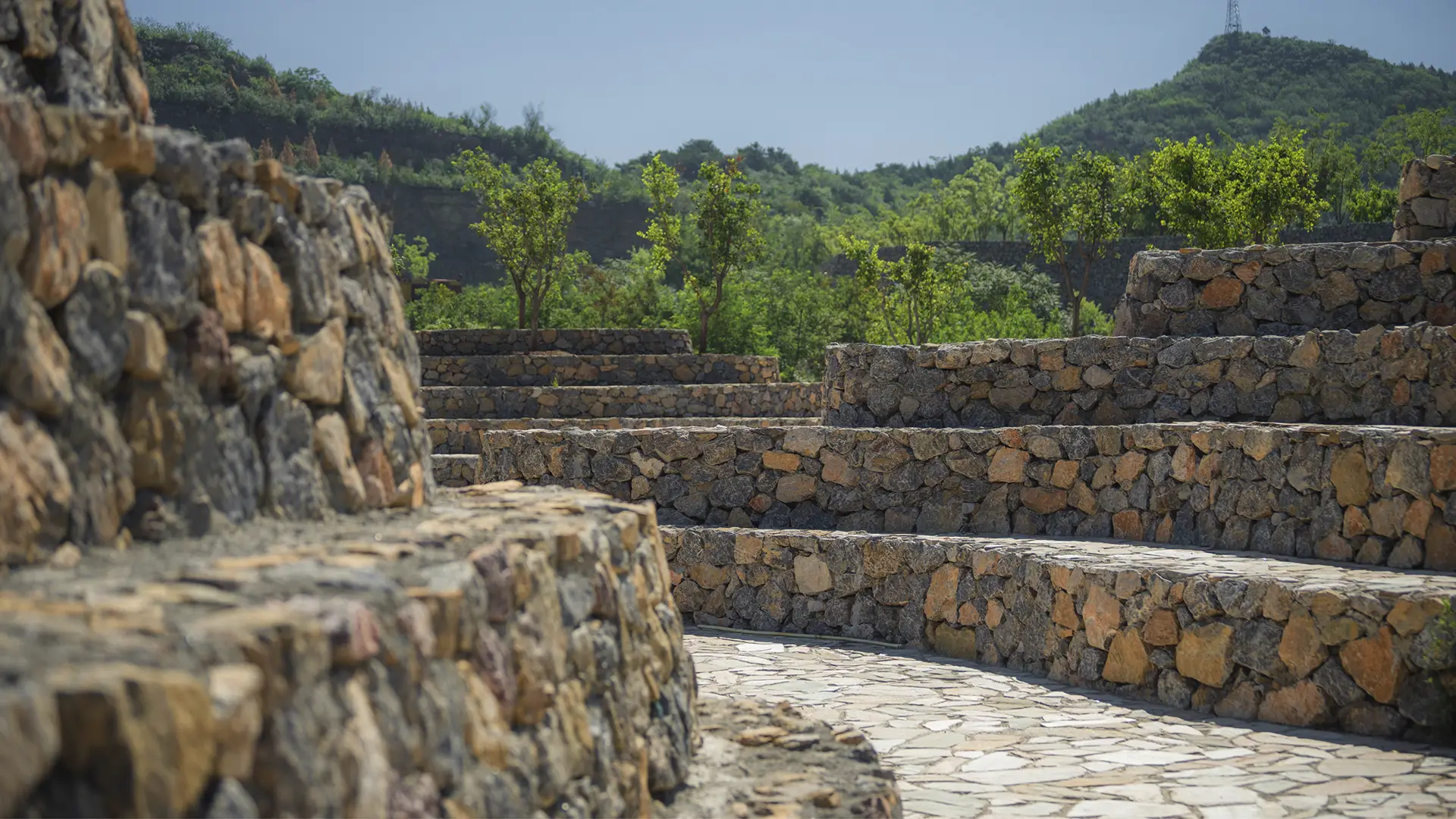
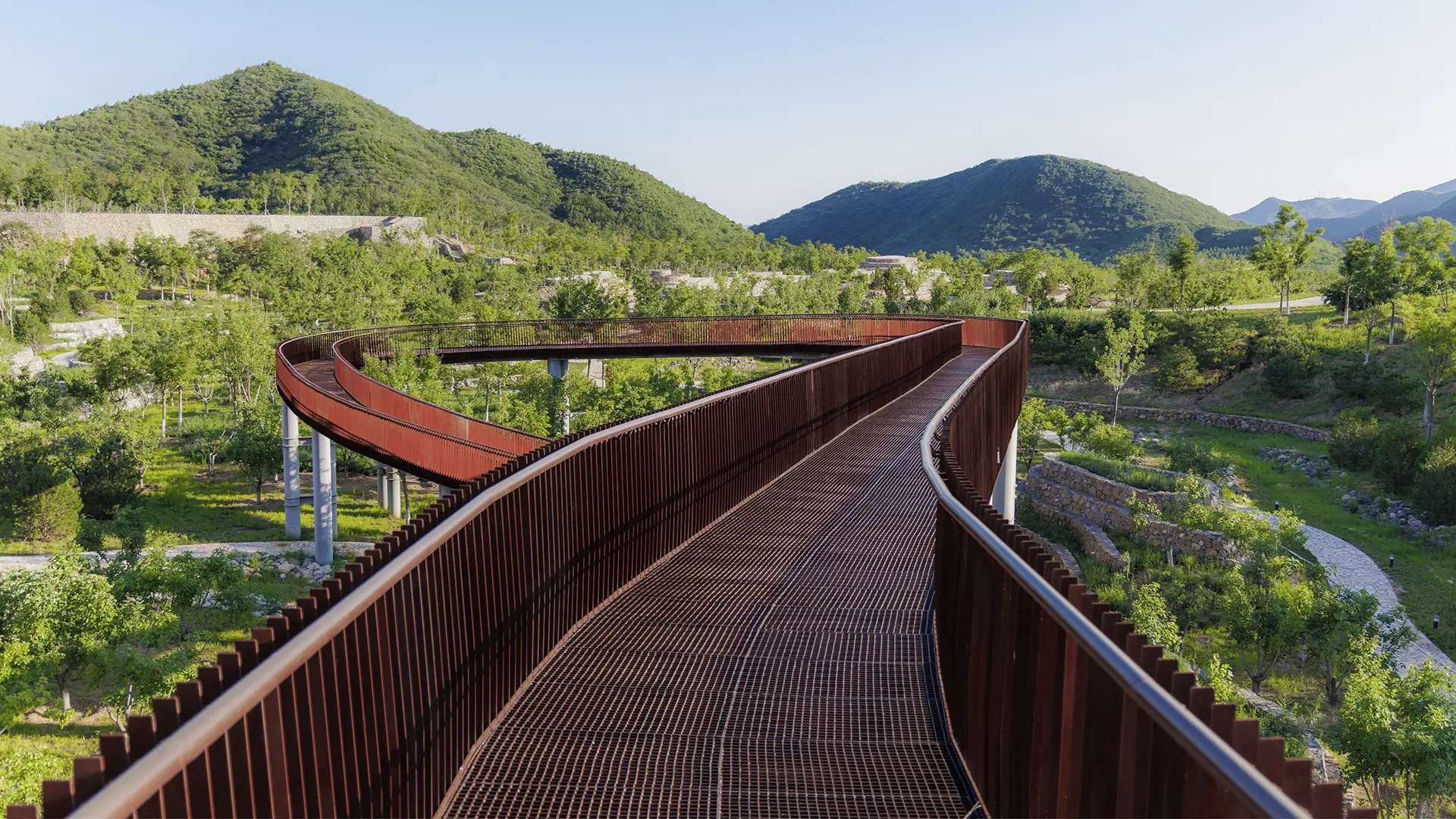
Paving, walls, and trail edging were constructed using recycled stone and shale. Salvaged conveyor housings and other industrial remnants were embedded into the landscape along the “Trail of Memory,” a pedestrian spine linking the two quarry pits that pays homage to the site’s industrial past. Climbing up a nearby hilltop to an overlook pavilion, a 1.2-kilometer hiking trail provides panoramic views of the surrounding Yan Mountains.
Metcalfe Playfield
Metcalfe Park, a resilient community in north Milwaukee, has long grappled with challenges tied to structural racism, disinvestment, and environmental injustice. Milwaukee Recreation is working to change the city’s public spaces through an effort to revitalize all 52 of its playfields, and Metcalfe Playfield is the 15th completed renovation. The park was selec...
King Salman Park
The largest urban public park ever built, King Salman Park is a defining element of Saudi Vision 2030—an ambitious effort to transform Riyadh into a more livable, sustainable, and globally competitive city. Envisioned as the “Green Lung of Riyadh,” the 16.6-square-kilometer park spans seven times the size of London’s Hyde Park and five times that of New York’s...
Tunica River Park
In 1990 the Mississippi Legislature legalized gaming as a job and tax creation strategy. Tunica, located at the northern border of the state near Memphis, Tennessee, was the first county to adopt gaming as an economic development strategy and implemented a program of rapid growth. The first casino was completed in 1992 and eight more were opened during the nex...
Thousand Lantern Lake Park System
Nanhai Citizen’s Plaza and Thousand Lantern Lake Park exemplifies the exciting and innovative opportunities for master planning and urban design in new international communities. The site is located in the newly established city of Nanhai, and consists of a commercial precinct, public parks, and civic buildings arranged around a series of lakes and waterways. ...