


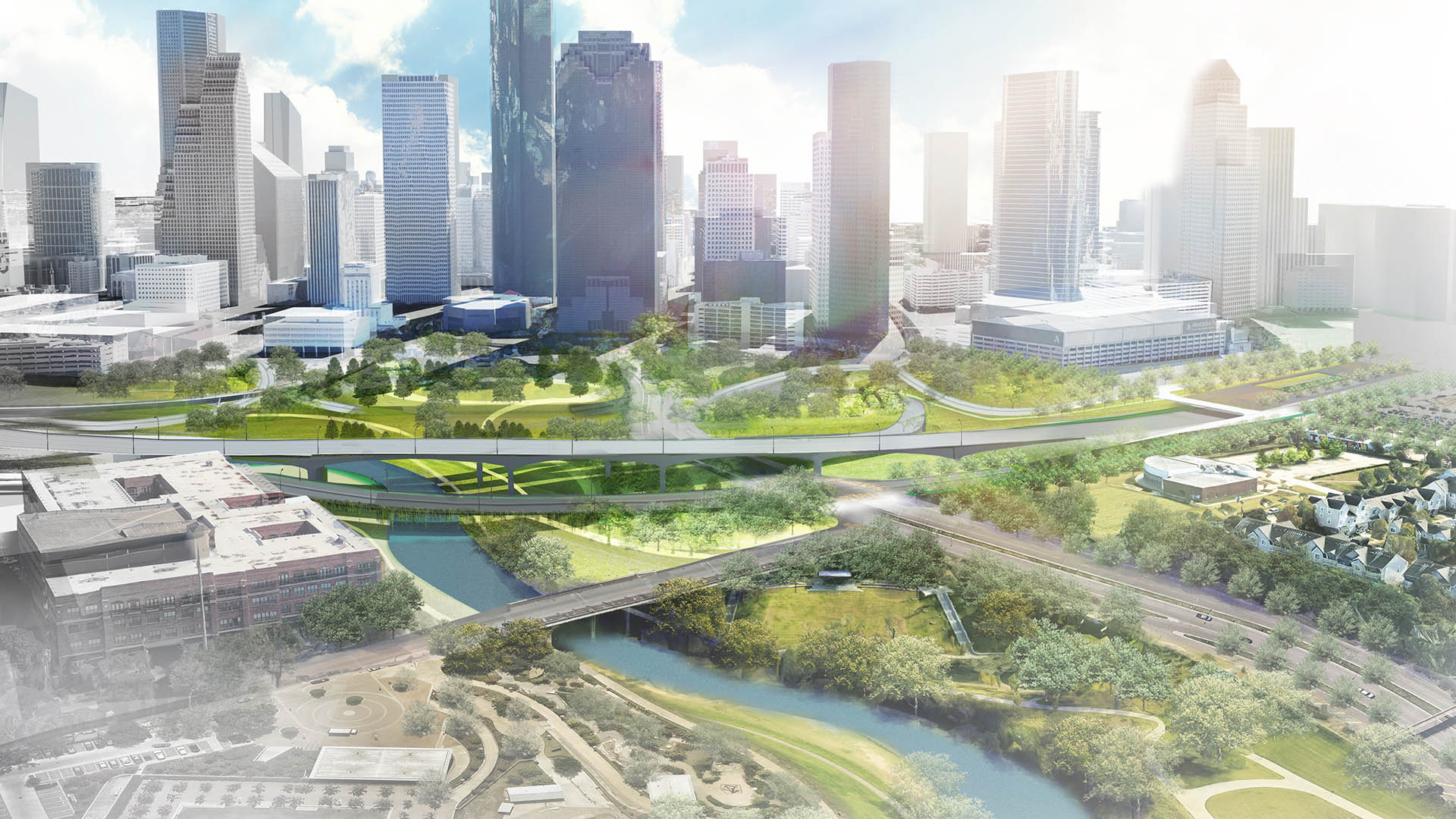

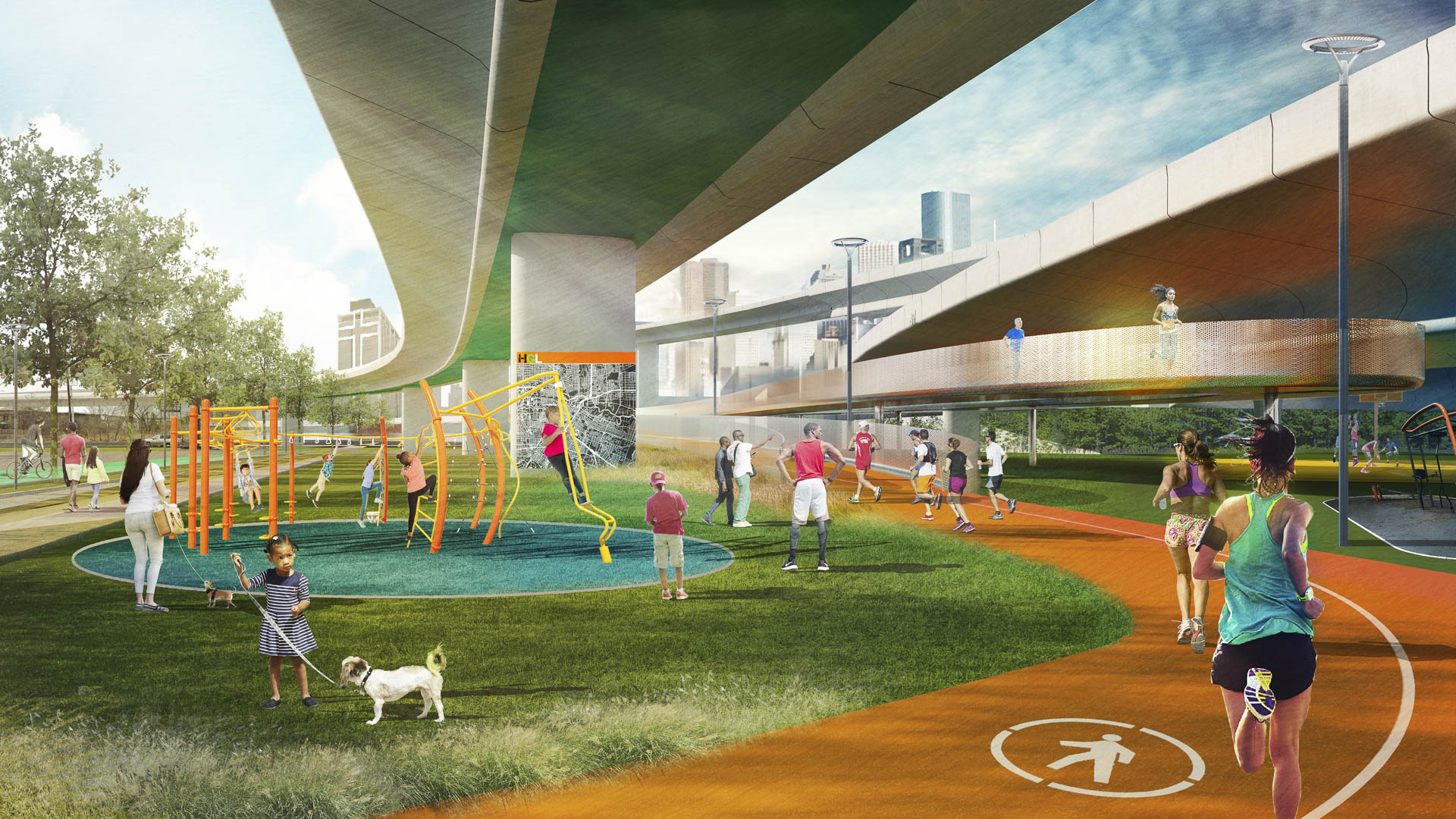

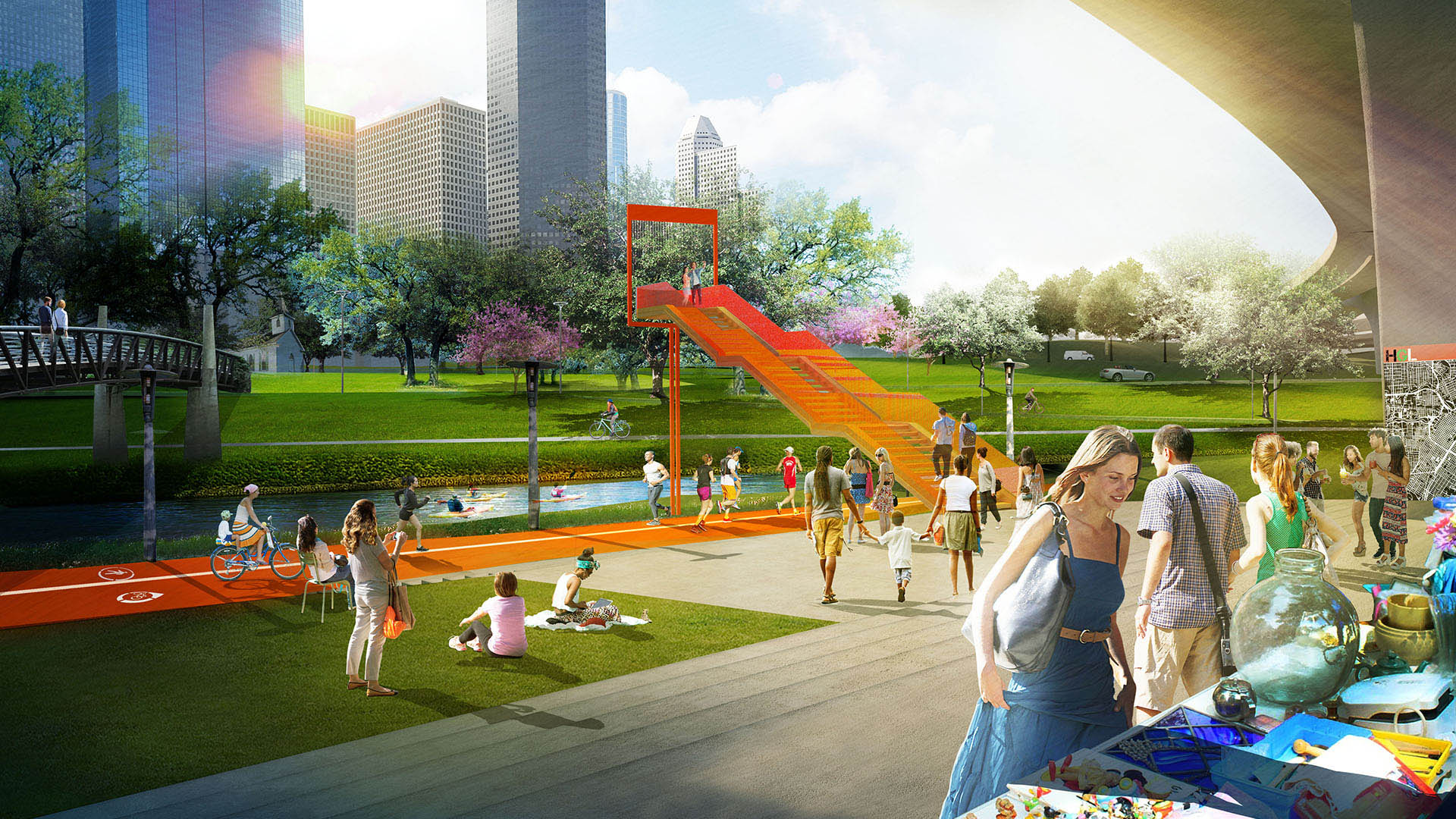
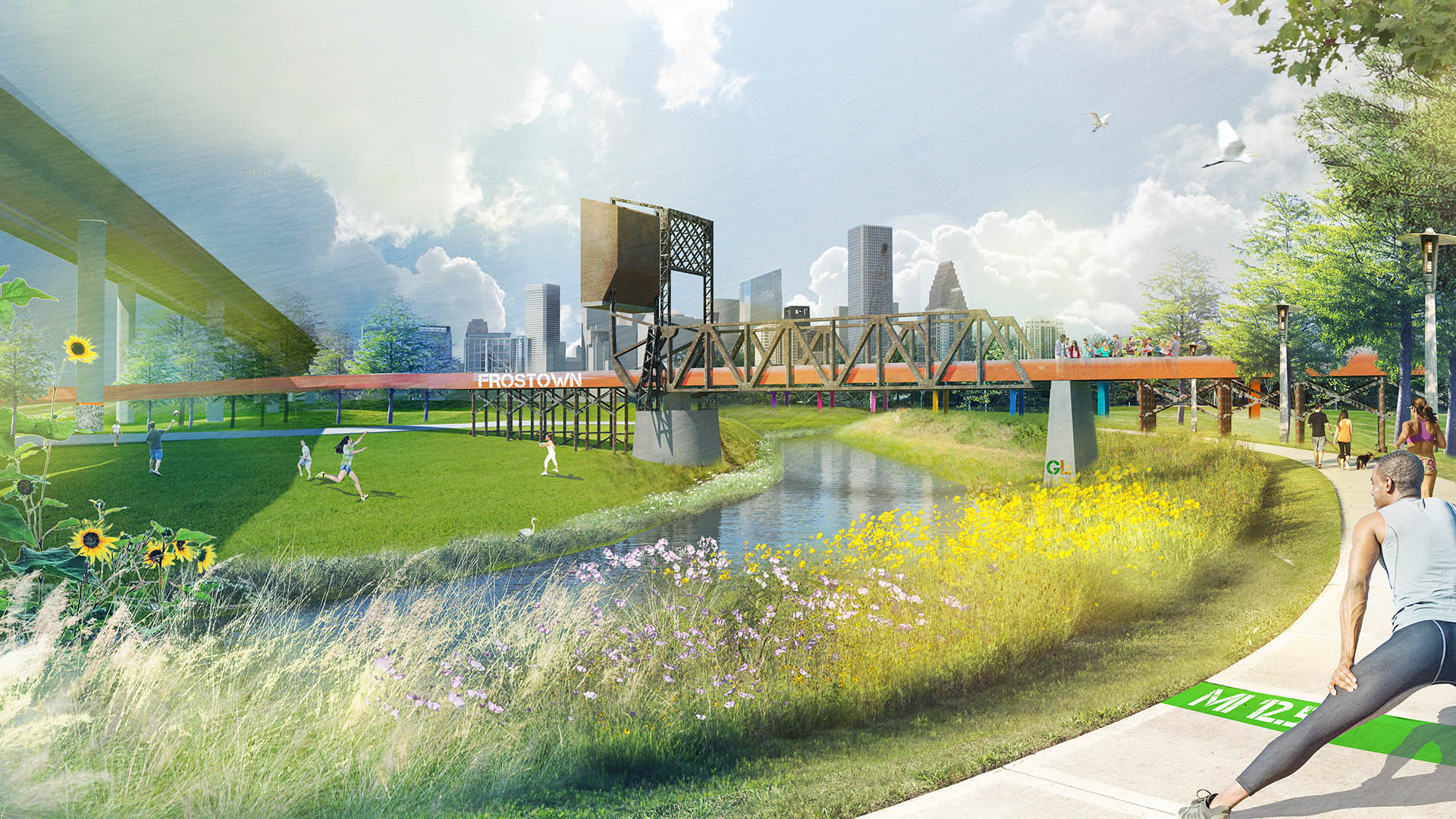

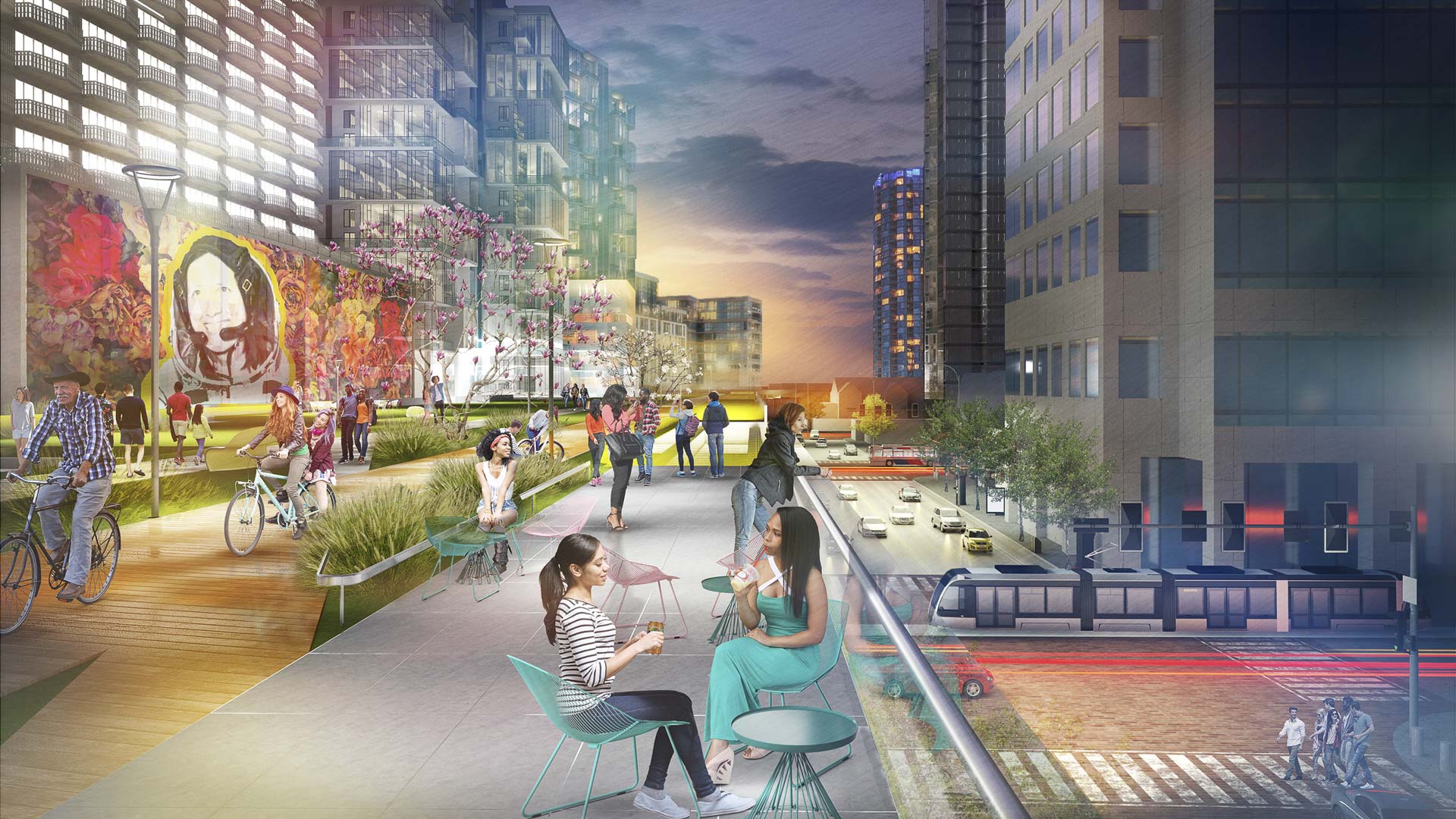

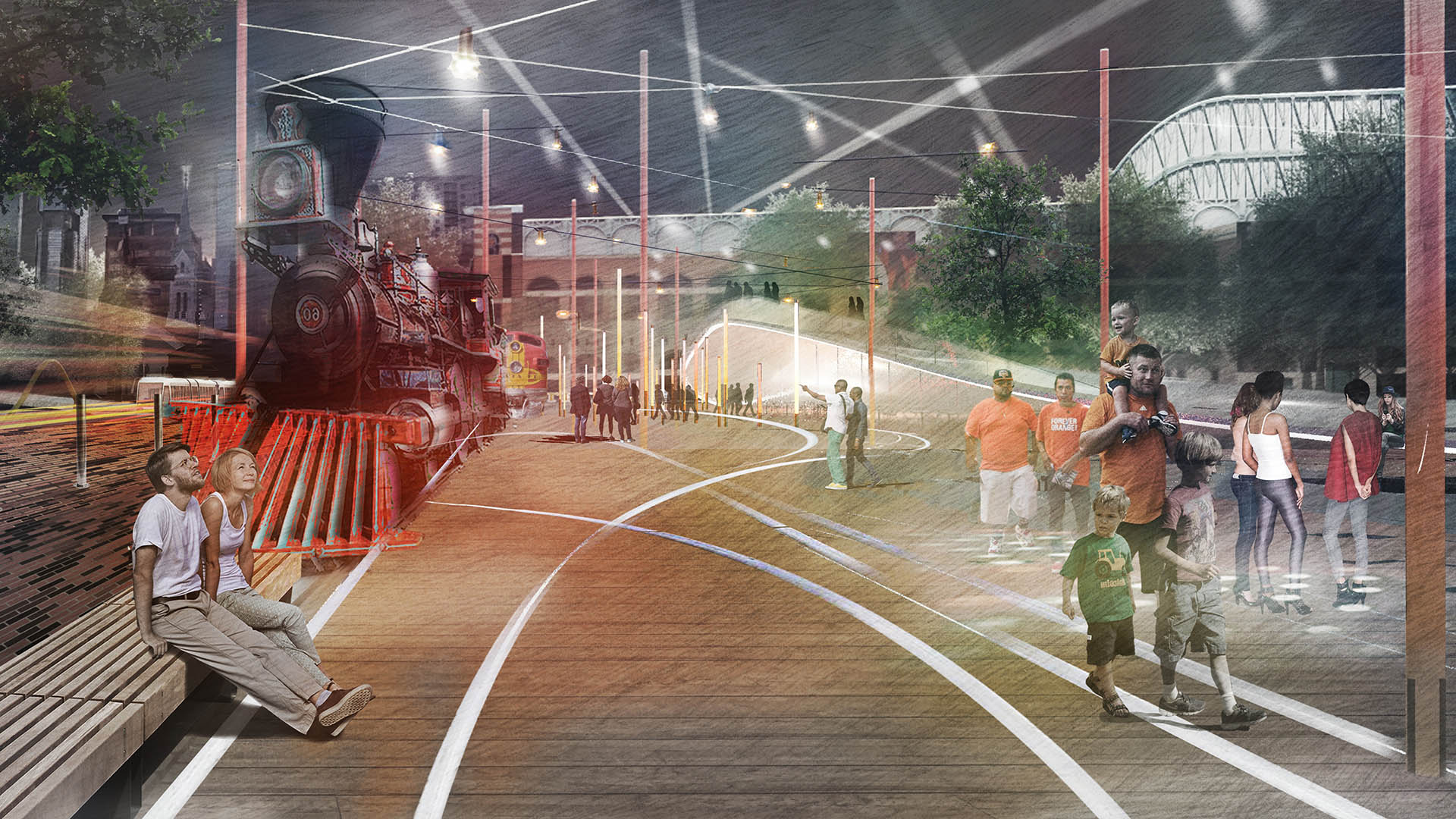

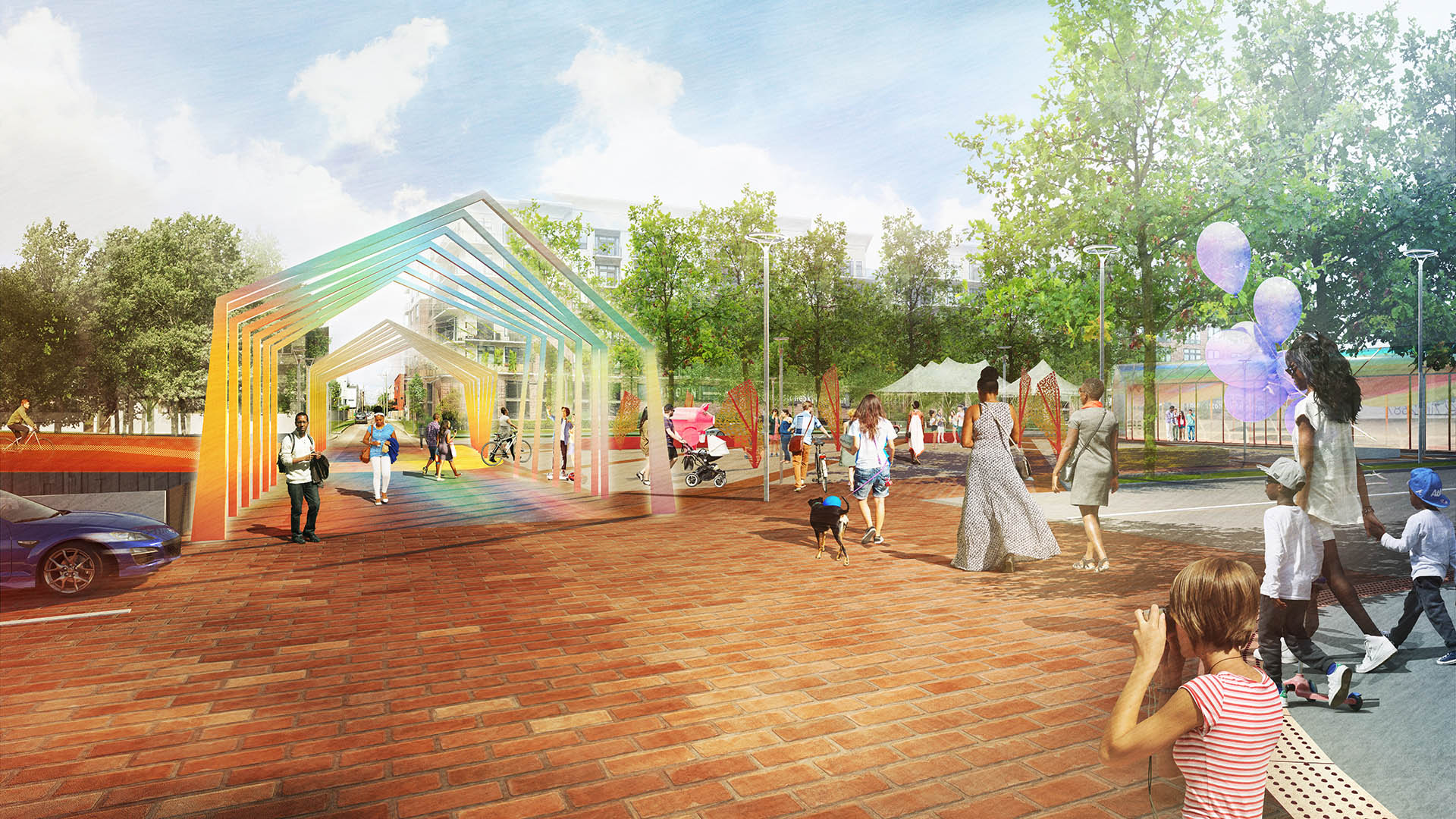
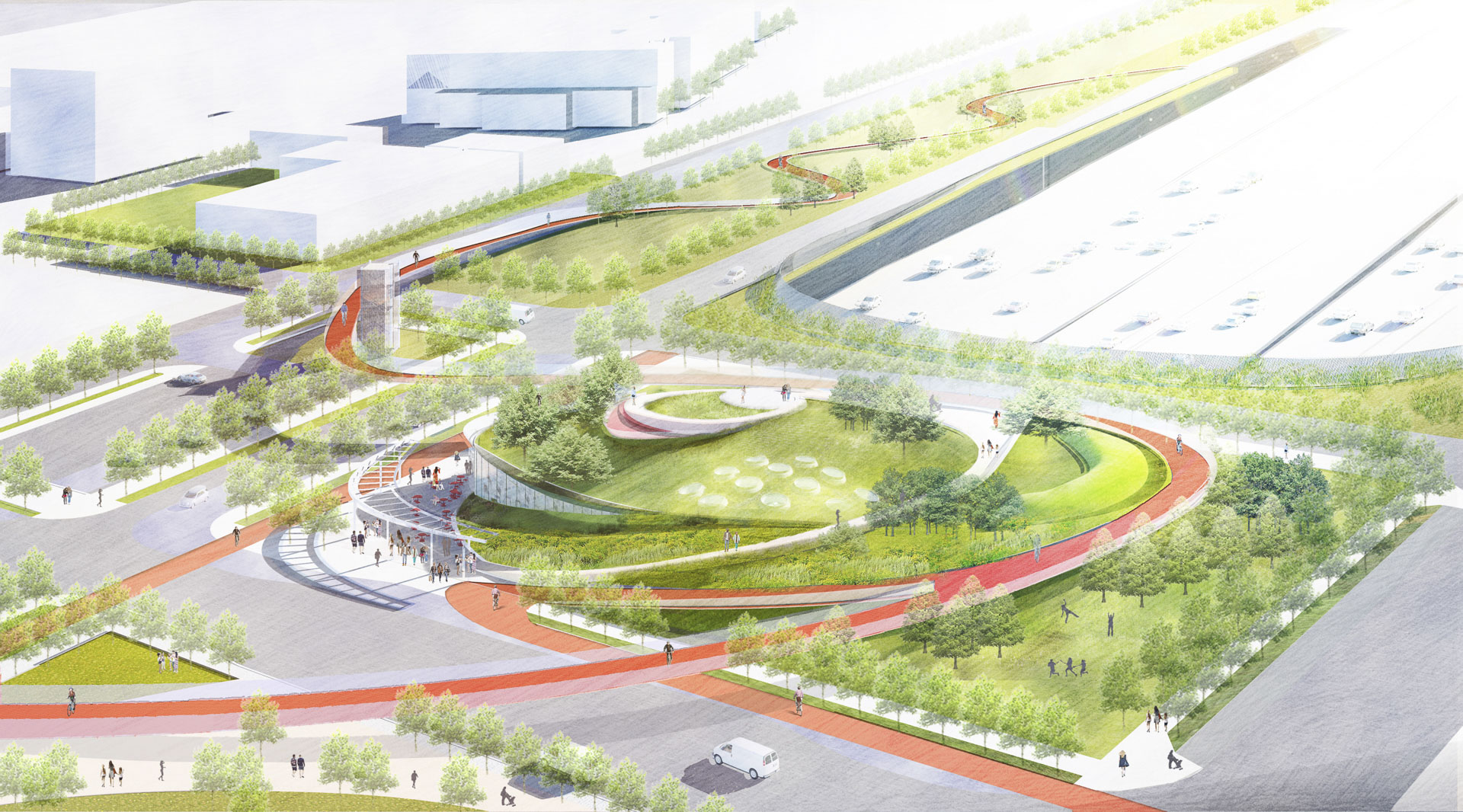
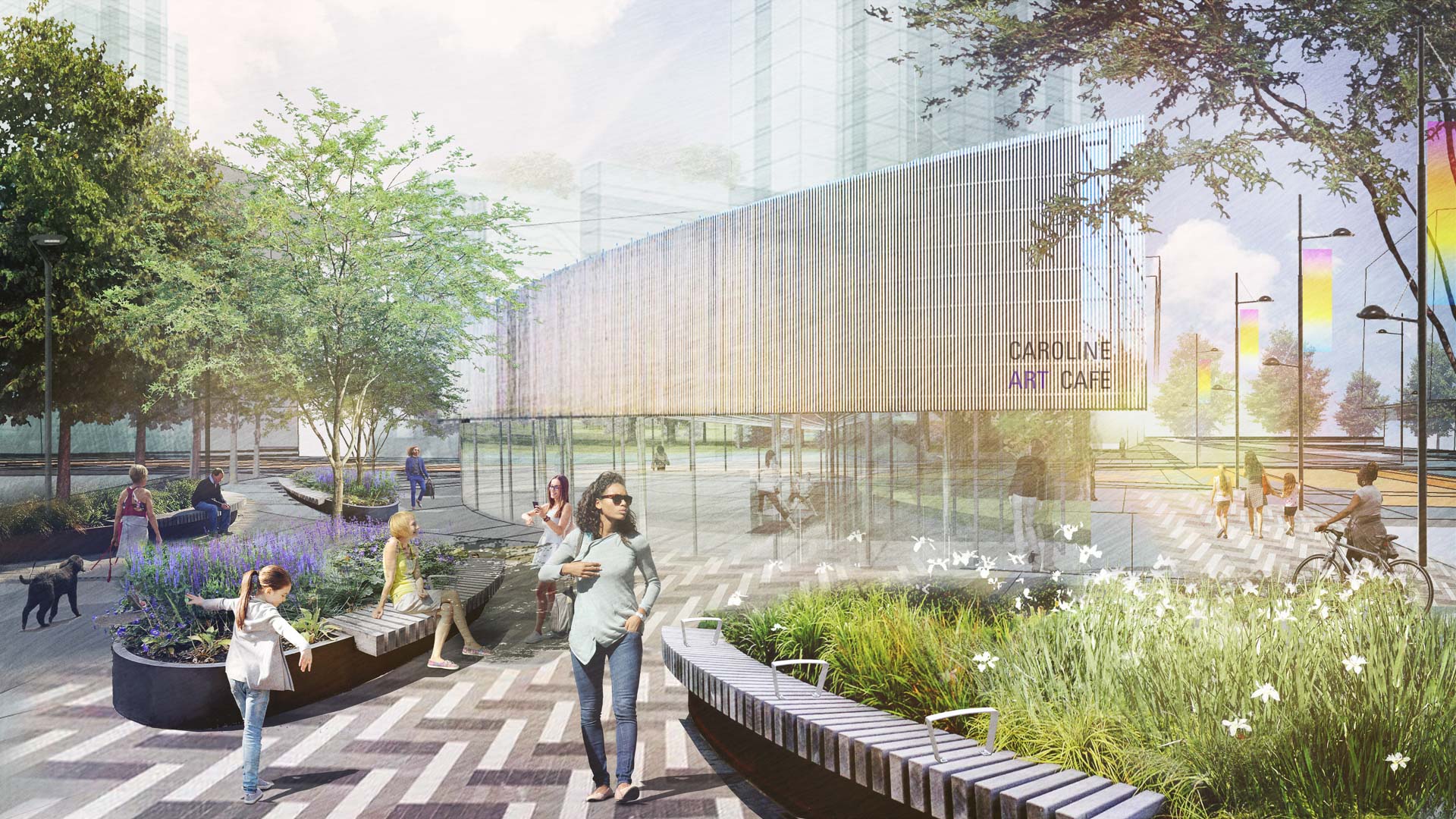
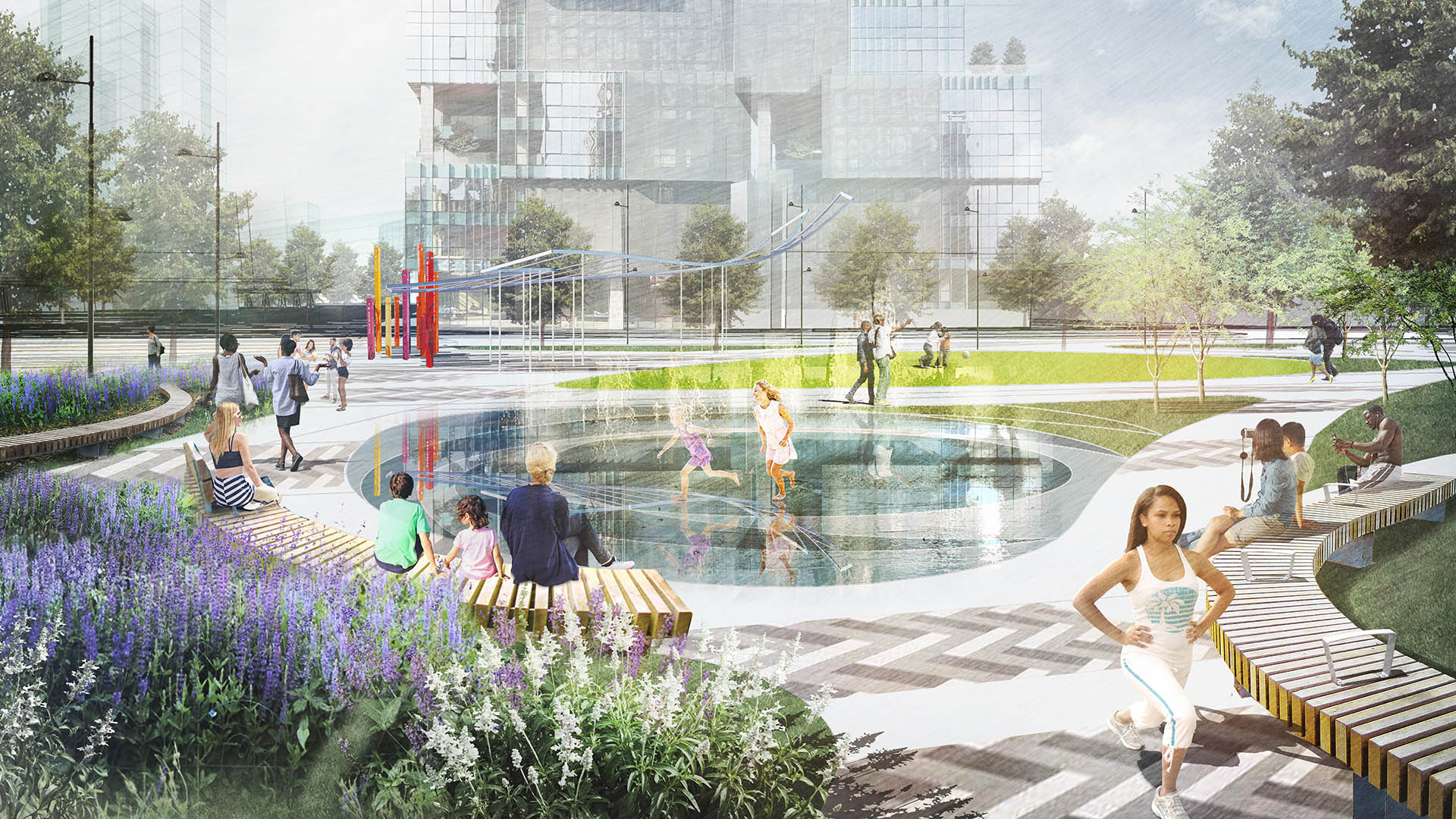

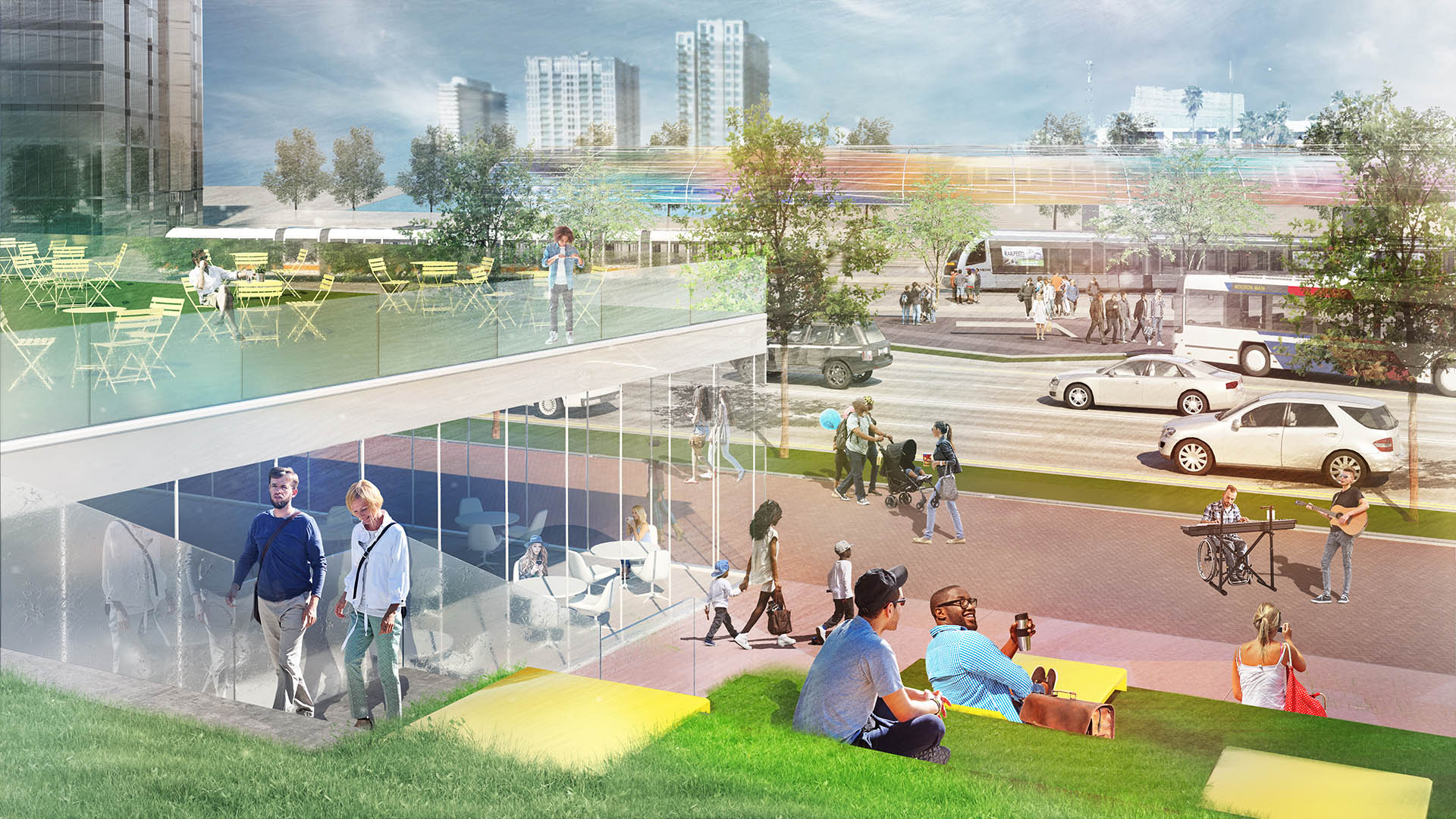
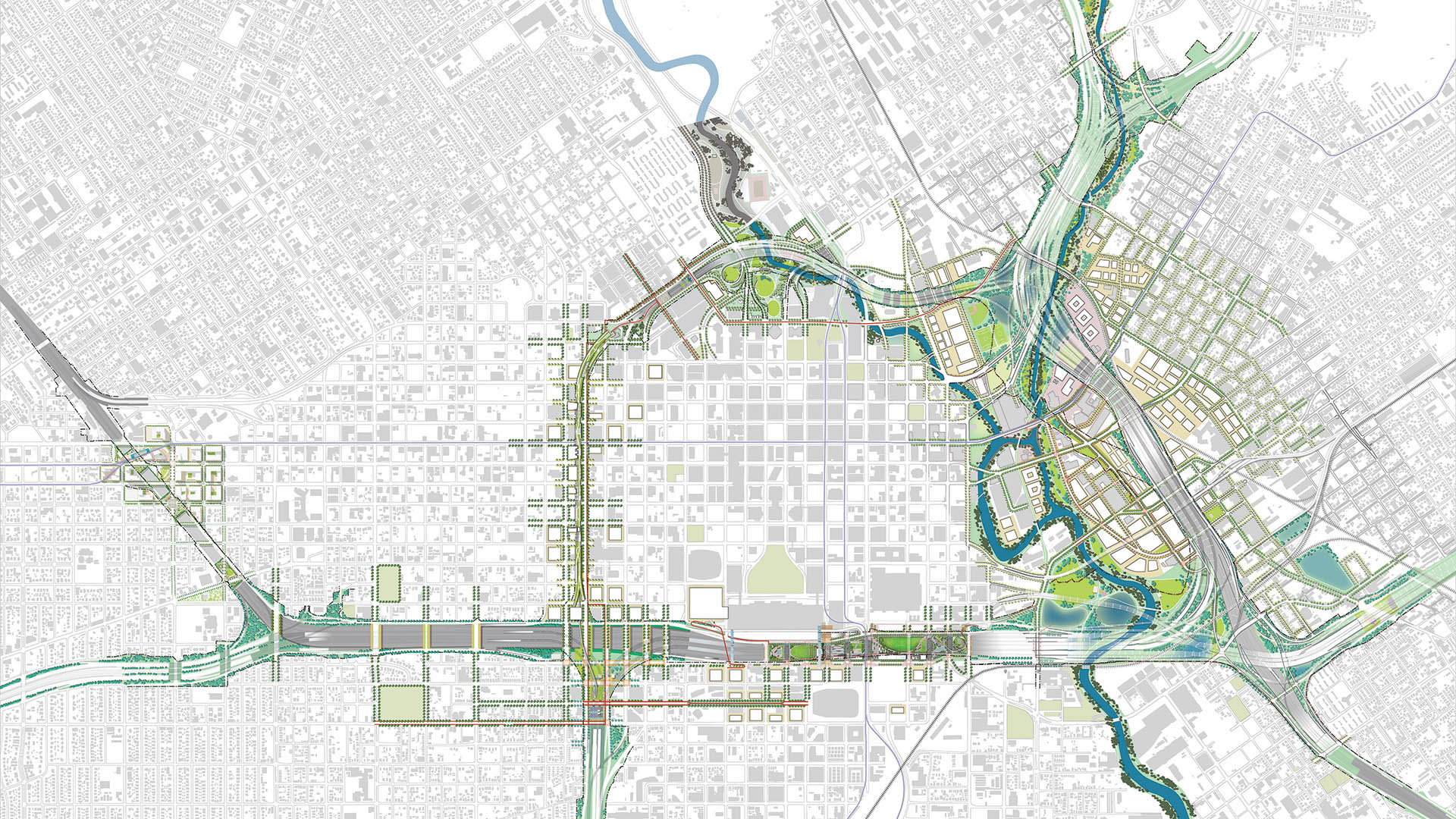
With the coming expansion and realignment of the highways around Downtown Houston, SWA identified the opportunity to enact a bold vision: a multi-use branded connectivity system that will leverage the immense reconstruction investment. SWA’s concept creates a continuous pedestrian loop over, under, and around the downtown highway system, thus redirecting the unpleasant experience and appearance of the freeway infrastructure into unique pedestrian-scale experiences while creating meaningful exchanges among neighborhoods and urban districts. The loop re-imagines the civic commons by artfully negotiating topography, land use, and natural resources. The renderings aim to demonstrate strategic investment zones that have the potential to initiate development of the Houston Green Loop. These visuals successfully served as a tool for communicating possibilities and investment value to the mayor’s stakeholder committee, which is comprised of prominent city officials, entrepreneurs, and philanthropists. As one example of a sustainable gesture along the Loop, at Frostown Crossing, the design proposal creates an outdoor amenity along a detention pond that is activated by the restoration of a historic bridge.
Atlanta Museum of Freeway Art (MOFA)
The freeway is an integral part of the open space of the American City, a series of infrastructural systems that affect the spatial characteristics of our natural and cultural landscapes. The Atlanta Connector Transformation Project is a collaborative effort between the City of Atlanta, Georgia Department of Transportation, Downtown and Midtown to improve the ...
ARTIC – Anaheim Regional Transportation Intermodal Center
ARTIC, the new 16-acre Anaheim Regional Transportation Intermodal Center in Southern California, forms a seamless gateway from Anaheim to all of Orange County, spurring economic growth and community redevelopment throughout the region. The landscape design establishes a unique and identifiable image for the ARTIC Mixed-Use District by complementing the site’s ...
Culver City Medians
The Culver Boulevard Median Park has worn many hats over time, from railroad right-of-way to freeway on-ramp to bike and pedestrian conveyance. Today the Median Park is being asked to do more. Introducing below-grade stormwater management, SWA is working with the community to finesse an intricate network of stormwater, biodiversity, traffic, and program. The p...
Xili Lake Greenway
Encircling one of Shenzhen’s four major reservoirs, Xili Lake Greenway is the third segment of the 200-kilometer Kunpeng Trail to be completed under the city’s Mountain-Sea-City corridor initiative. Navigating over 16 kilometers of diverse terrain across upland, densely forested, and urban landscapes, the trail connects Xili Science and Education City, 18 tech...