

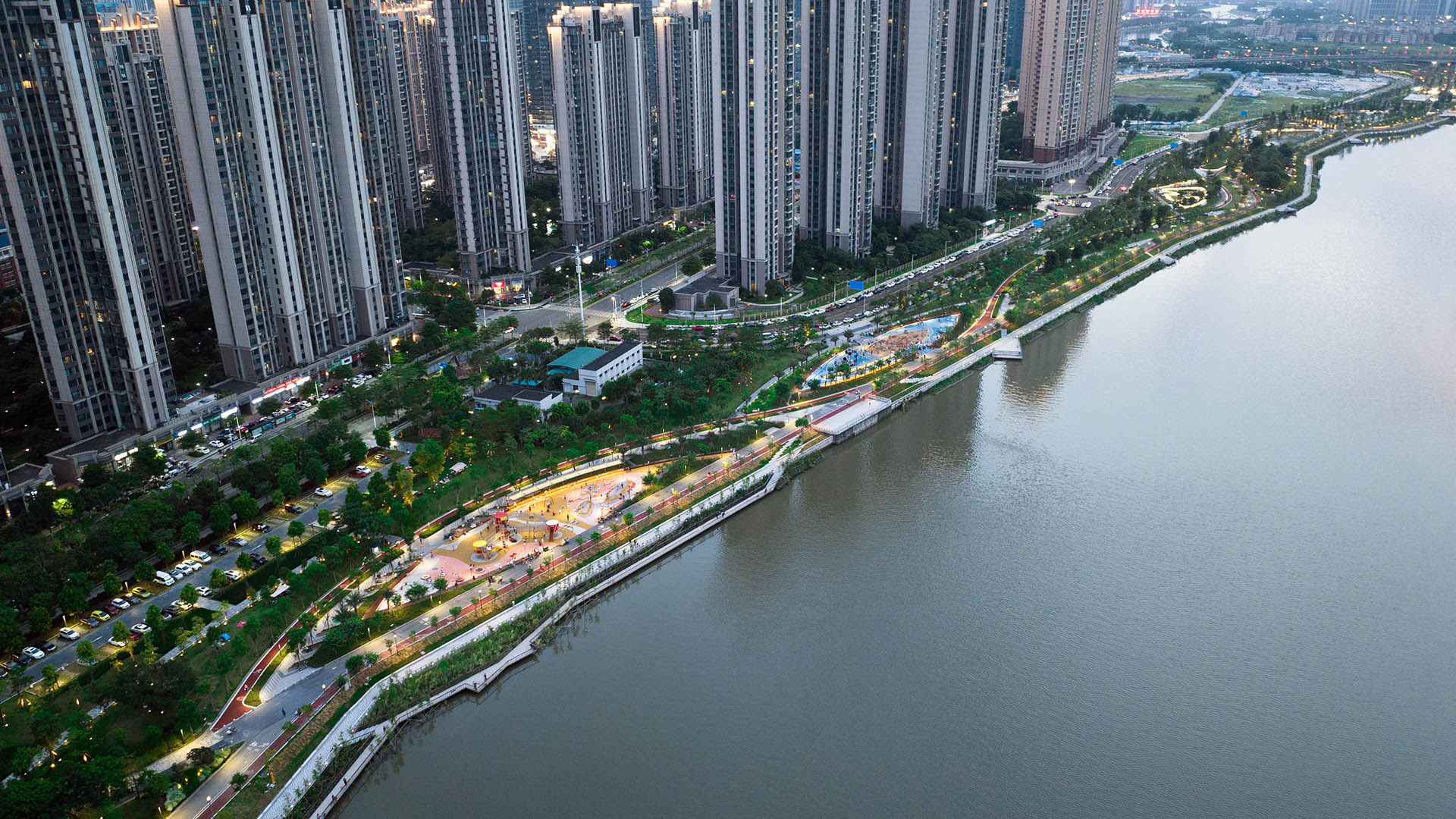
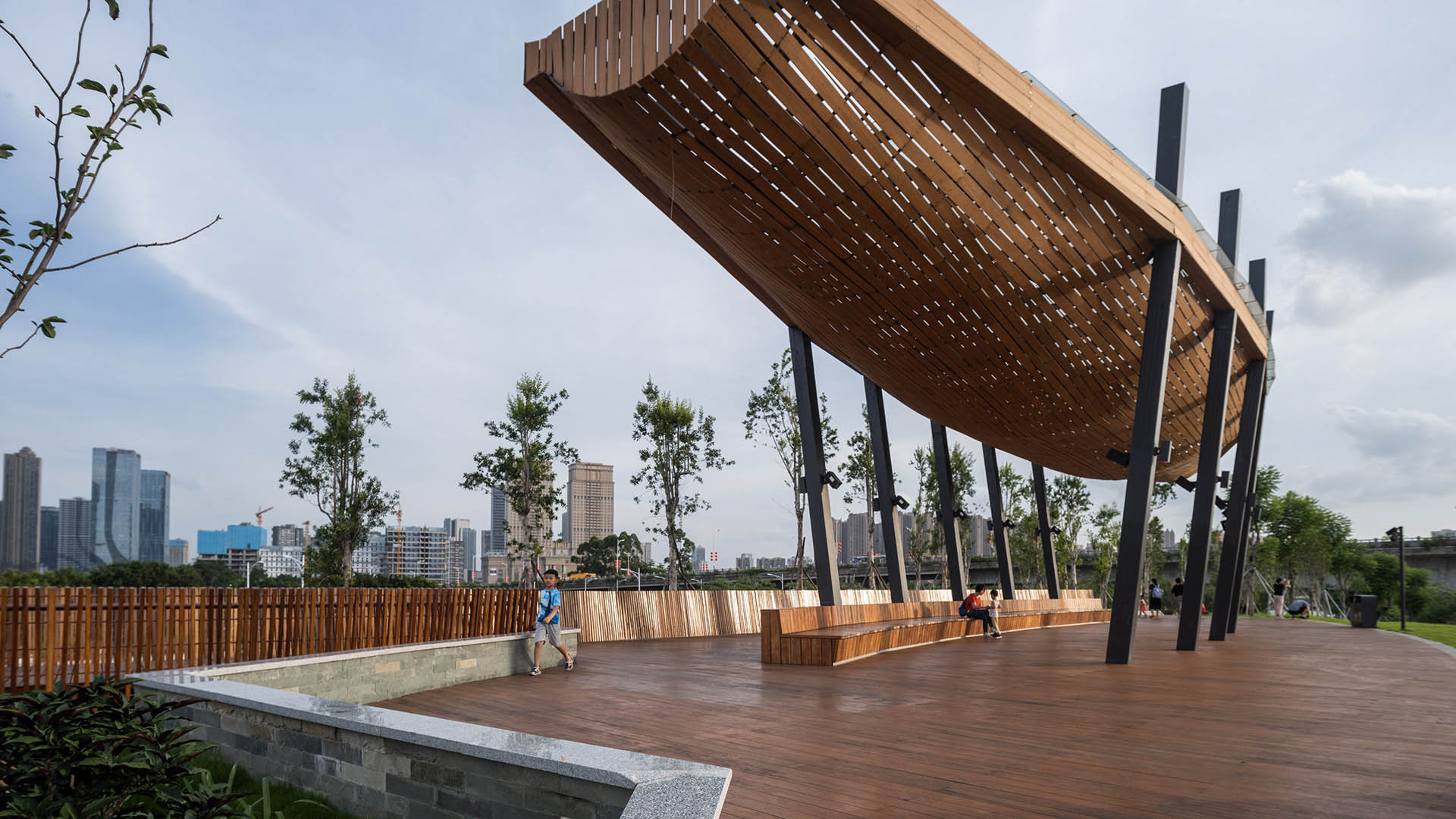
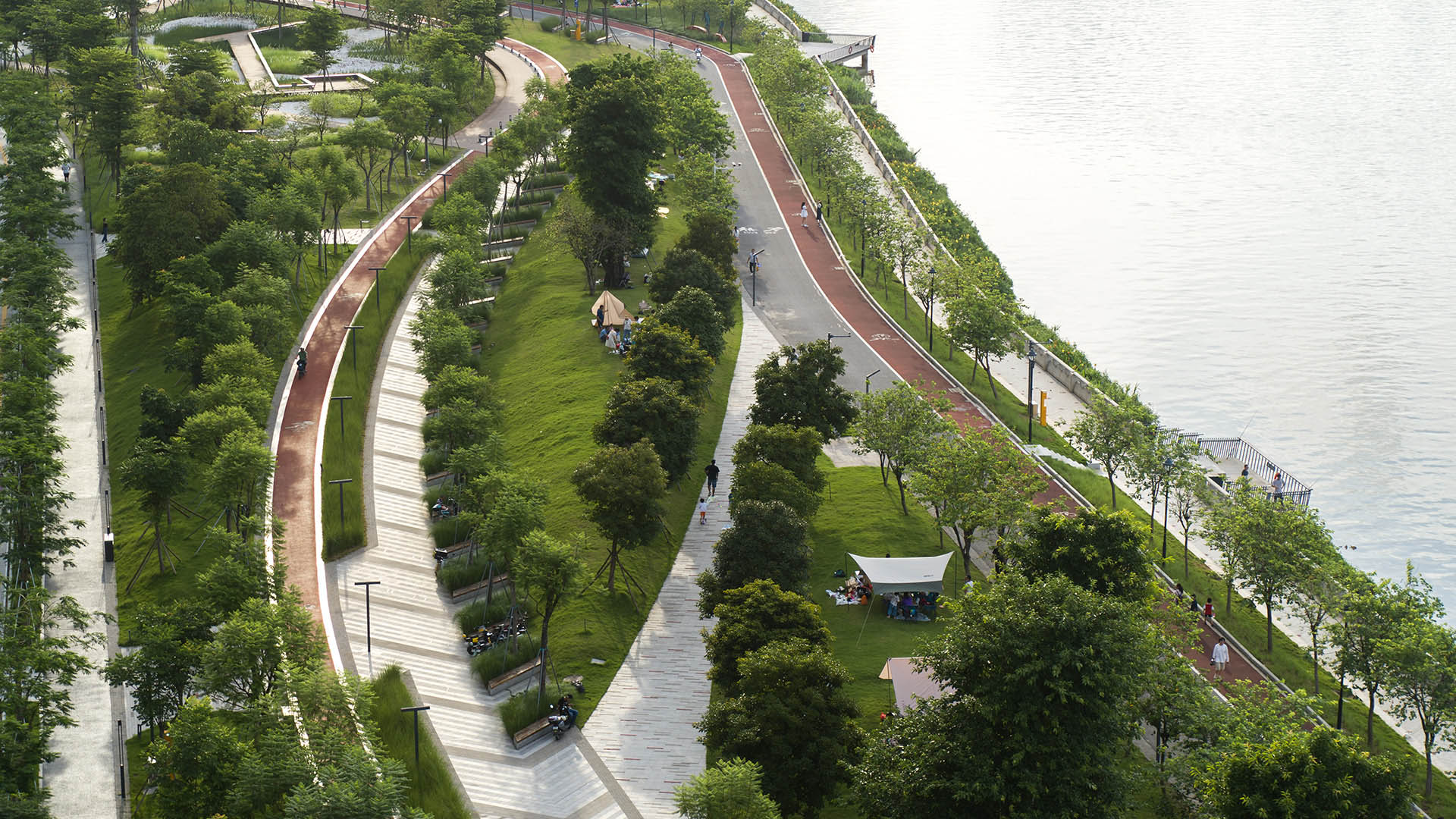
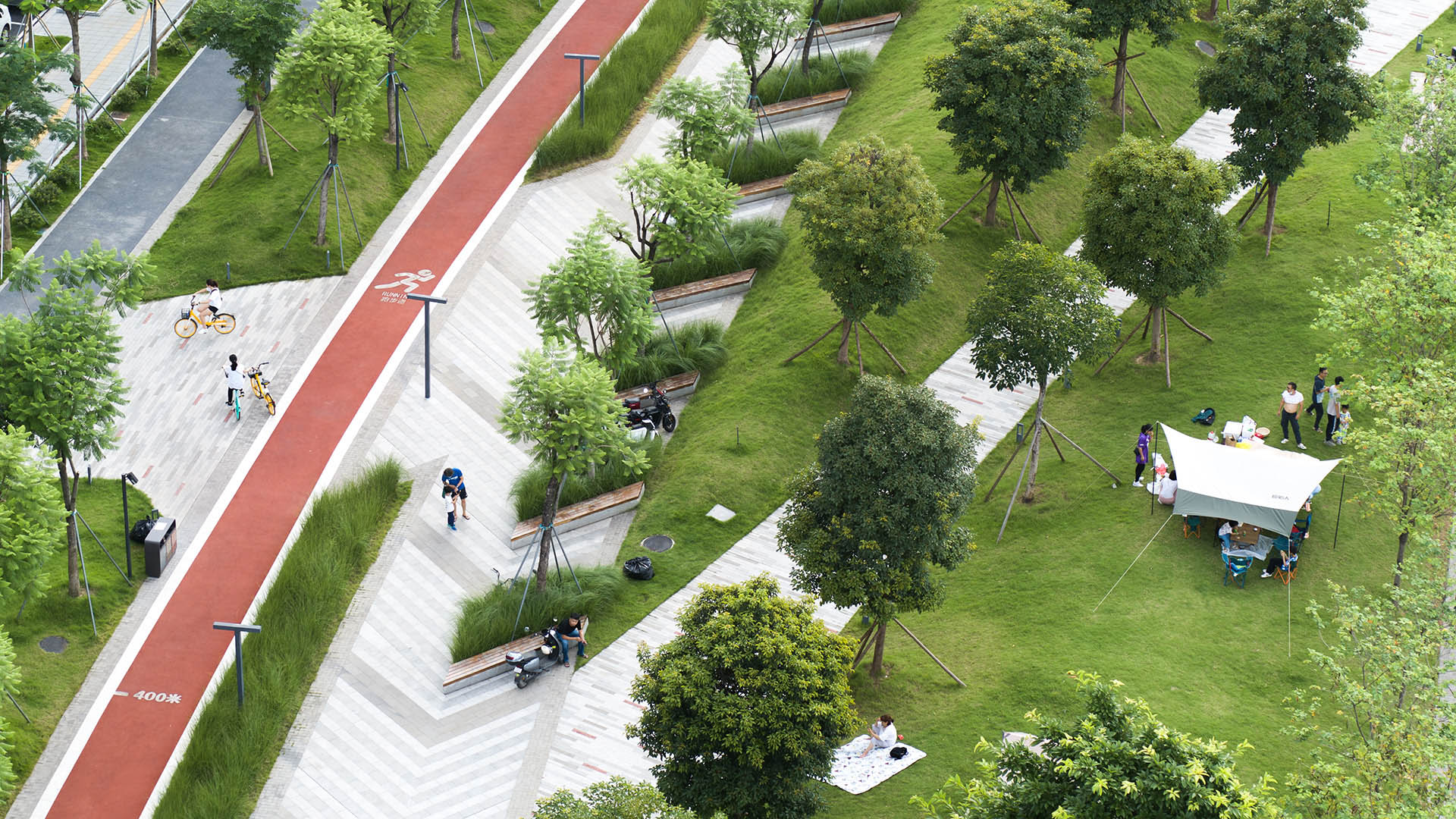
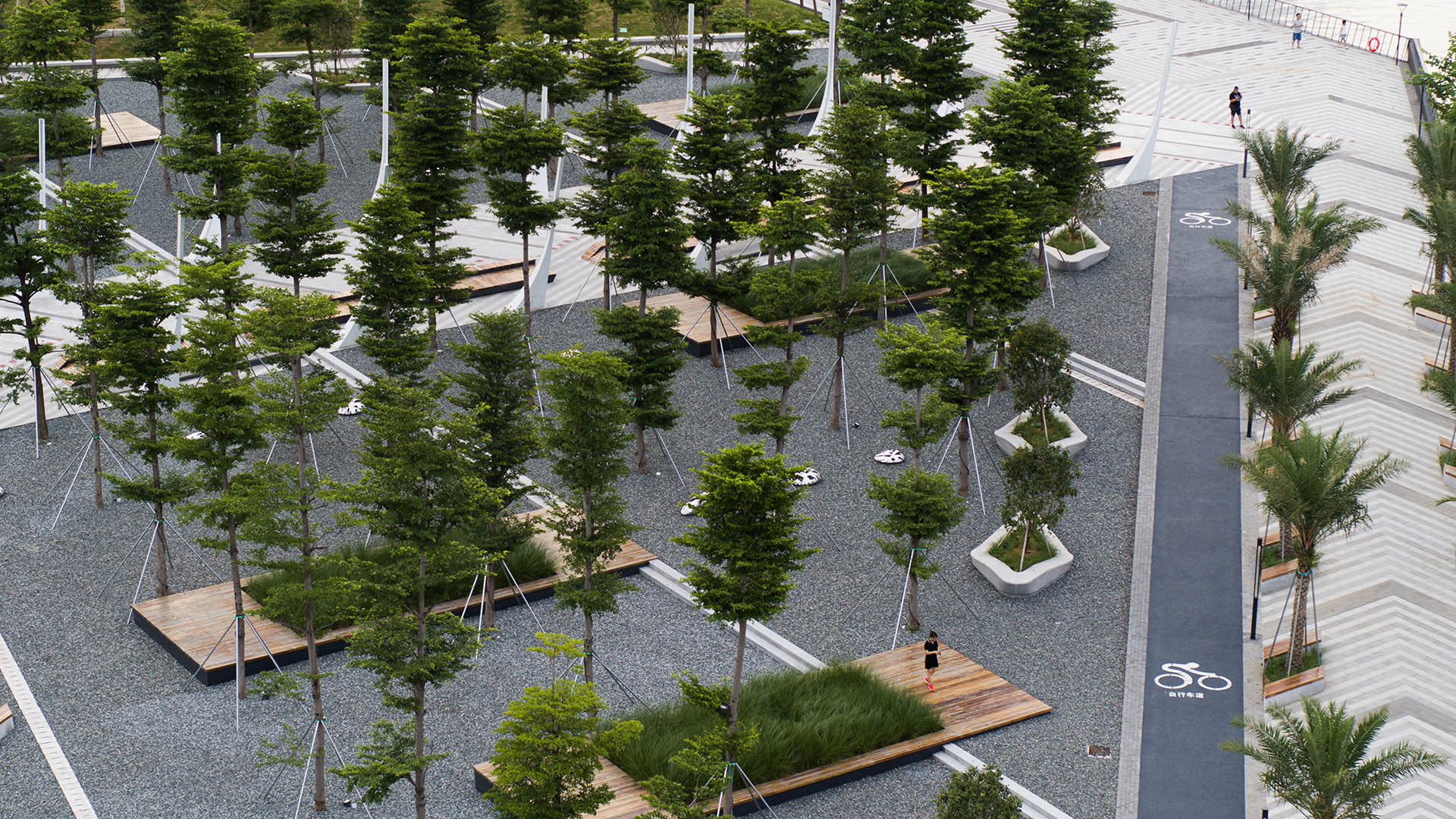
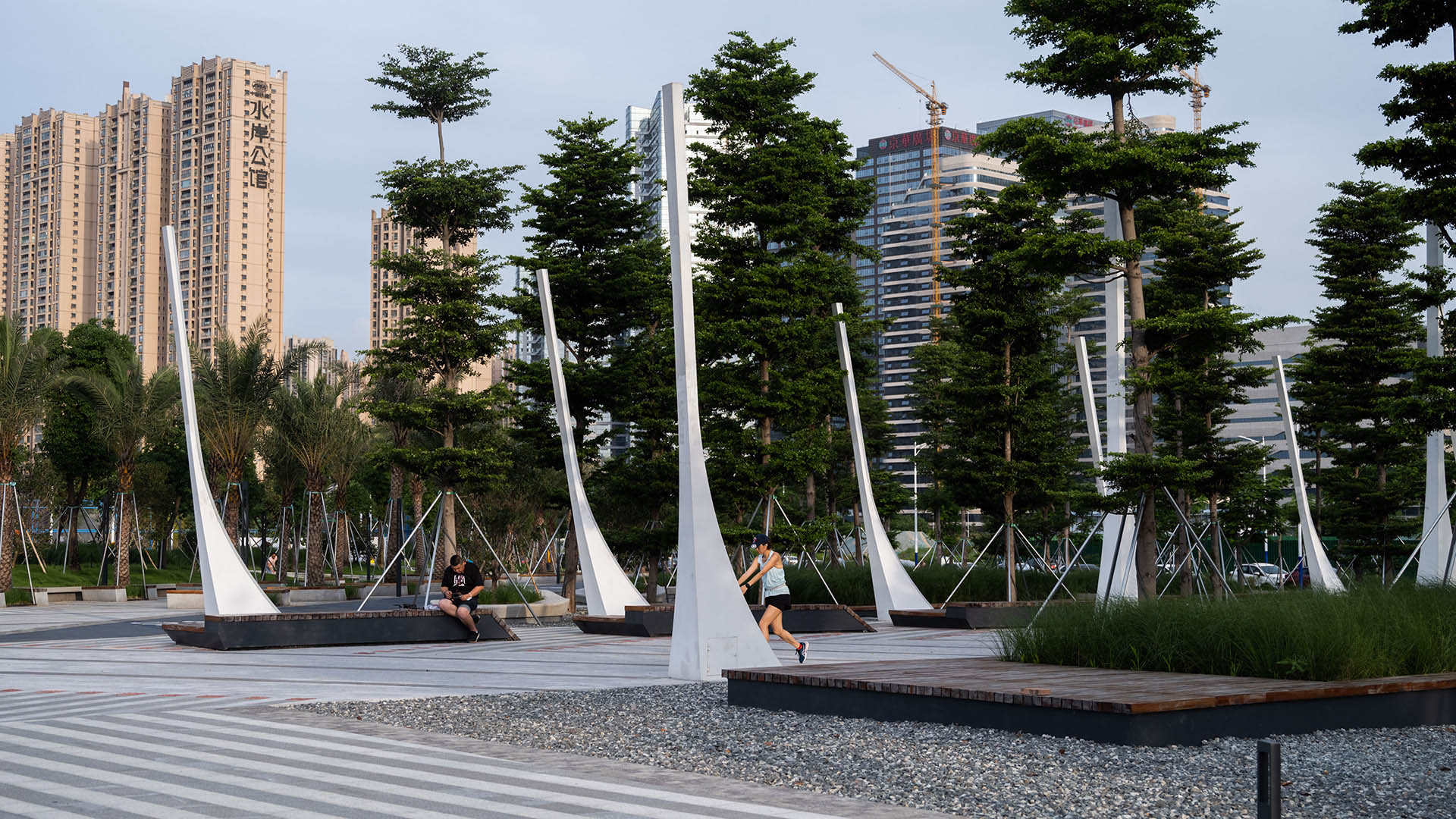
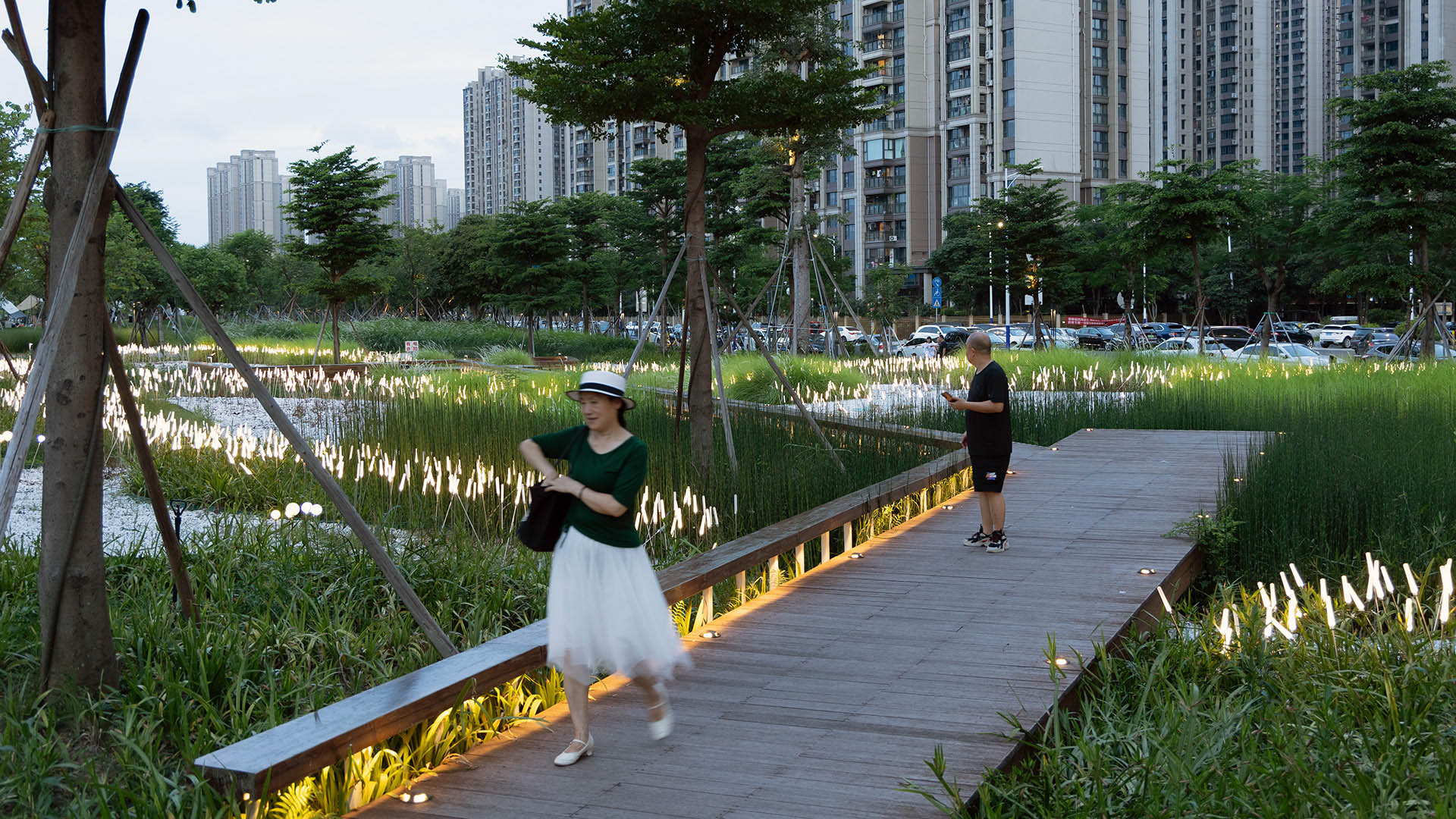
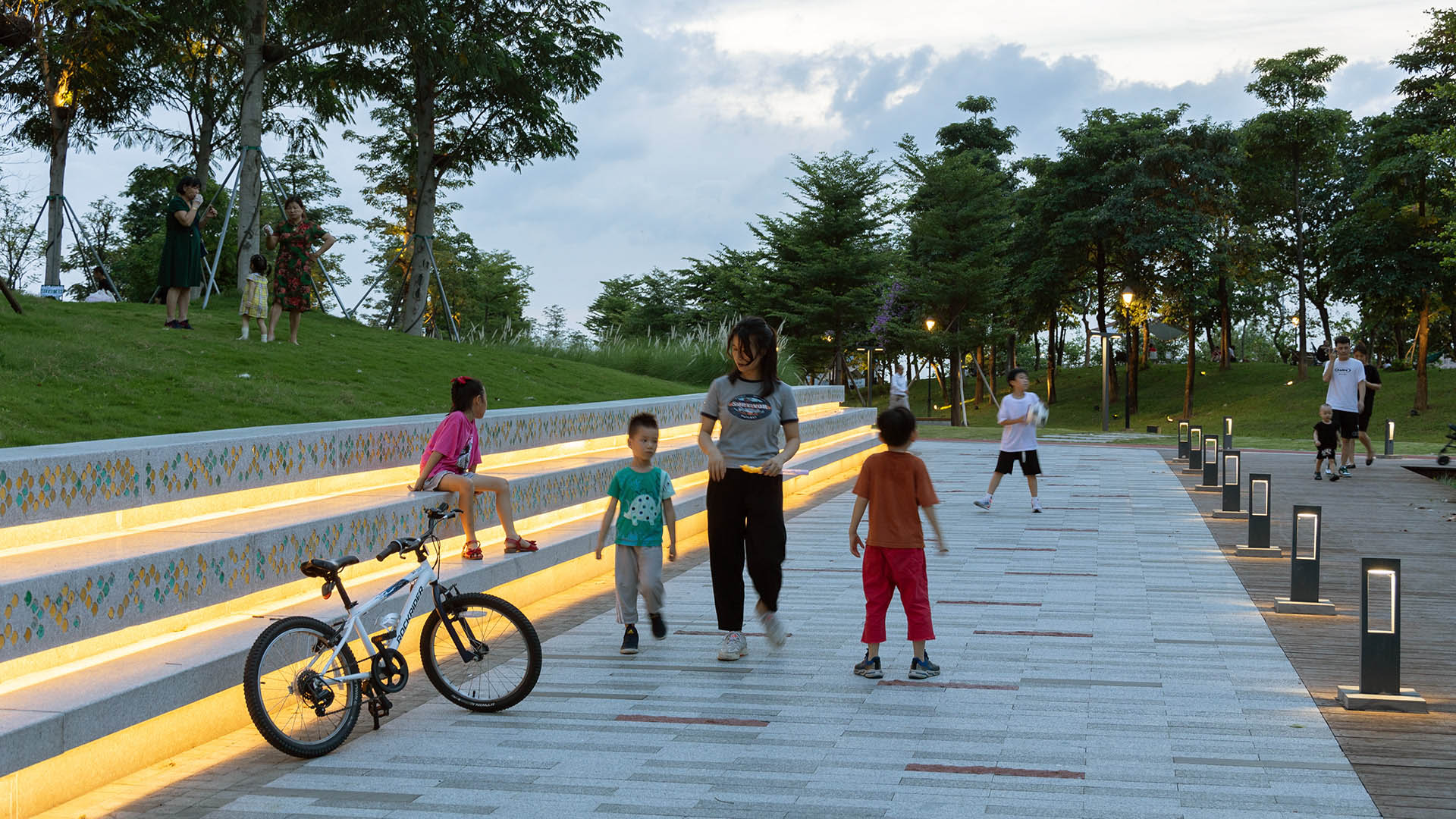
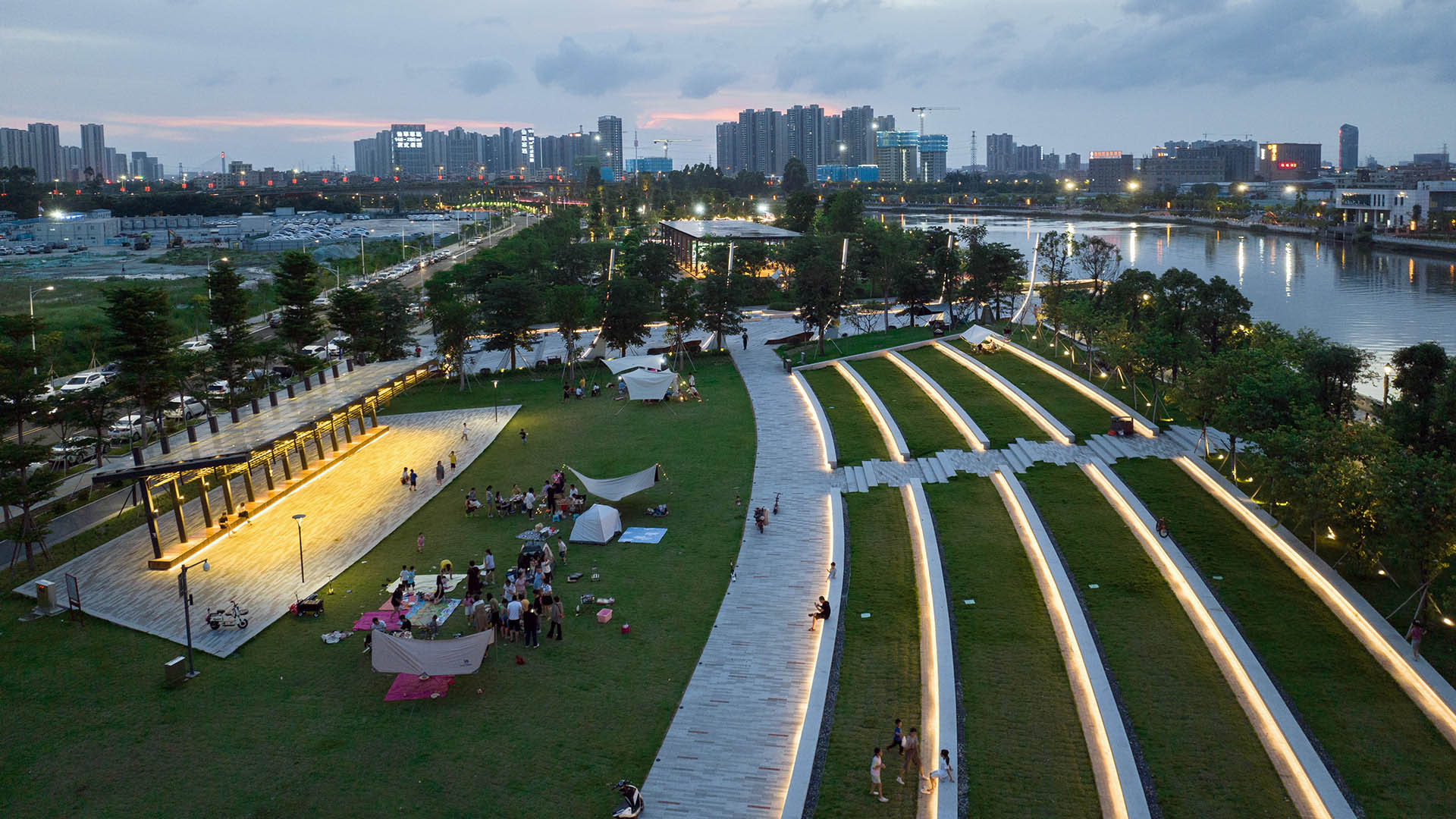
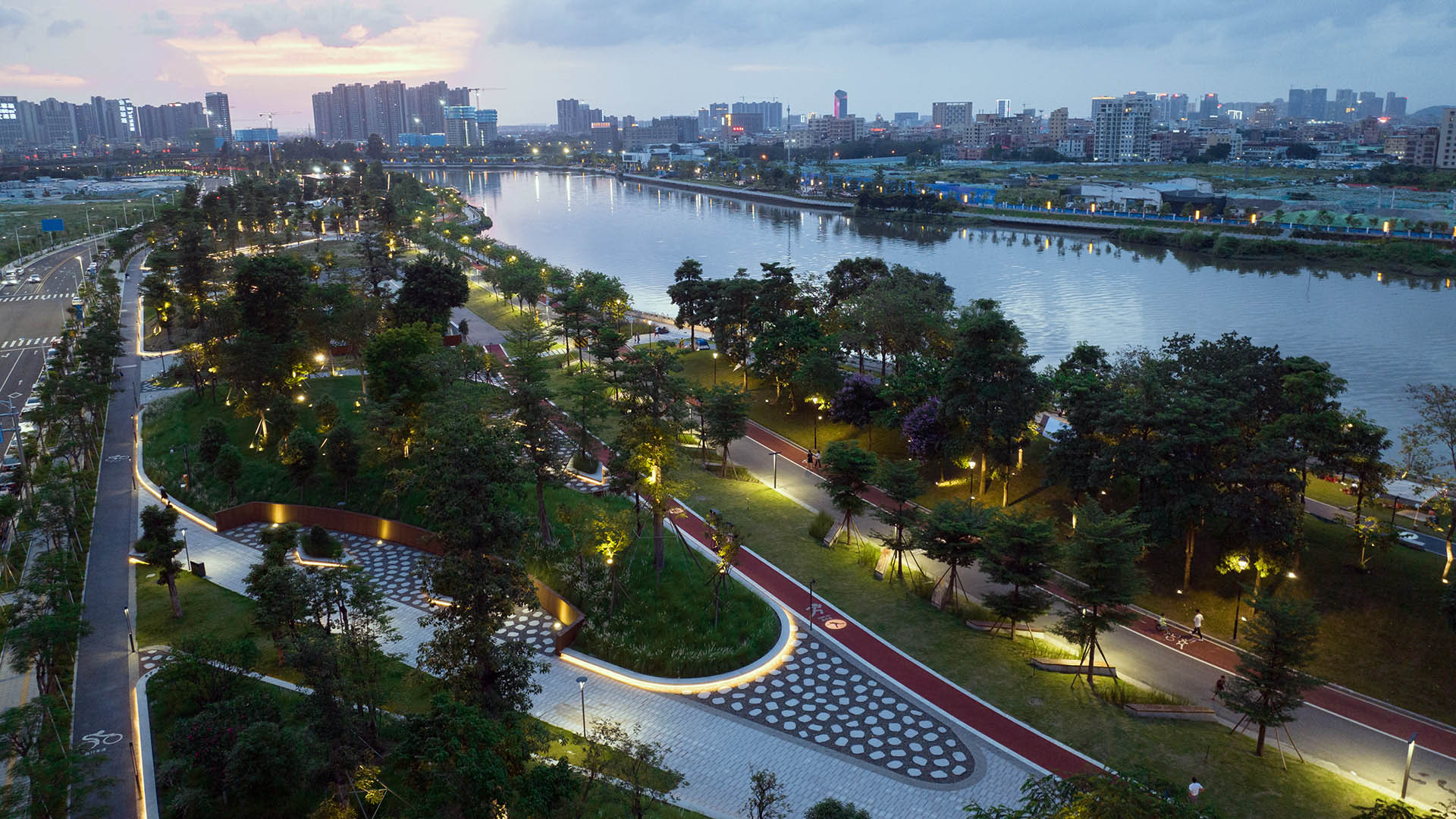
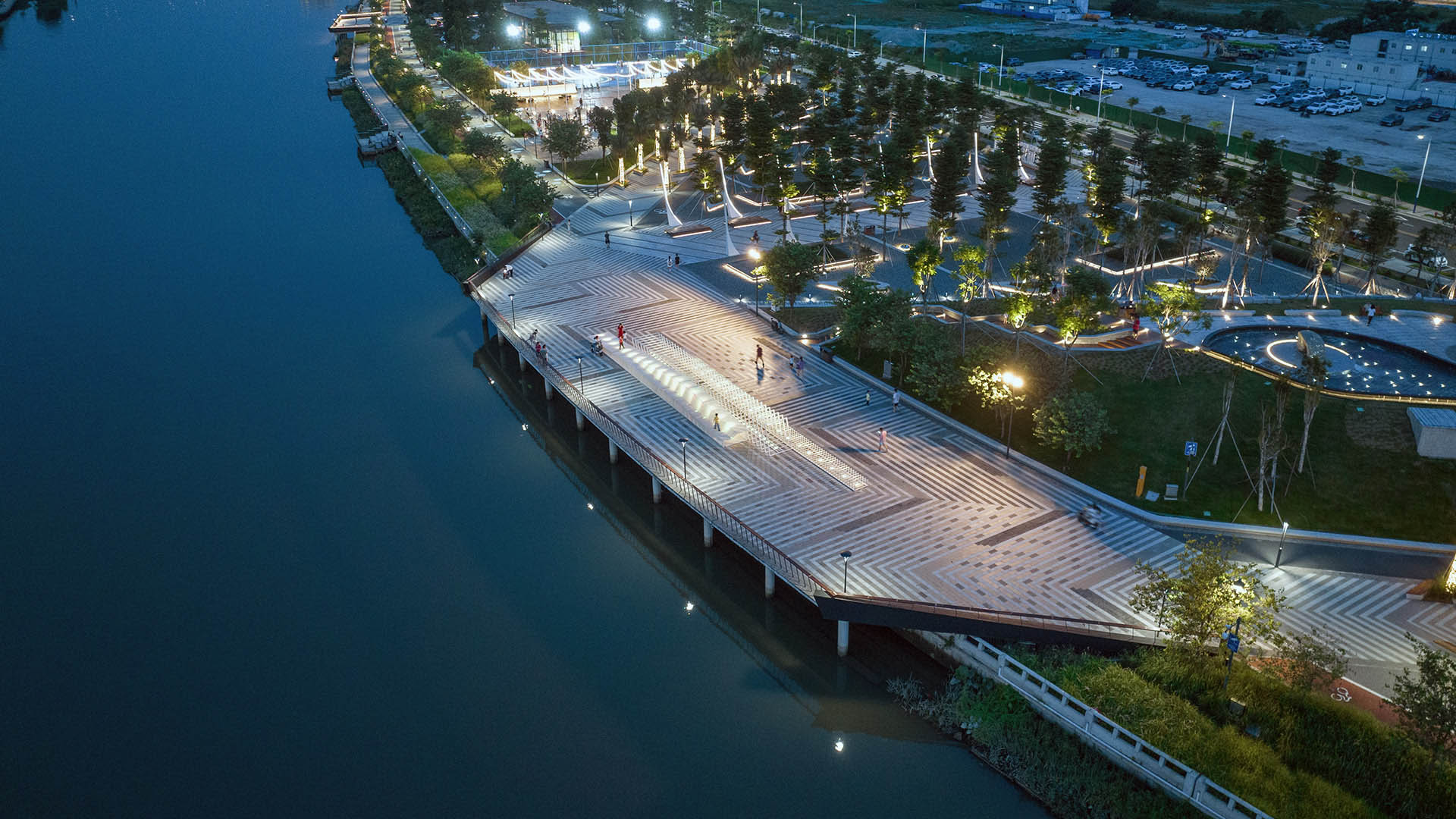
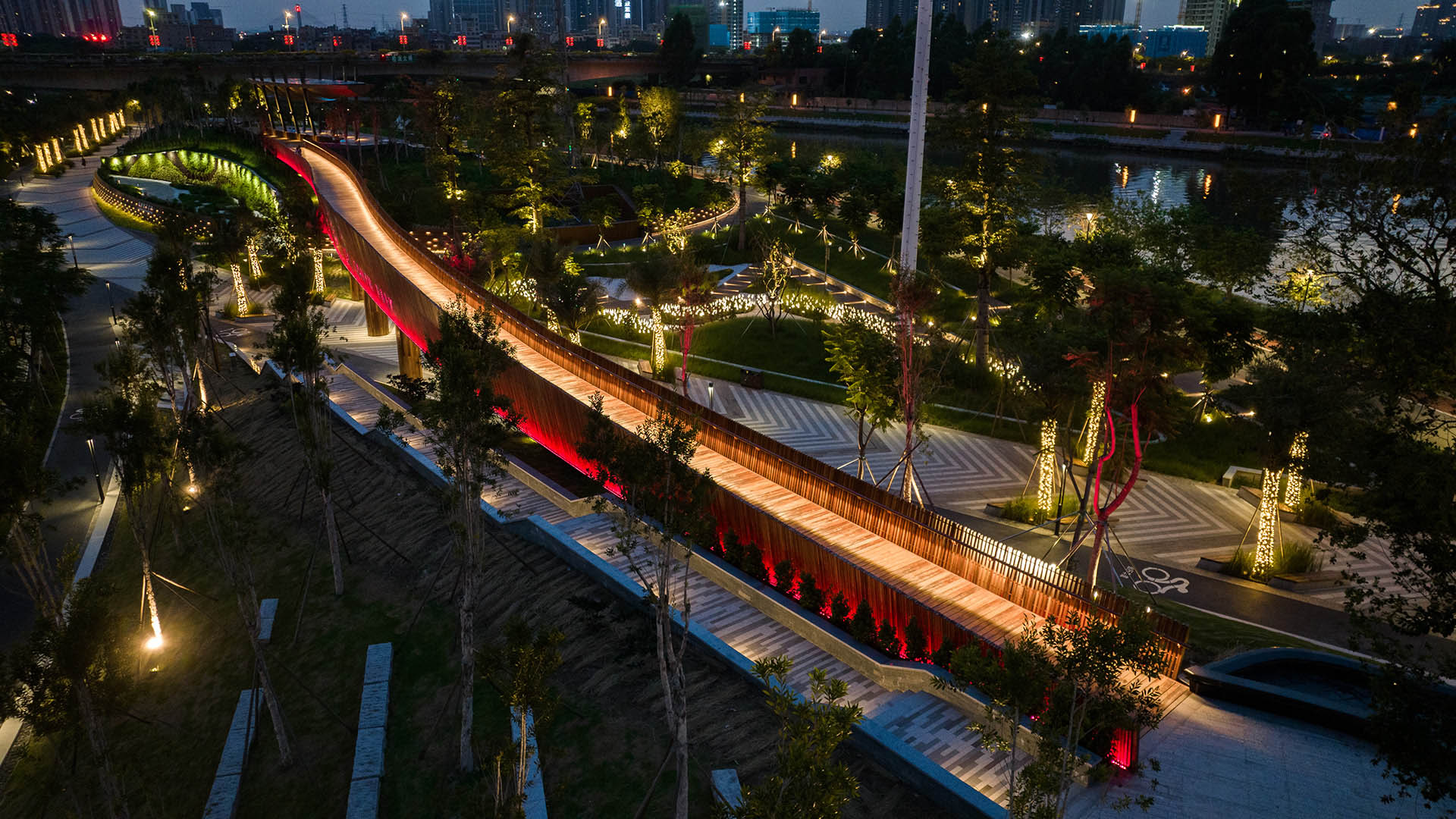
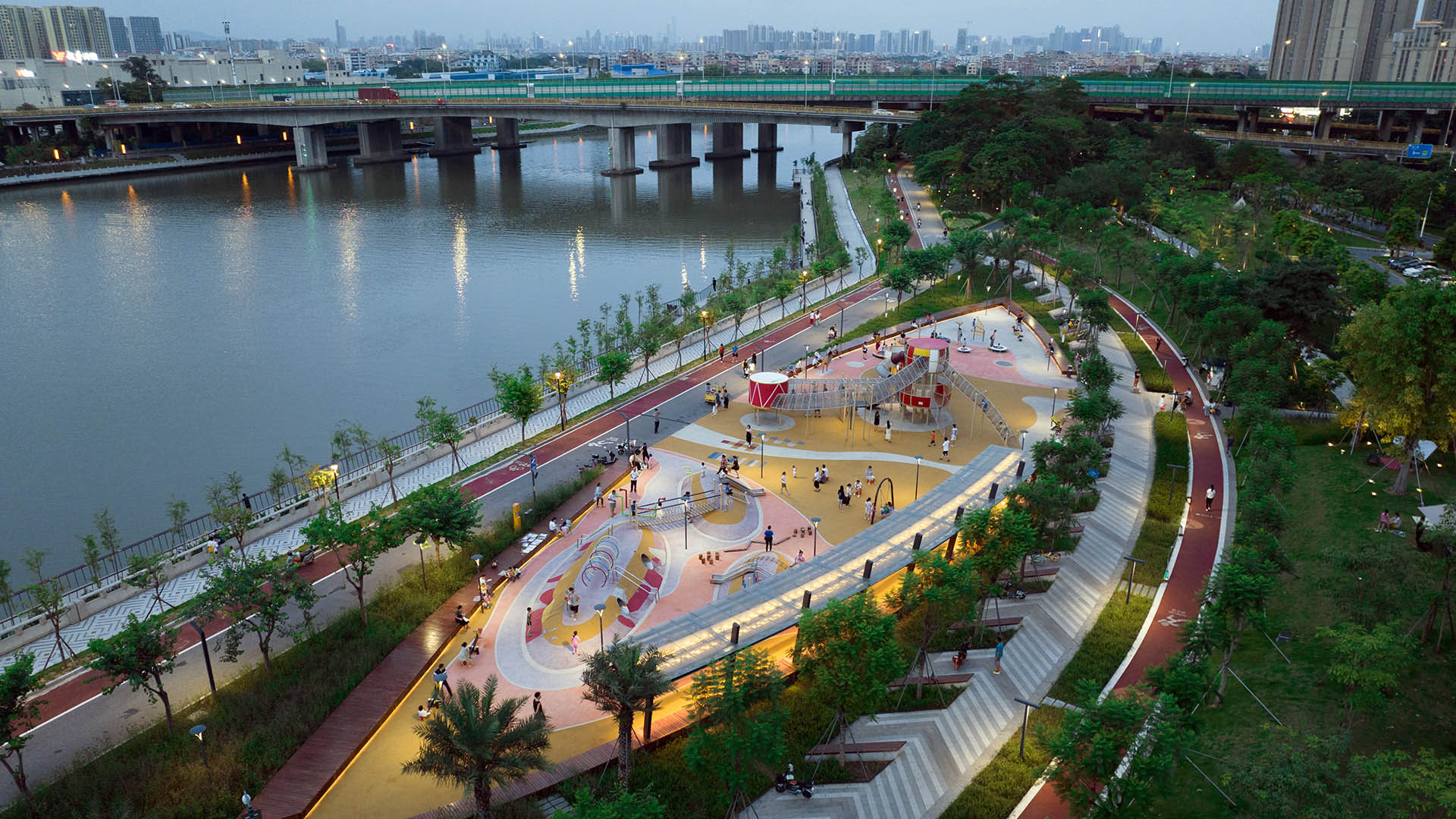
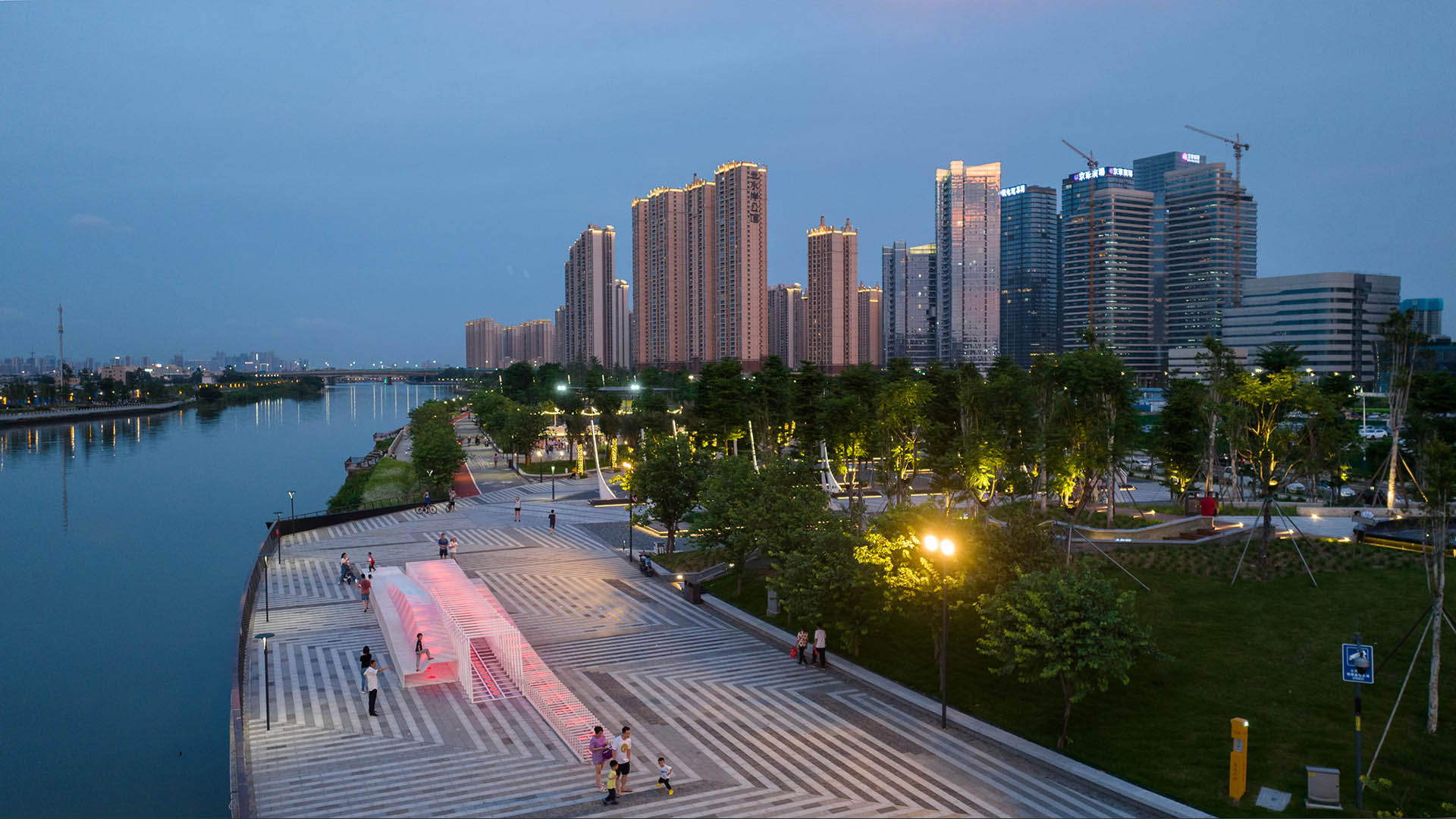
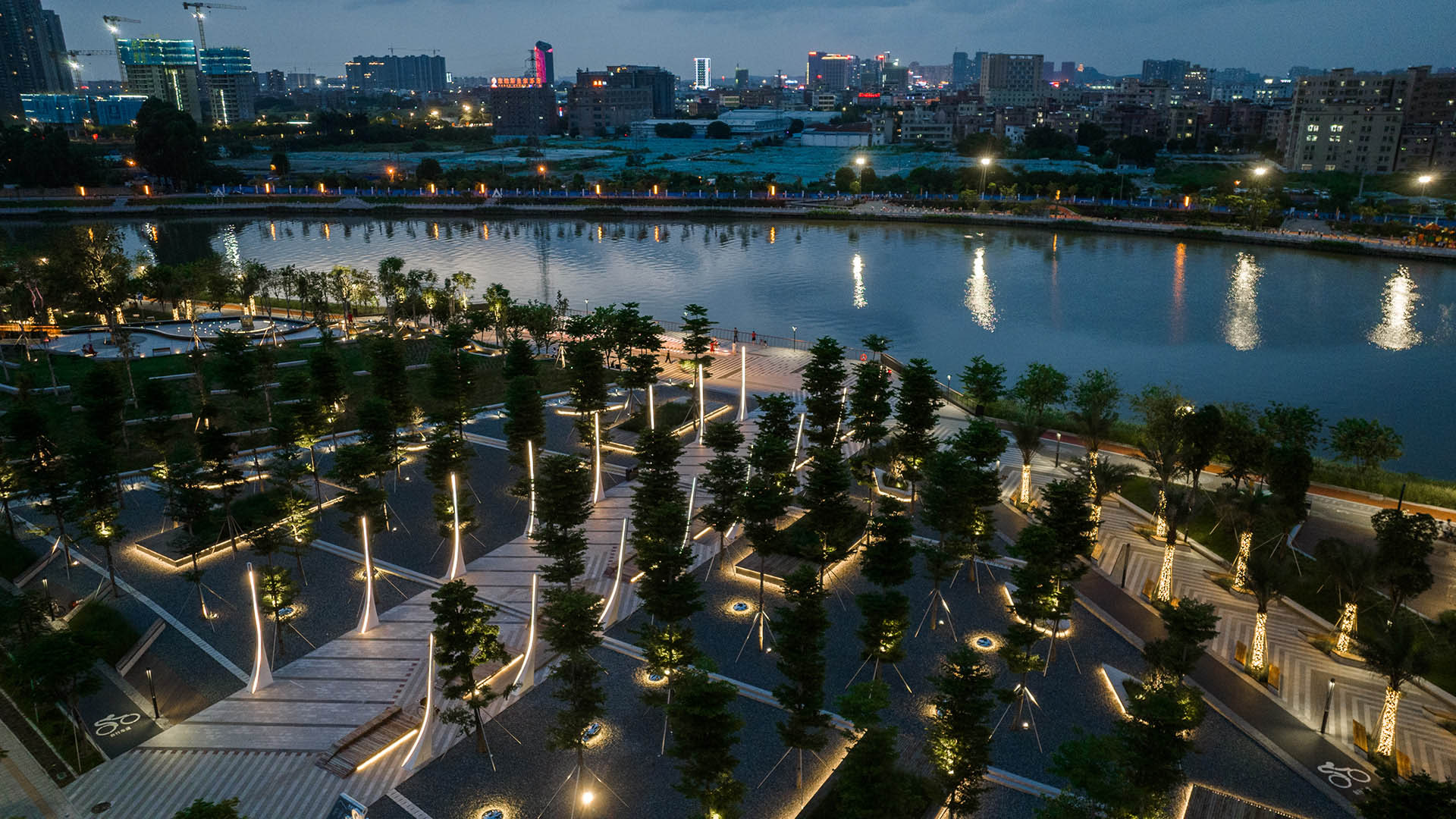
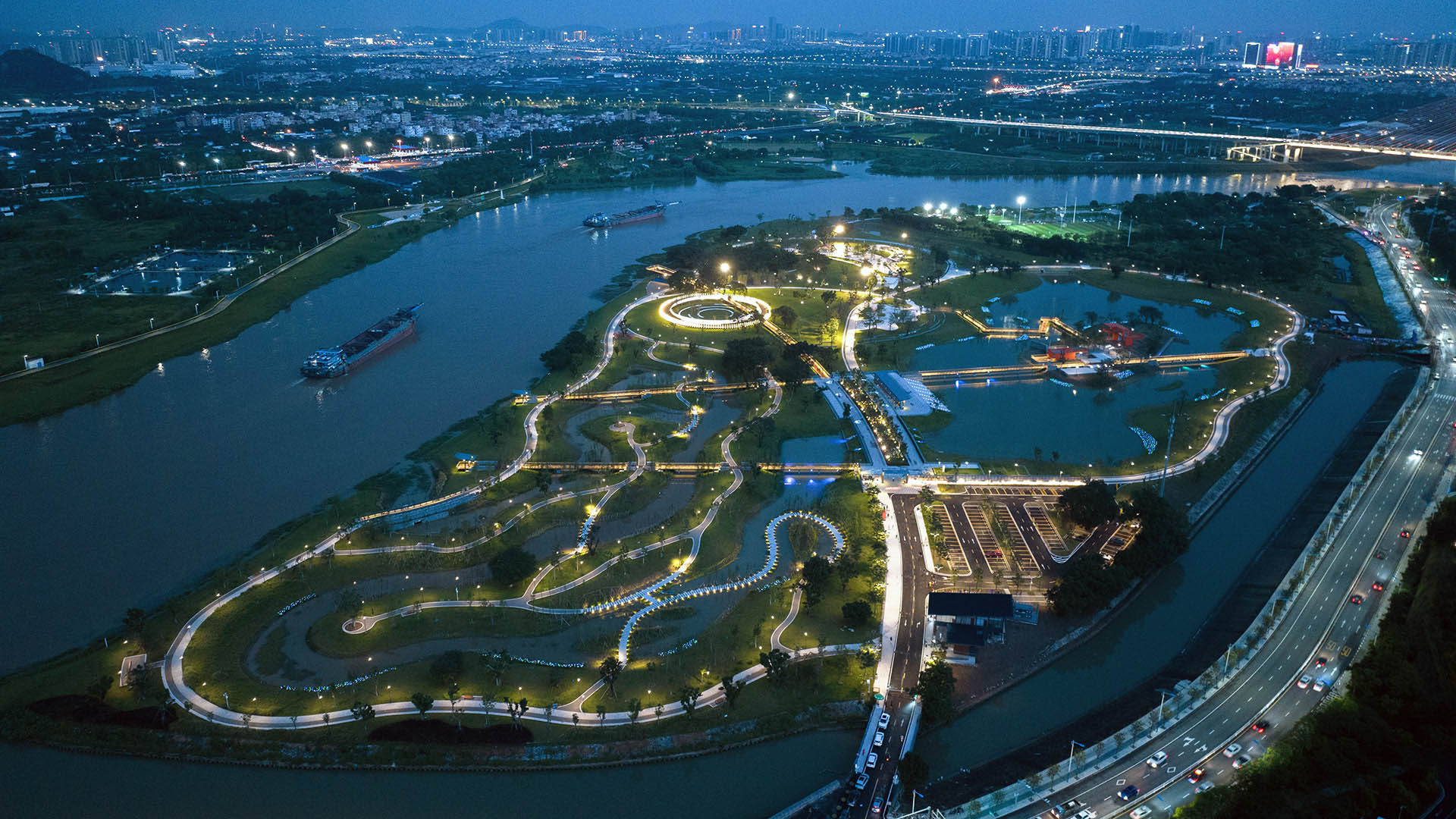
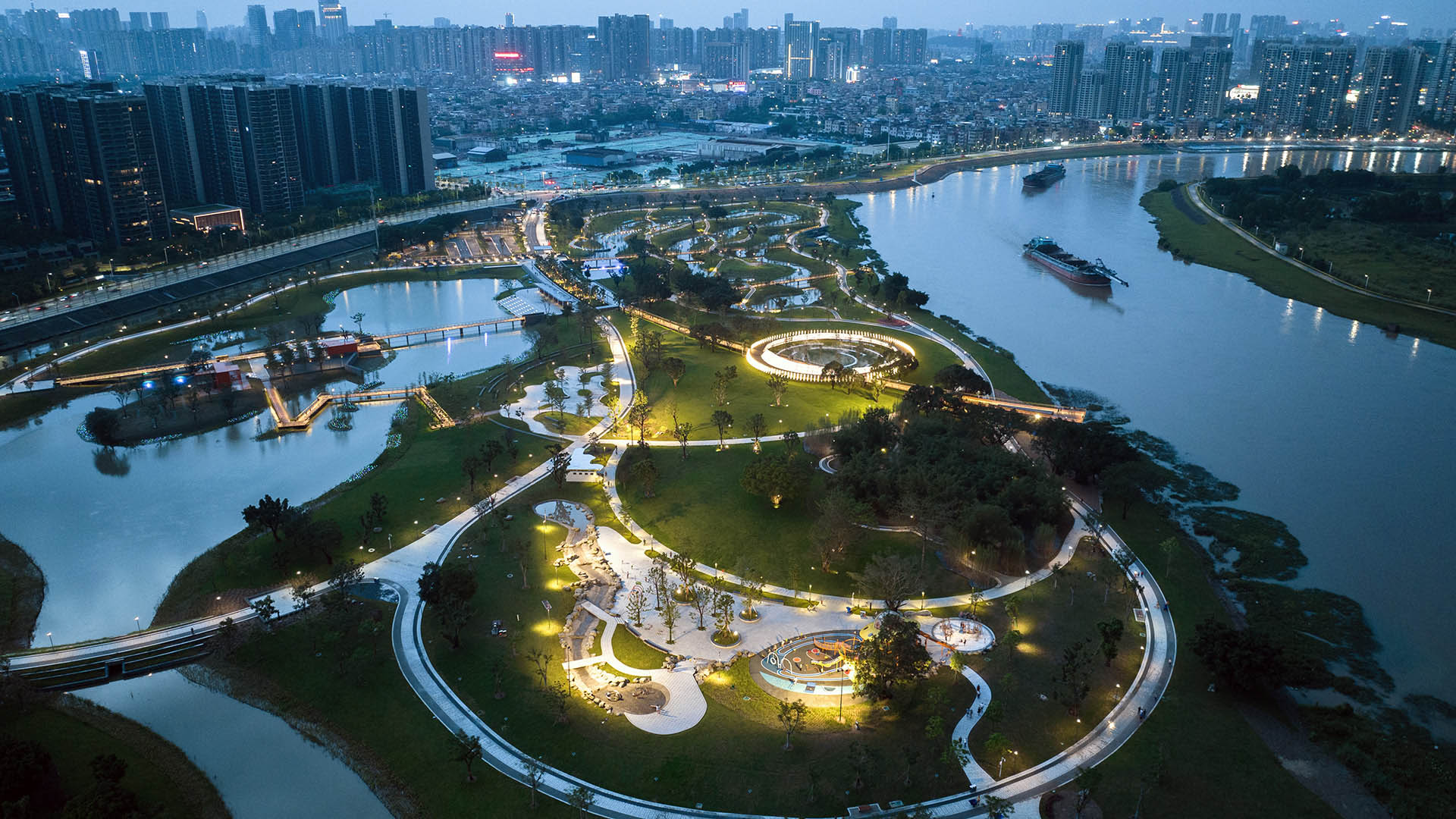
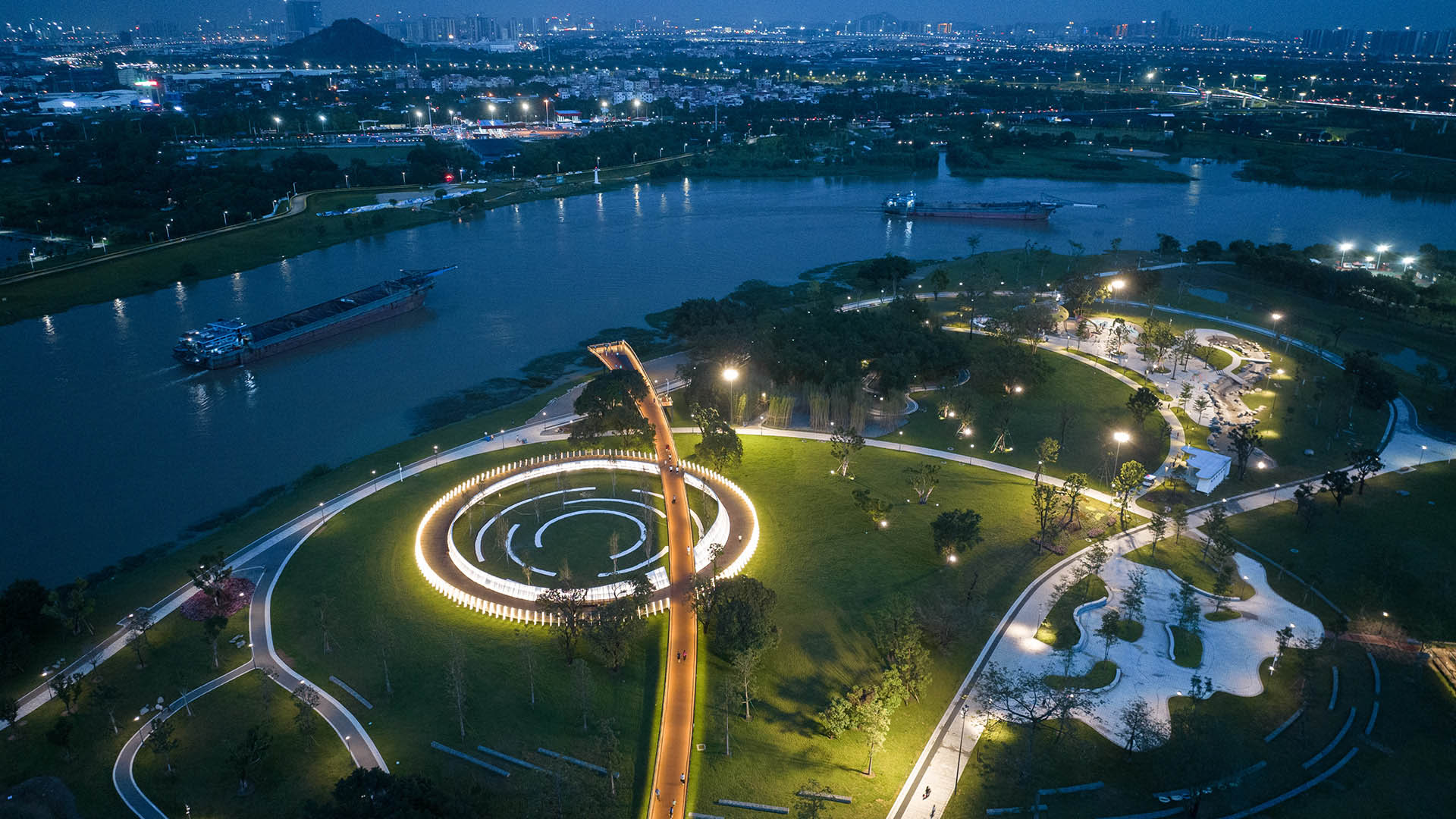
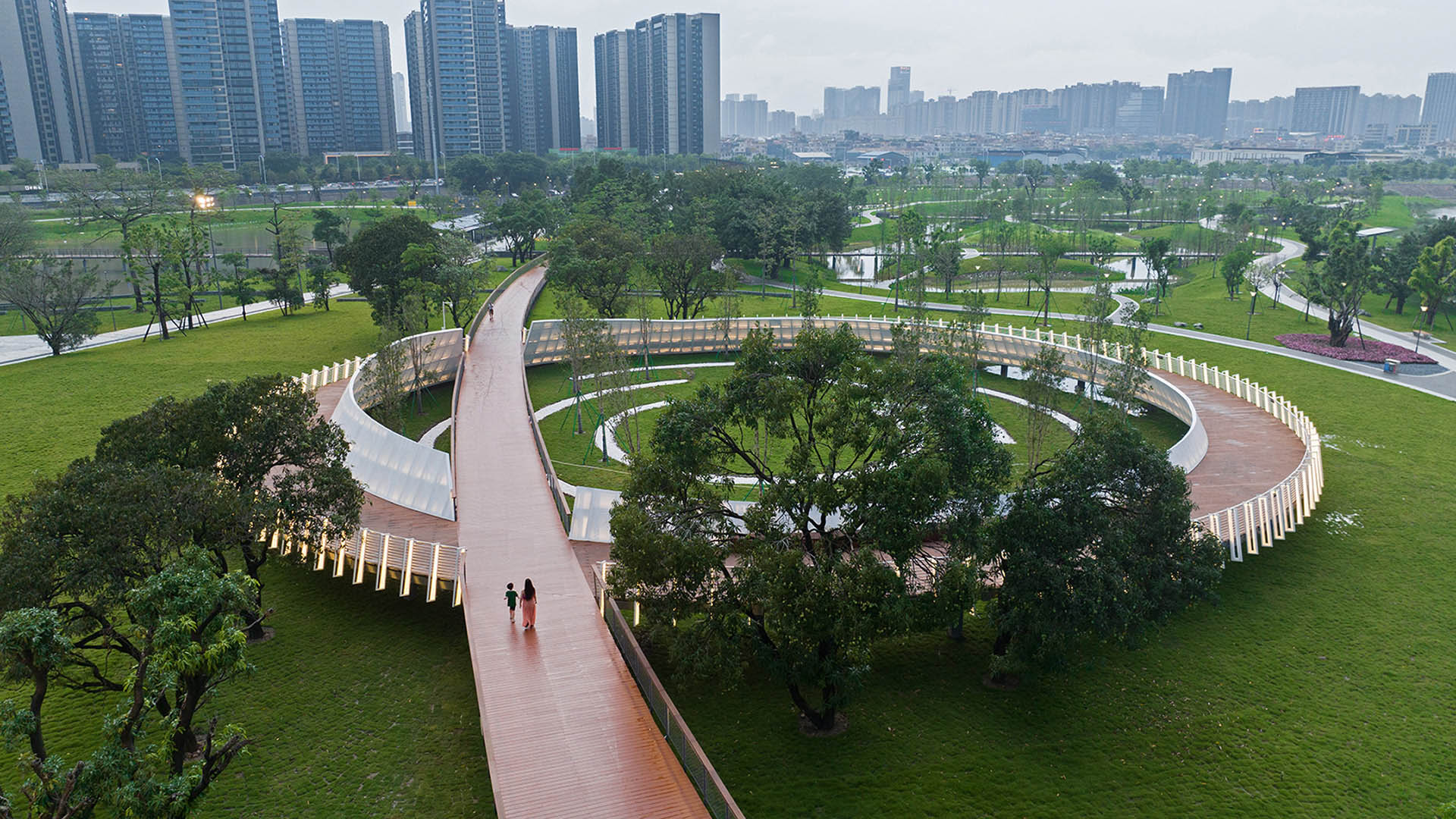
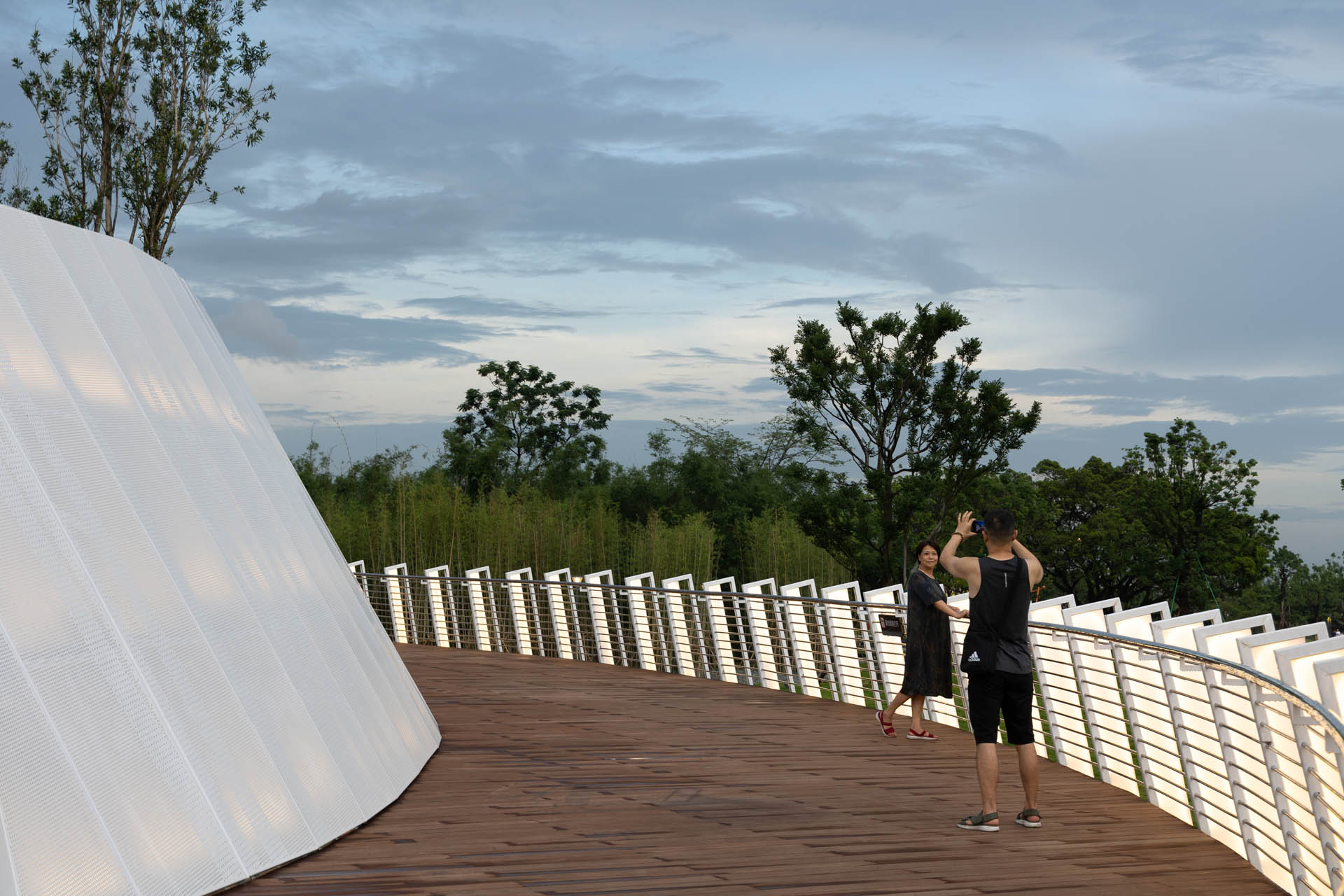
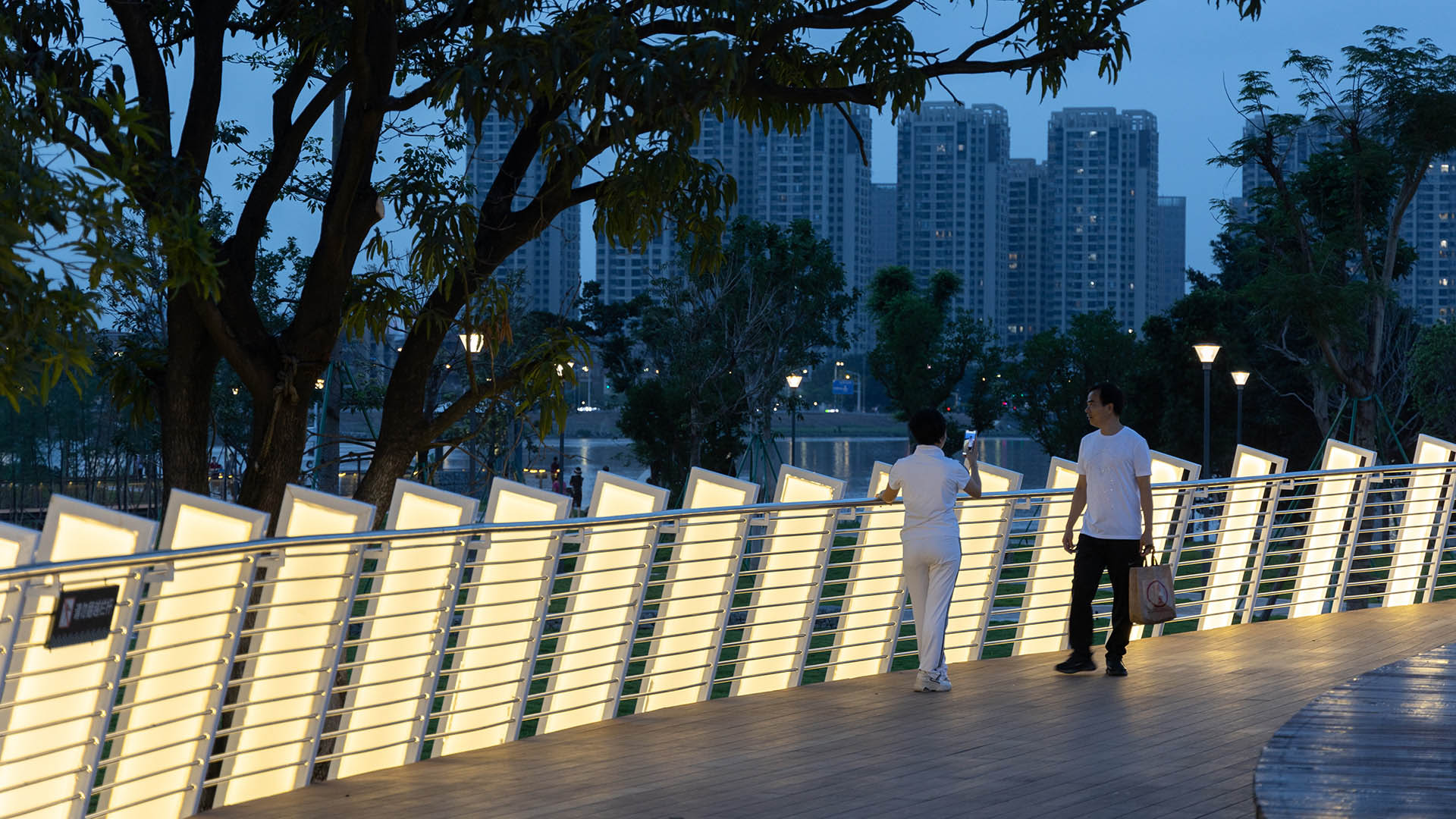
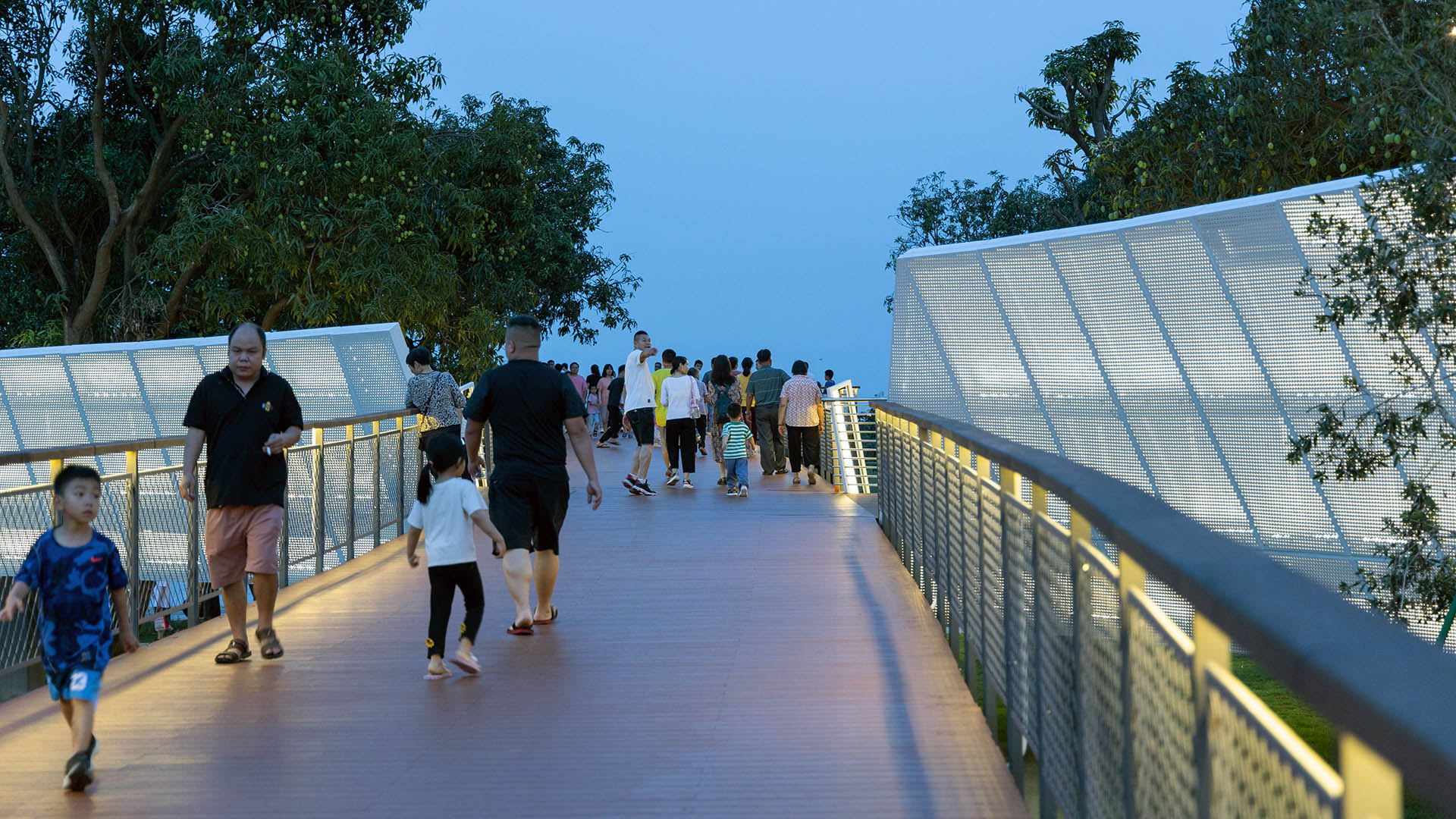
After winning a design competition in 2017, SWA undertook two projects within the Guicheng Riverfront park system, a defining blueway and leisure loop belt. The two completed parks – South Bank Waterfront Park and Eco-Island Park – are designed with distinct programmatic elements and characters based on the riverfront’s surrounding land use and urban settings, assisting the region in its transition from transportation and industrial uses to a more leisure-based orientation.
The three-kilometer-long South Bank Waterfront Park encompasses several distinct character zones, offering leisure, recreational, and event spaces for diverse users in surrounding residential communities as well as Nanhai’s financial district. The design was inspired by Foshan’s riverside history and dragon boat races, as well as by a phrase from a renowned poem: “A hundred barges are vying forward; a thousand boats are competing across the river,” These thematic elements were incorporated into the landscape, creating a distinctive series of outdoor places, water features, and furniture.
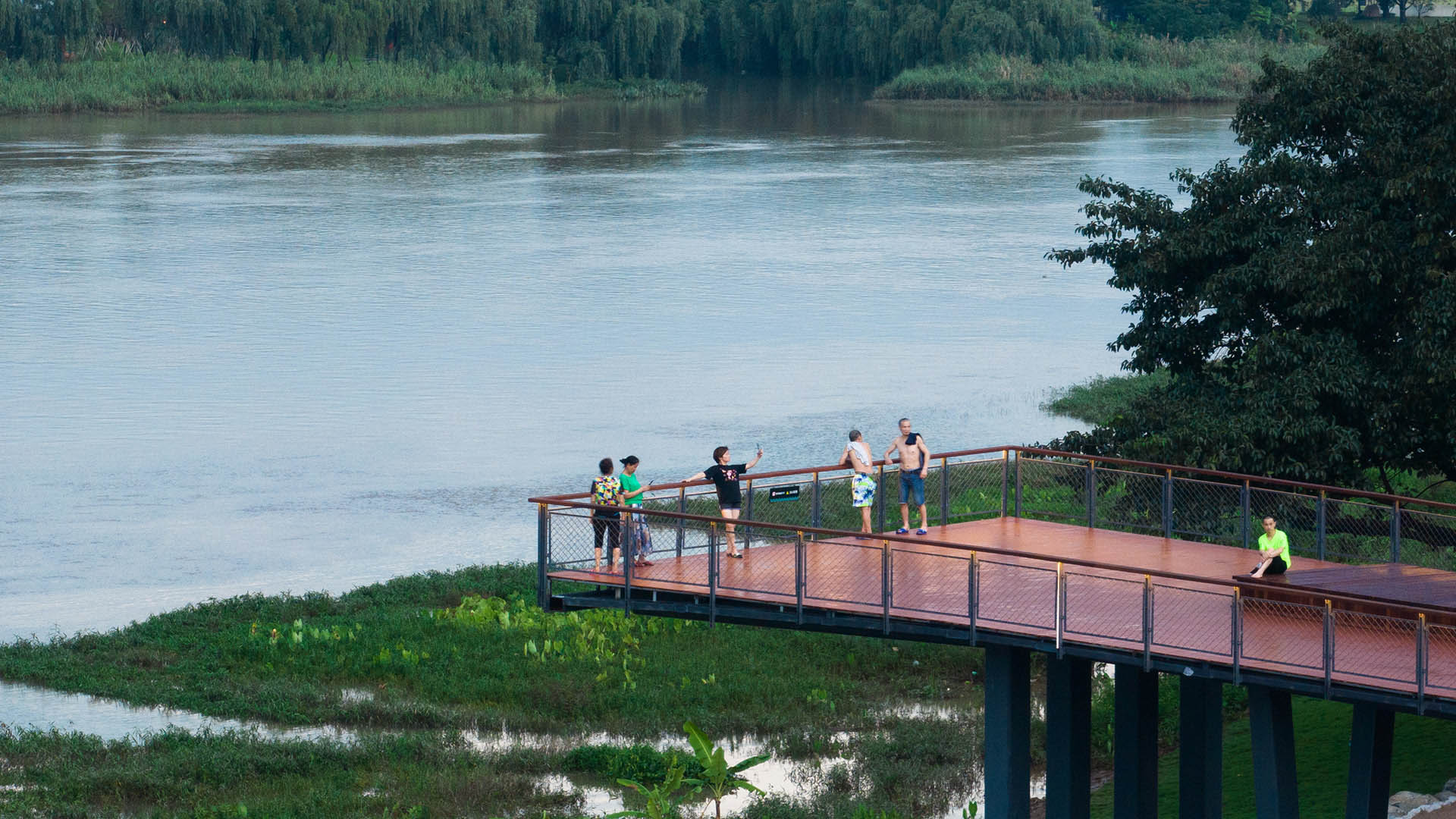
Eco-island Park is located on the west bank of the Pingzhou River, outside of the city levee system. The park seeks to establish balance within a dynamic river environment, accommodating rapidly fluctuating flood waters while establishing a restored riparian landscape. The park provides a valuable urban destination with passive recreation opportunities through a network of trails, viewing decks, restored beachfront, and children’s play environments to provide an immersive experience for a wide range of park users. The design also established a network of lakes and wetland waterways to filter stormwater and relieve hydraulic stresses on the park.
Hengqin Island
Hengqin Island, located in Zhuhai, China, is embedded within a unique and beautiful landscape, and is currently being developed for urban growth throughout the region. Taking cues from the surrounding site, SWA’s master plan intends to capture the essence of the place, and pay homage to its most fundamental landscape elements: the sea, valley, and mountains. S...
OCT Bao’an Waterfront Cultural Park
Bao’an Waterfront Park is an essential amenity for future residents of Shenzhen’s rapidly expanding Qianhai area, and is also an important connection between the urban fabric and the ocean. The key landscape frameworks for the park are its riverine interpretation aspects and water’s edge programs. The “Eco River” will bring water experiences into the green spa...
Aitken Place Park
Aitken Place Park is at the heart of Toronto’s East Bayfront Community – an area transformed from an underutilized industrial brownfield into a vibrant waterfront neighborhood. Flanked by the residential development to the west and the commercial buildings to the north, the park’s water’s edge location creates a unique destination that invites residents, touri...
Longgang River Blueway System
The Shenzhen Longgang River Blueway System is envisioned to unlock the tremendous land value of this 13-mile-long suburban watershed and galvanize the city’s future growth. SWA’s proposal addresses urbanization issues pertaining to water, the environment, and open space shortage, while also activating industrial and cultural revitalization in the surrounding d...