

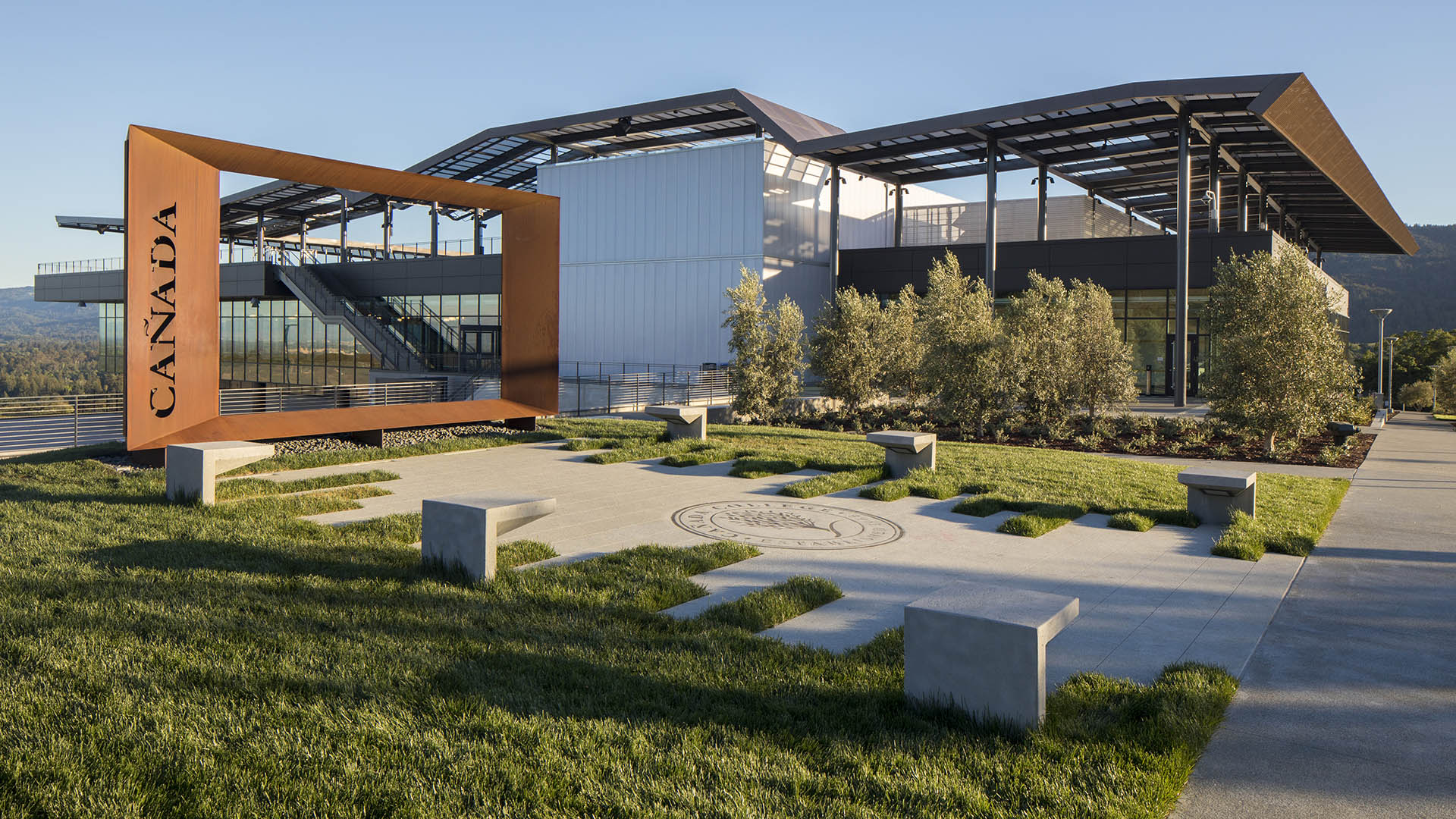


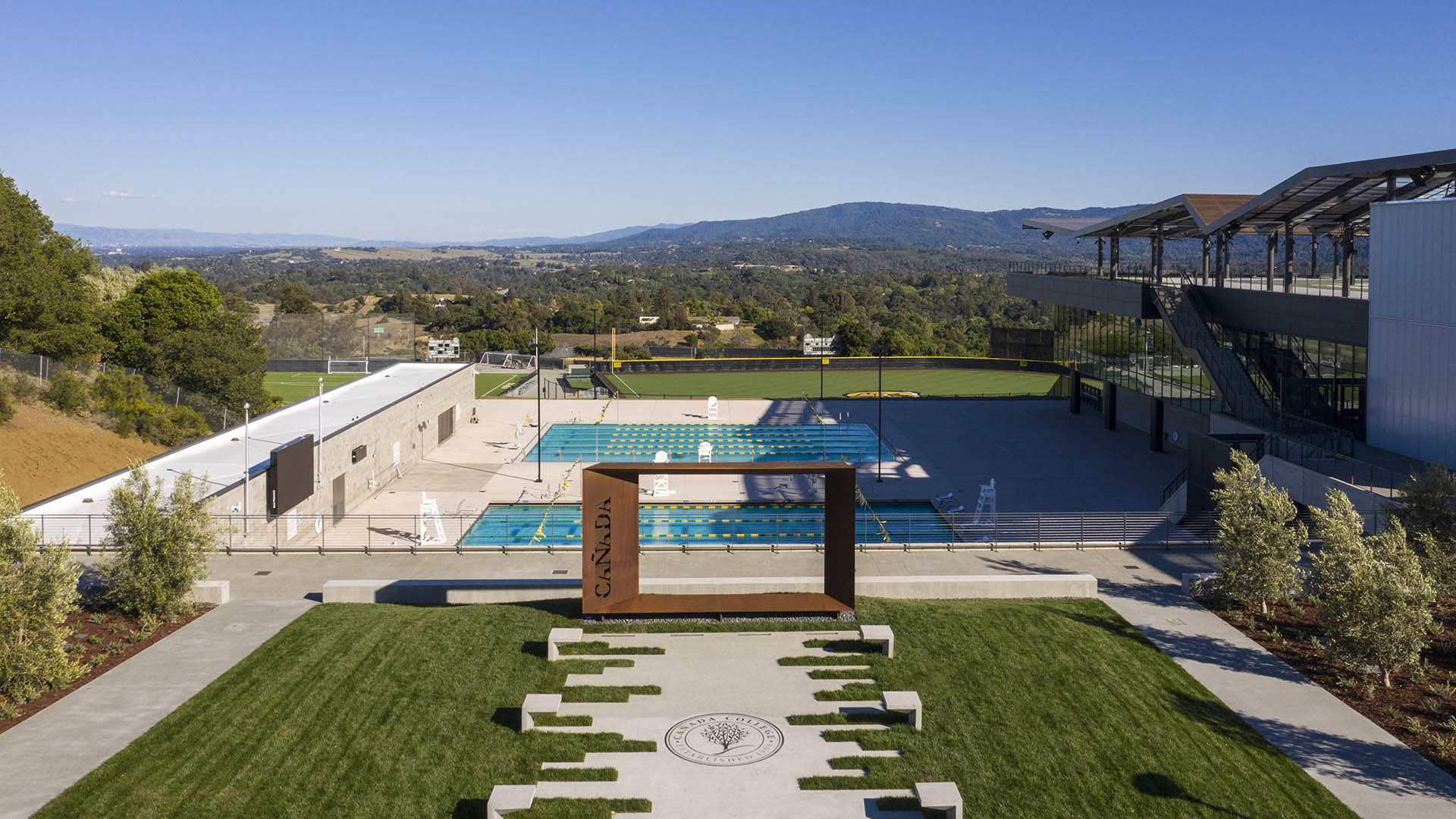
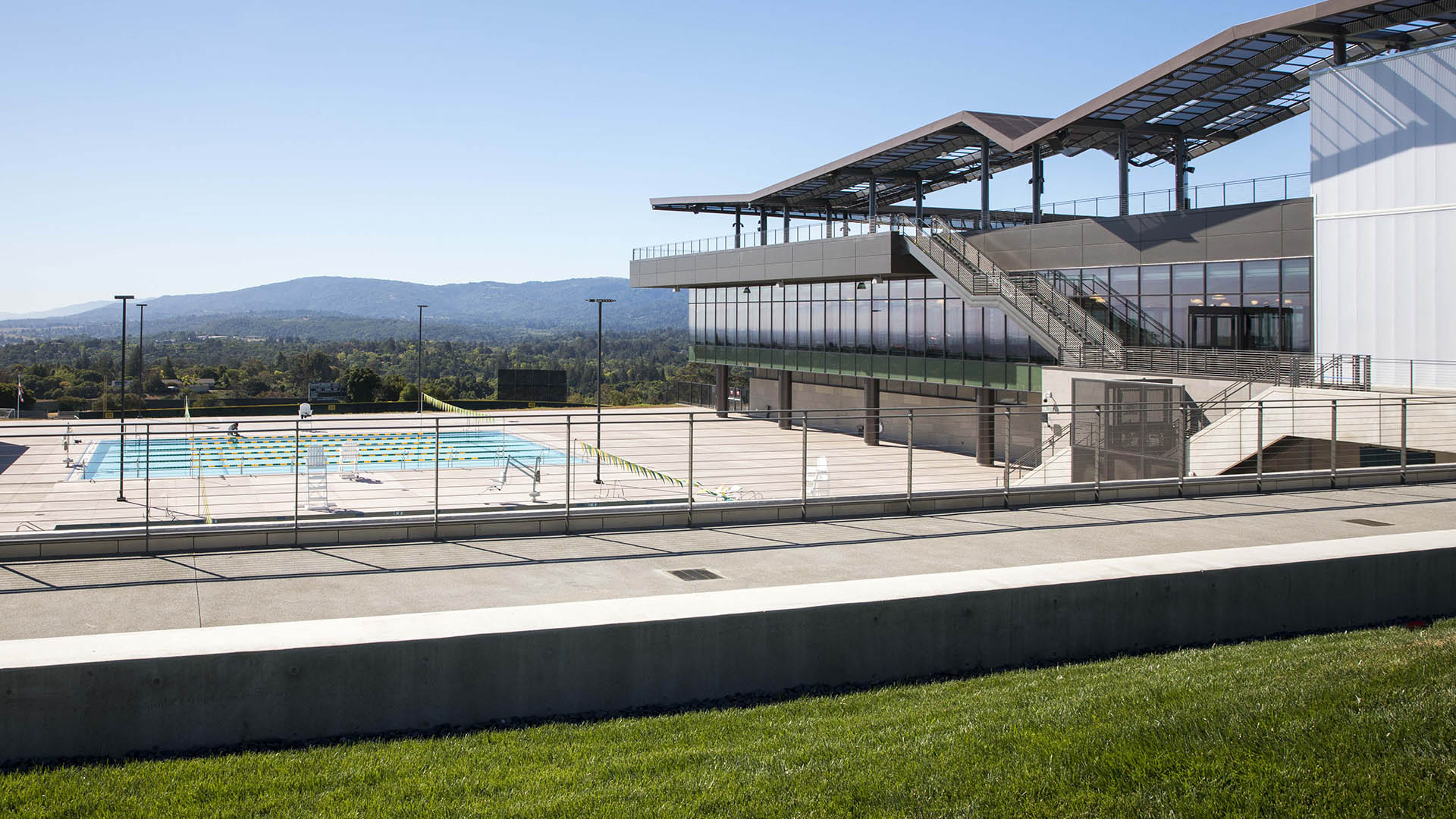
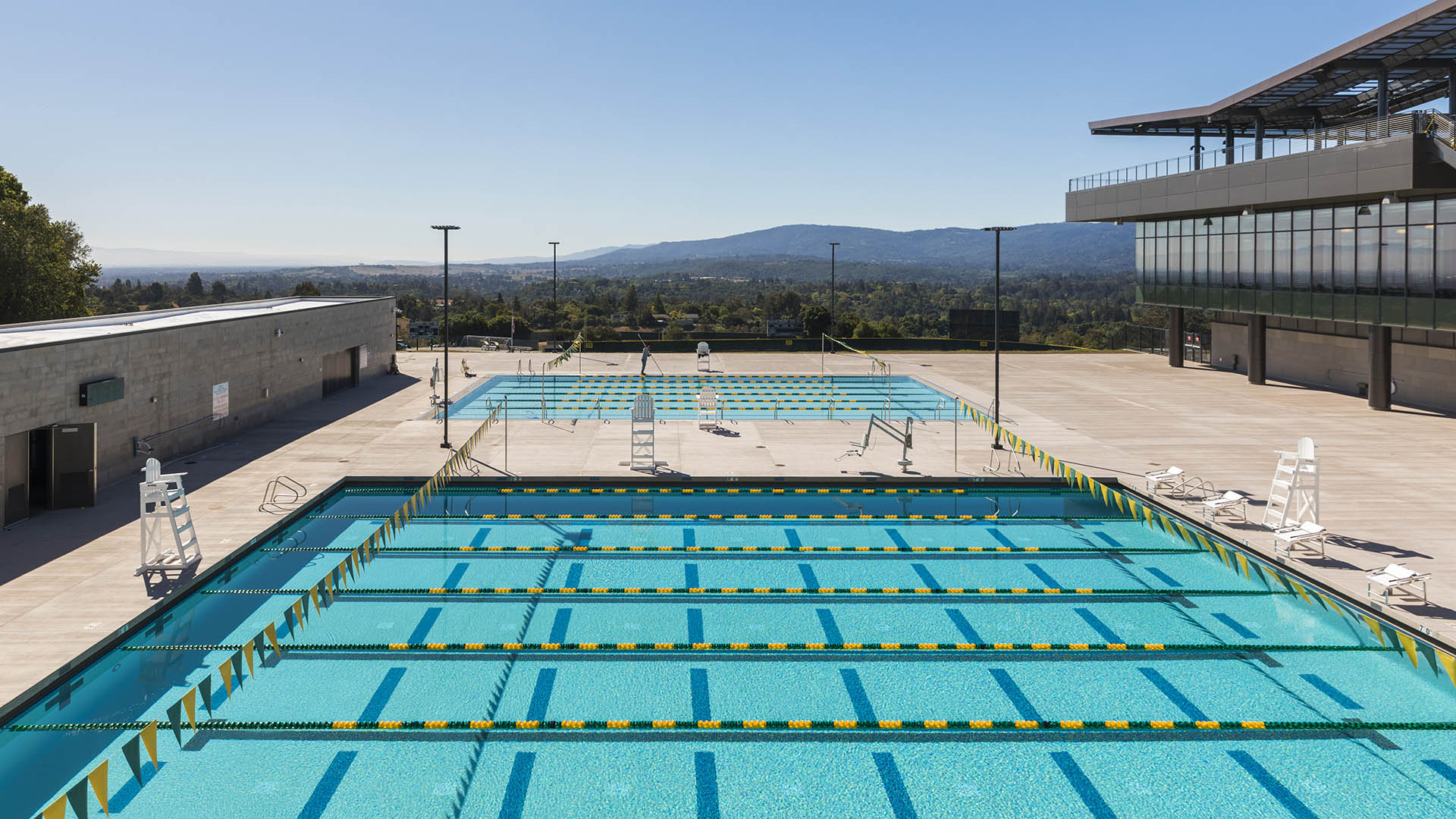
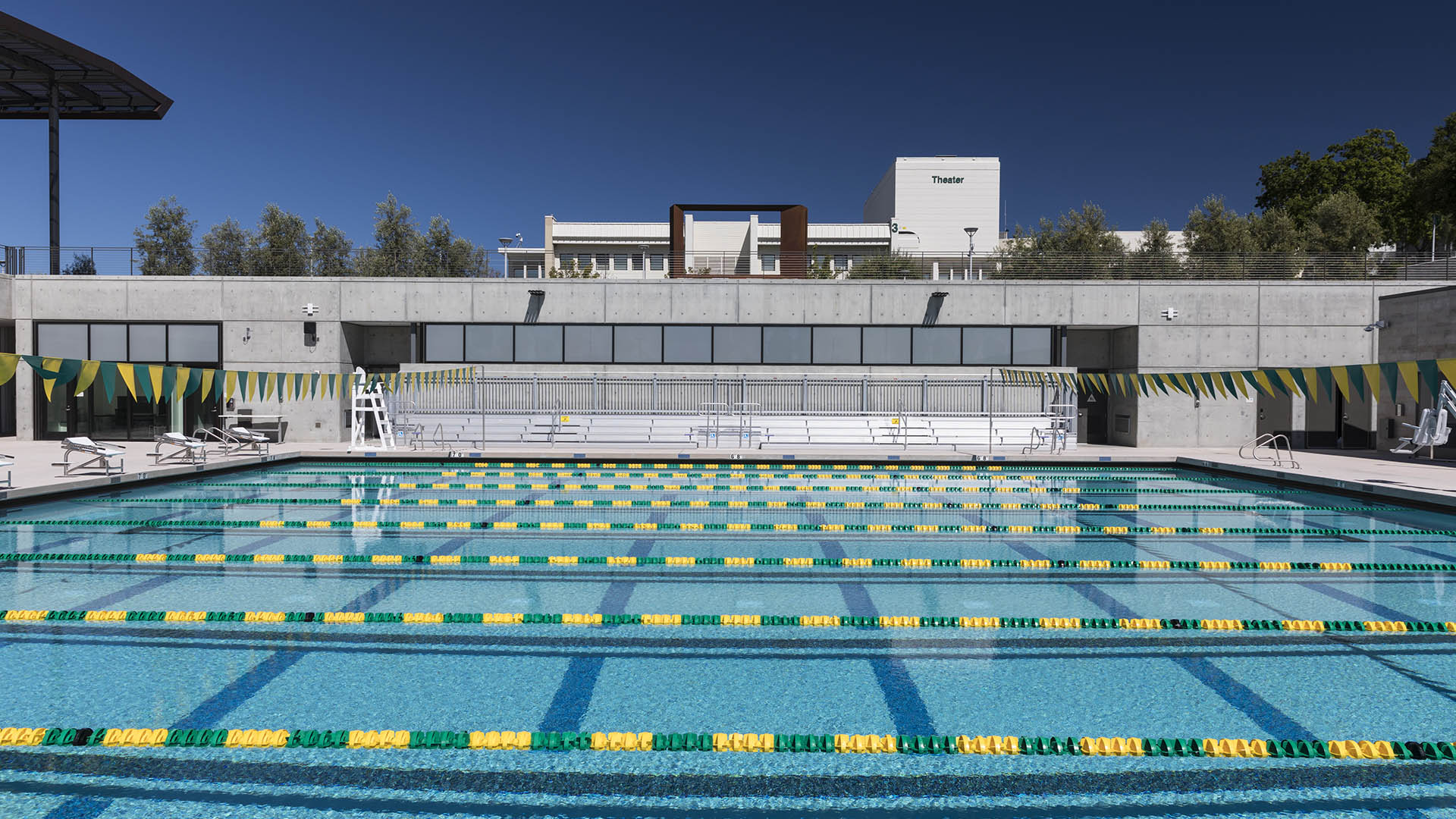
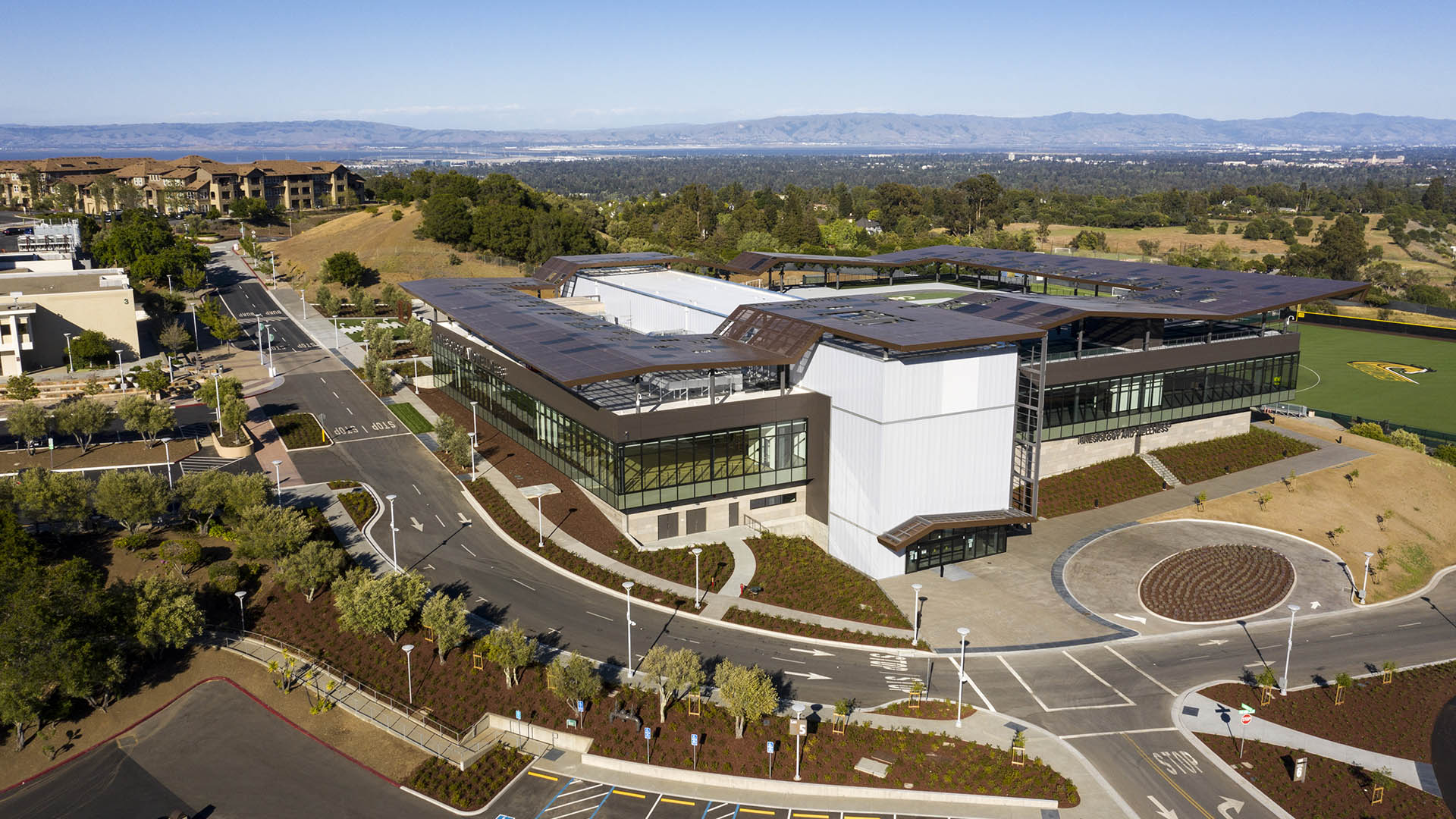
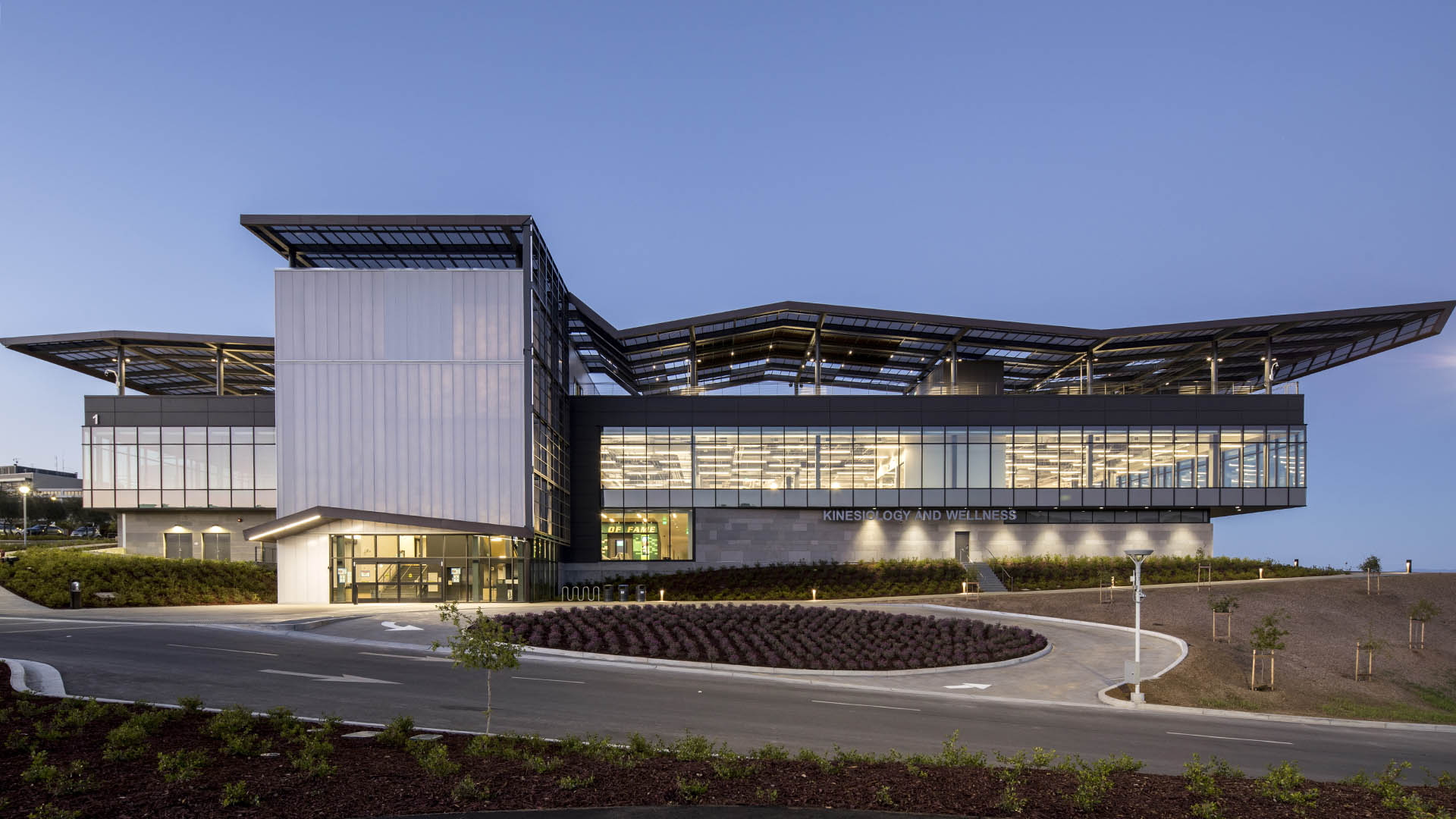

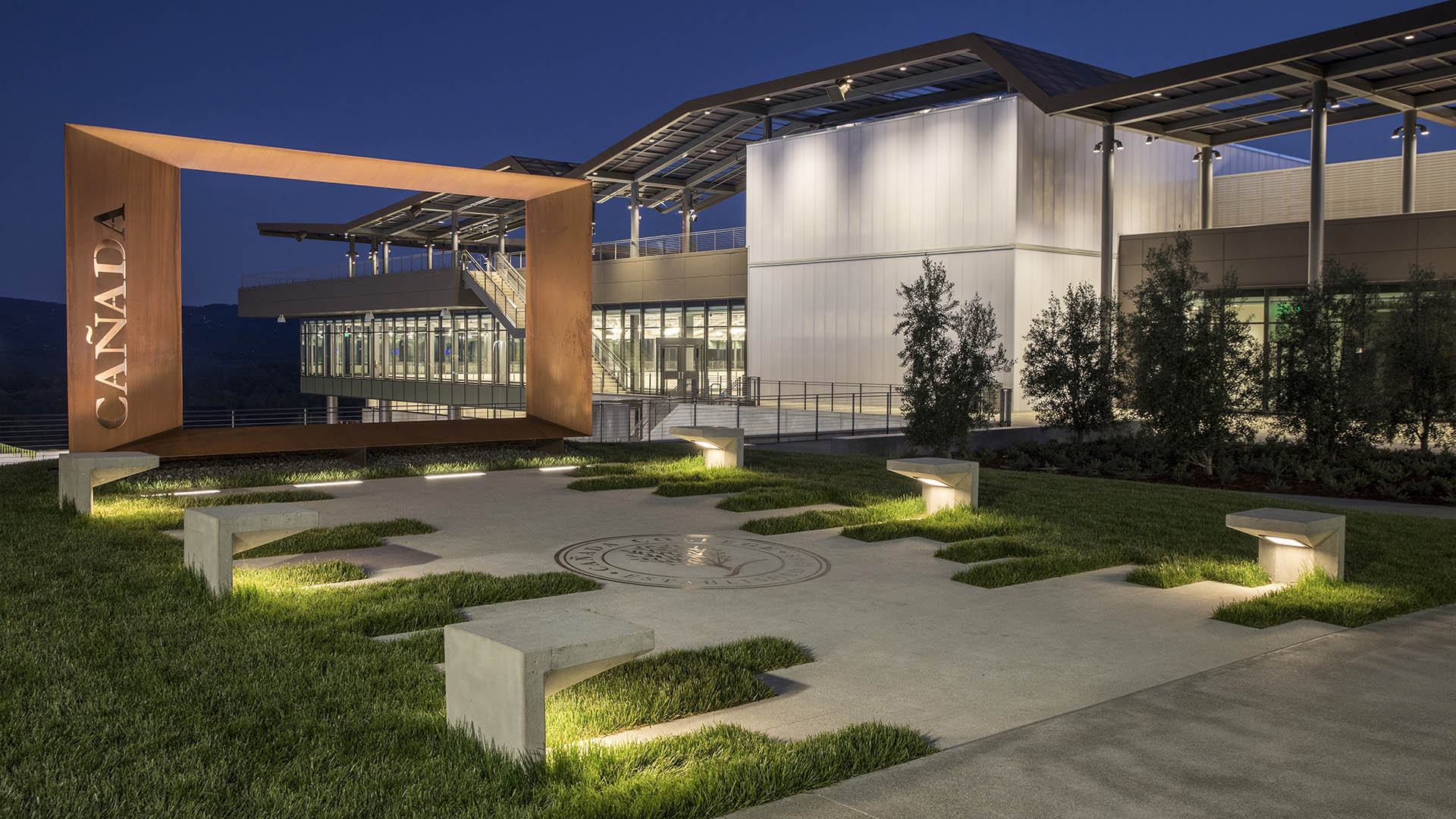
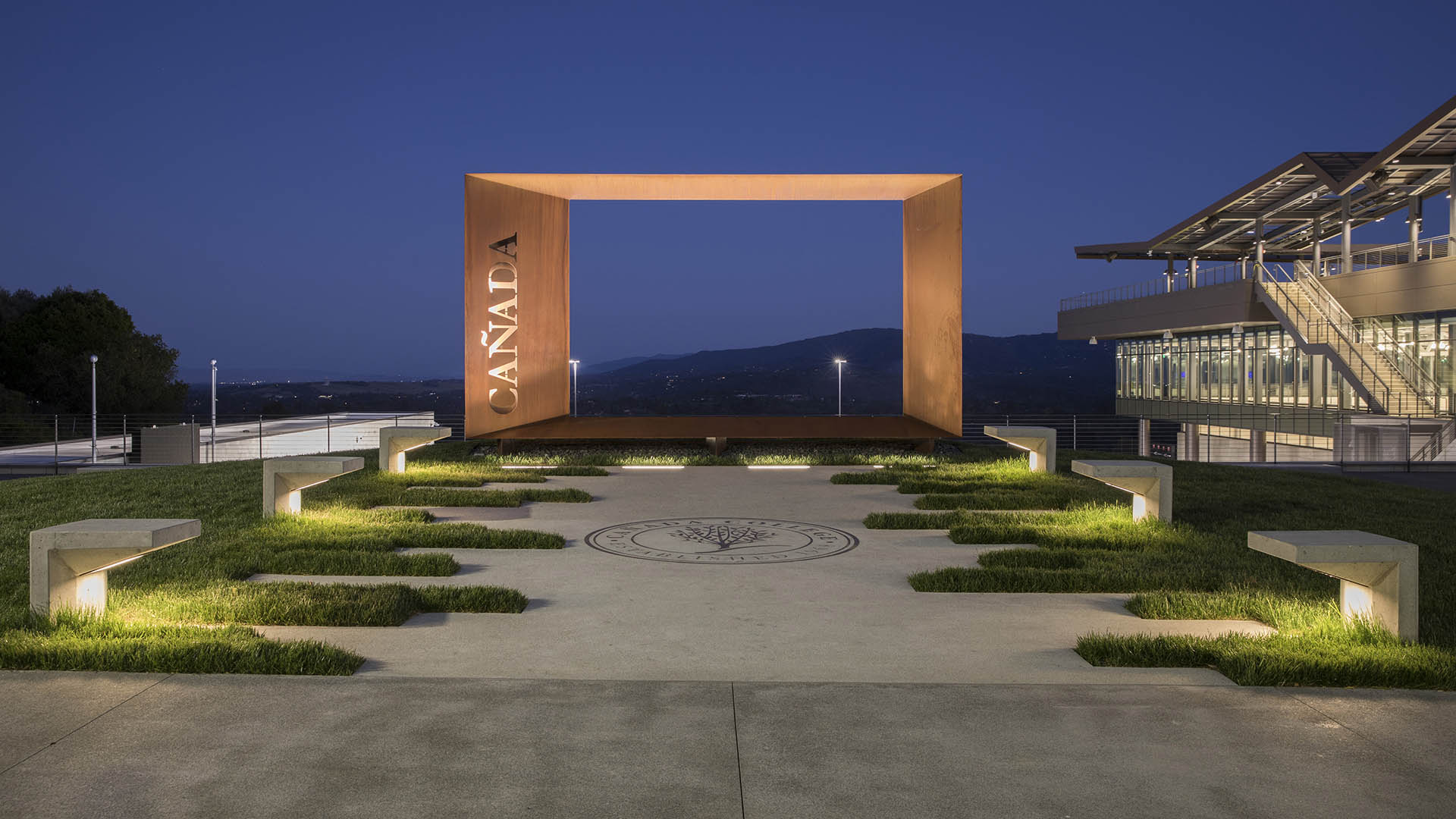
In collaboration with ELS, SWA designed a new landmark for Canada College: the Kinesiology & Wellness Center. The project replaced a windowless 1960s-era gym building and outdoor asphalt yard with the glassy new building and infinity pool deck on this hilltop campus with fantastic views. The project also created a new campus arrival and ceremonial overlook. To provide accessibility and convenient walking and drop-off access to the Center’s lobby, the lobby was extended a half-level down to the new entrance plaza, and the adjacent campus street intersection was narrowed and flattened.
To connect the Center with the rest of campus, the design team also designed a pedestrian quad to replace a small parking area. The quad, which will be implemented in a later phase, includes shade trees, communal tables, and convenience power and will serve as the campus’ outdoor living room.
Northwest Vista College
Northwest Vista College is situated in the oak covered hills west of San Antonio, with beautiful views toward the city and surrounding valley. Previously the design team completed an extensive master plan that accommodated for the expansion of the college facilities to three times its current size. The design seeks to sensitively integrate the nearly 400,000 s...
CREATE Campus, National University of Singapore
CREATE, the Campus for Research Excellence and Technological Enterprise, is an international research campus and innovation hub at the National University of Singapore. Home to a vibrant scientific community, CREATE hosts the National Research Foundation, interdisciplinary research centers from top universities, and corporate laboratories such as the Singapore...
Chabot College Library & Grand Court
In collaboration with architects Group 4 and HMC, SWA transformed Chabot College’s predominantly paved Grand Court into an outdoor living room at the heart of the 14,000-student campus. The opportunity to reimagine the space came in conjunction with siting, massing, and designing the new iconic, three-story faceted library where the campus’ main walks intersec...
CyFair College
The CyFair College Campus is a model for environmentally responsible development and restoration of a sensitive ecosystem. Located on the suburban fringe of northwest Houston, it is surrounded by the Katy Prairie, an endangered ecosystem of coastal prairie grass meadows marked by groves of trees and connected to a system of wetlands, bayous, and ponds.
...