


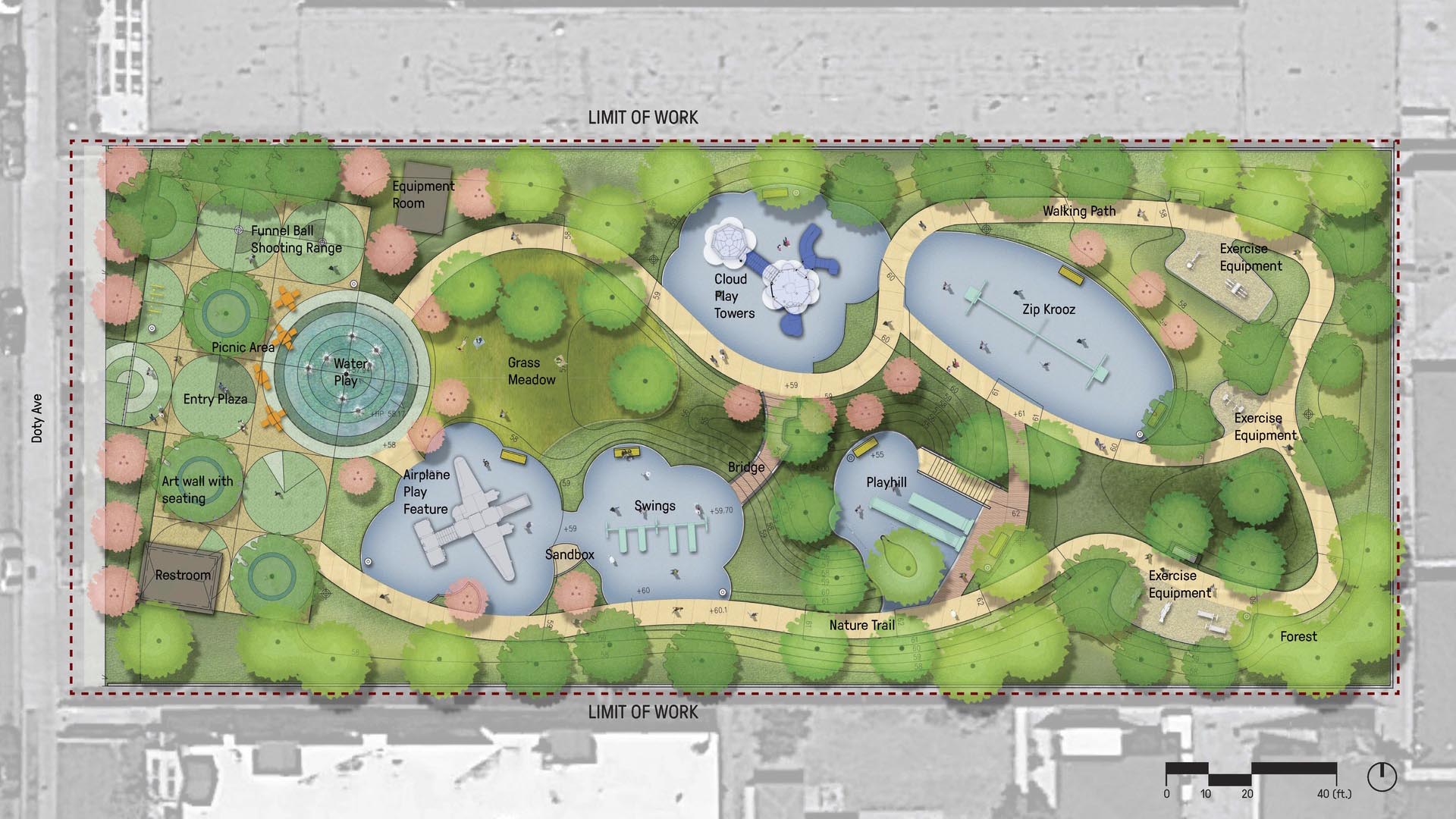

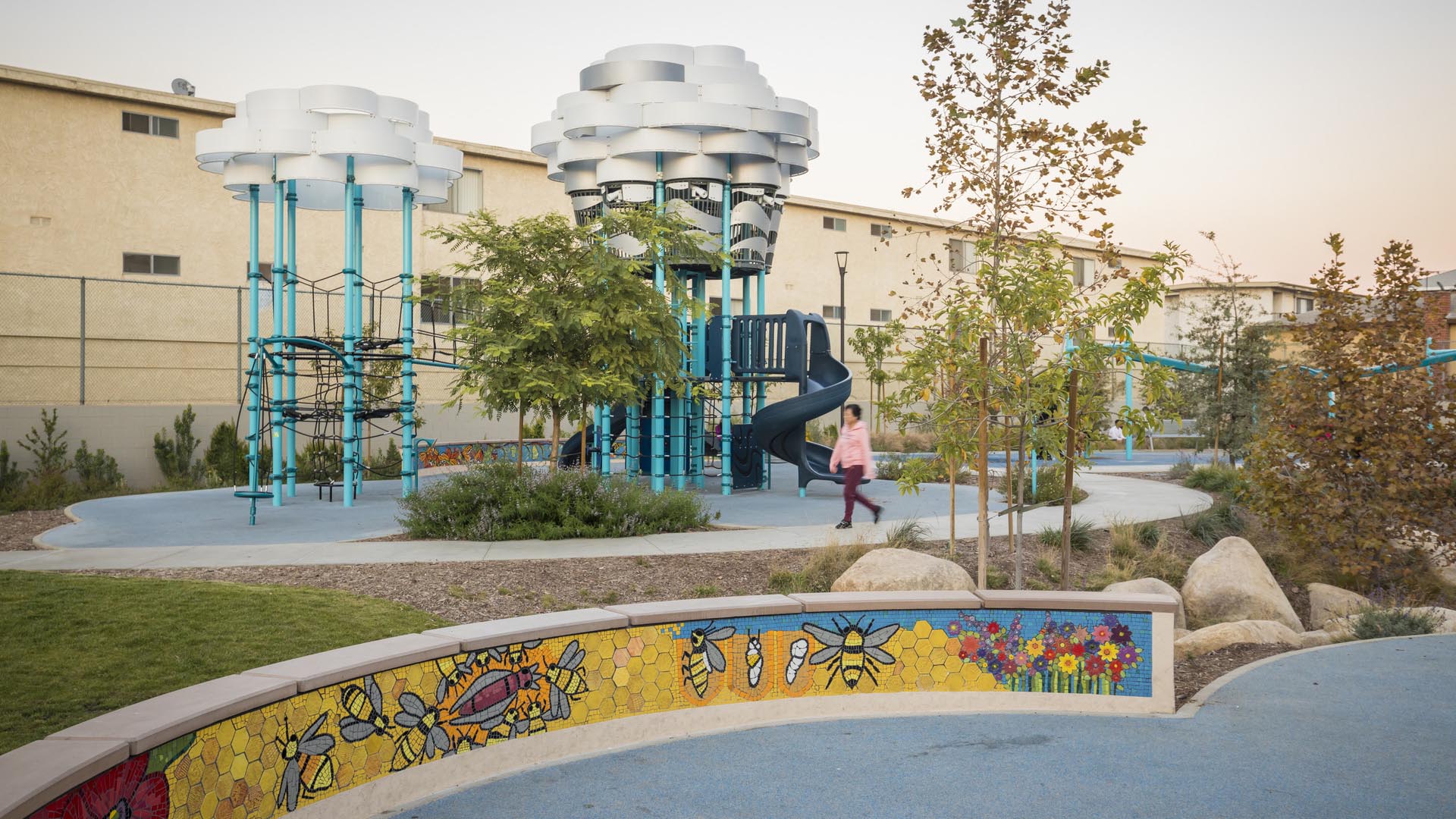

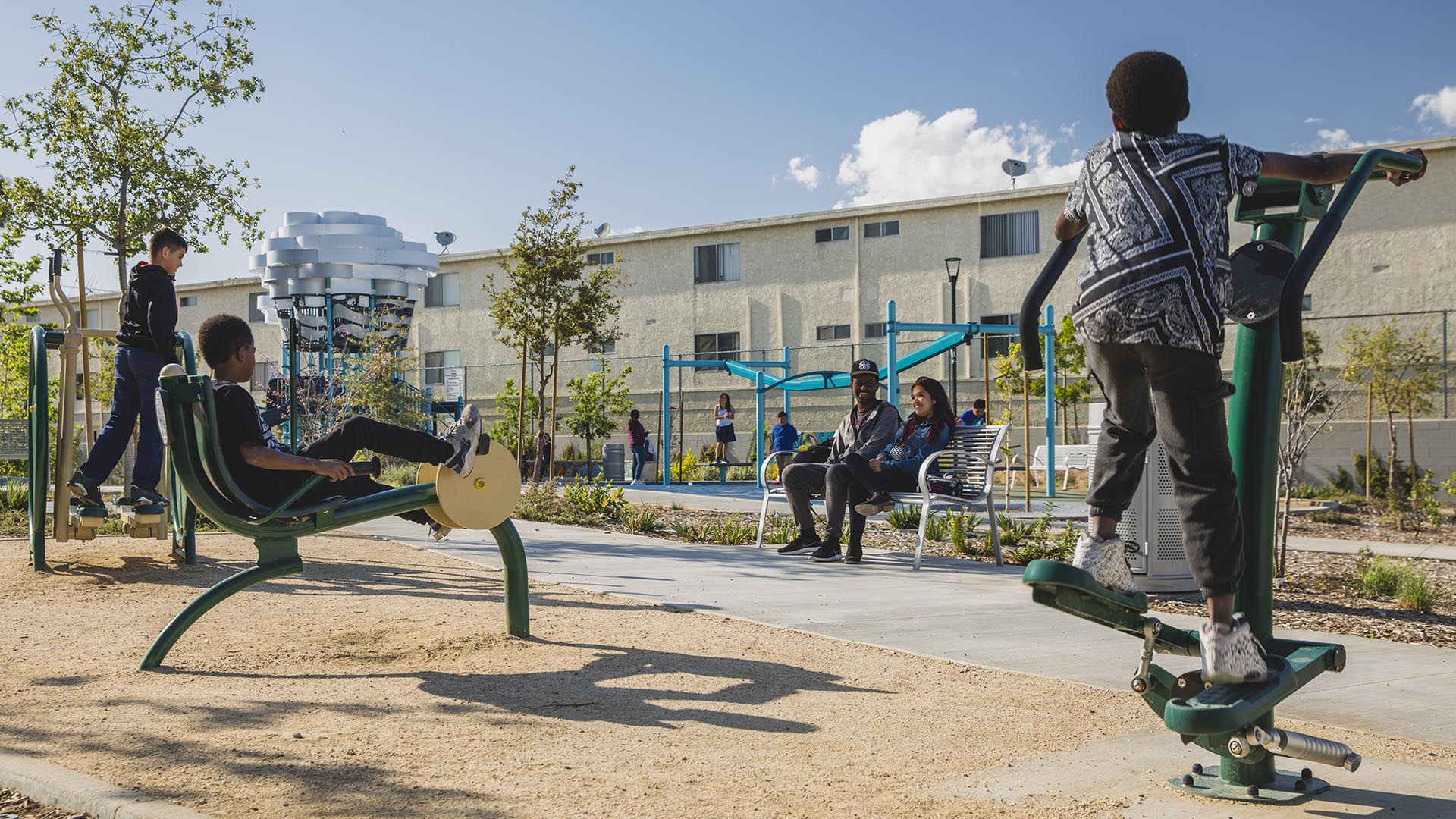

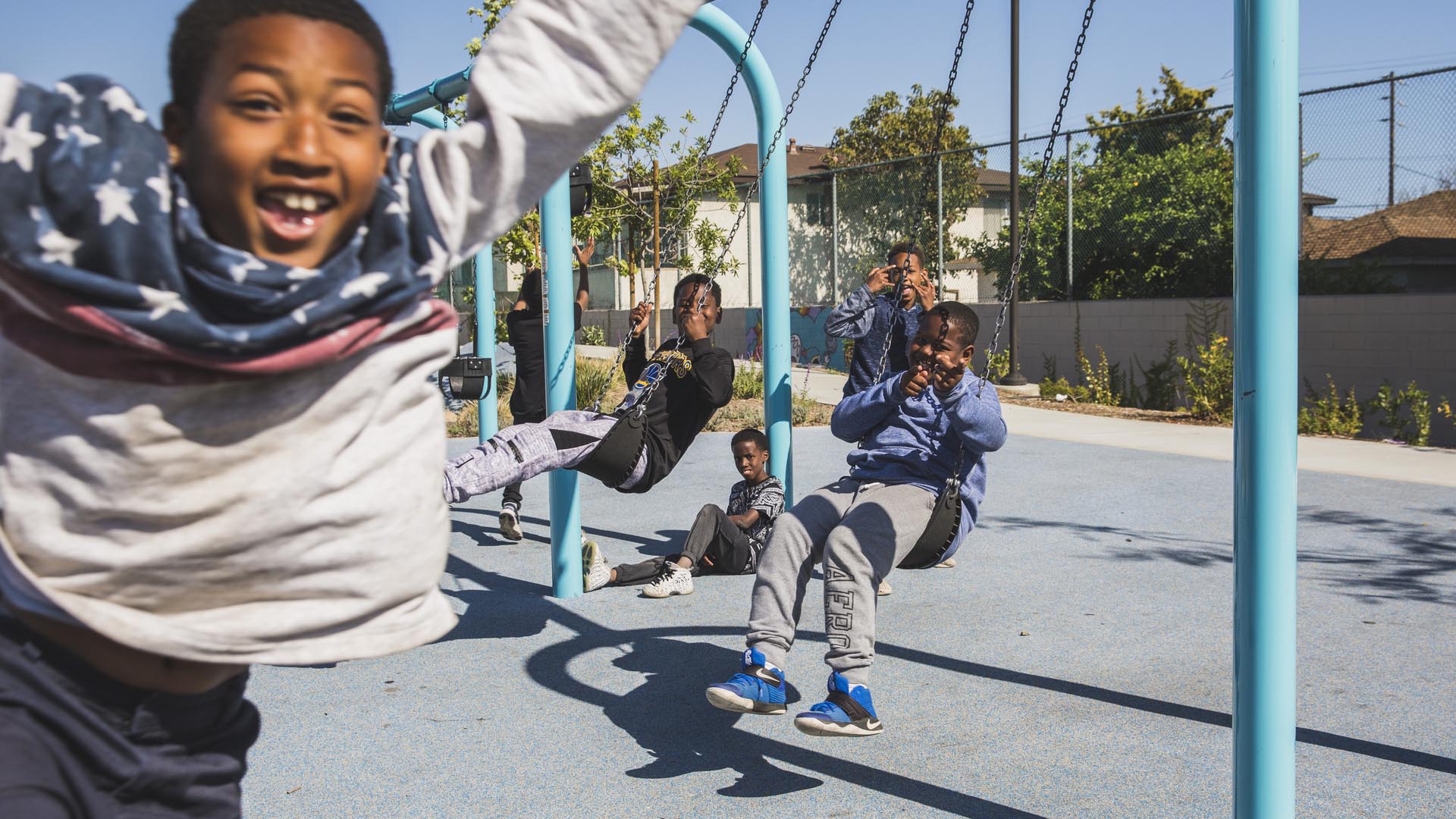
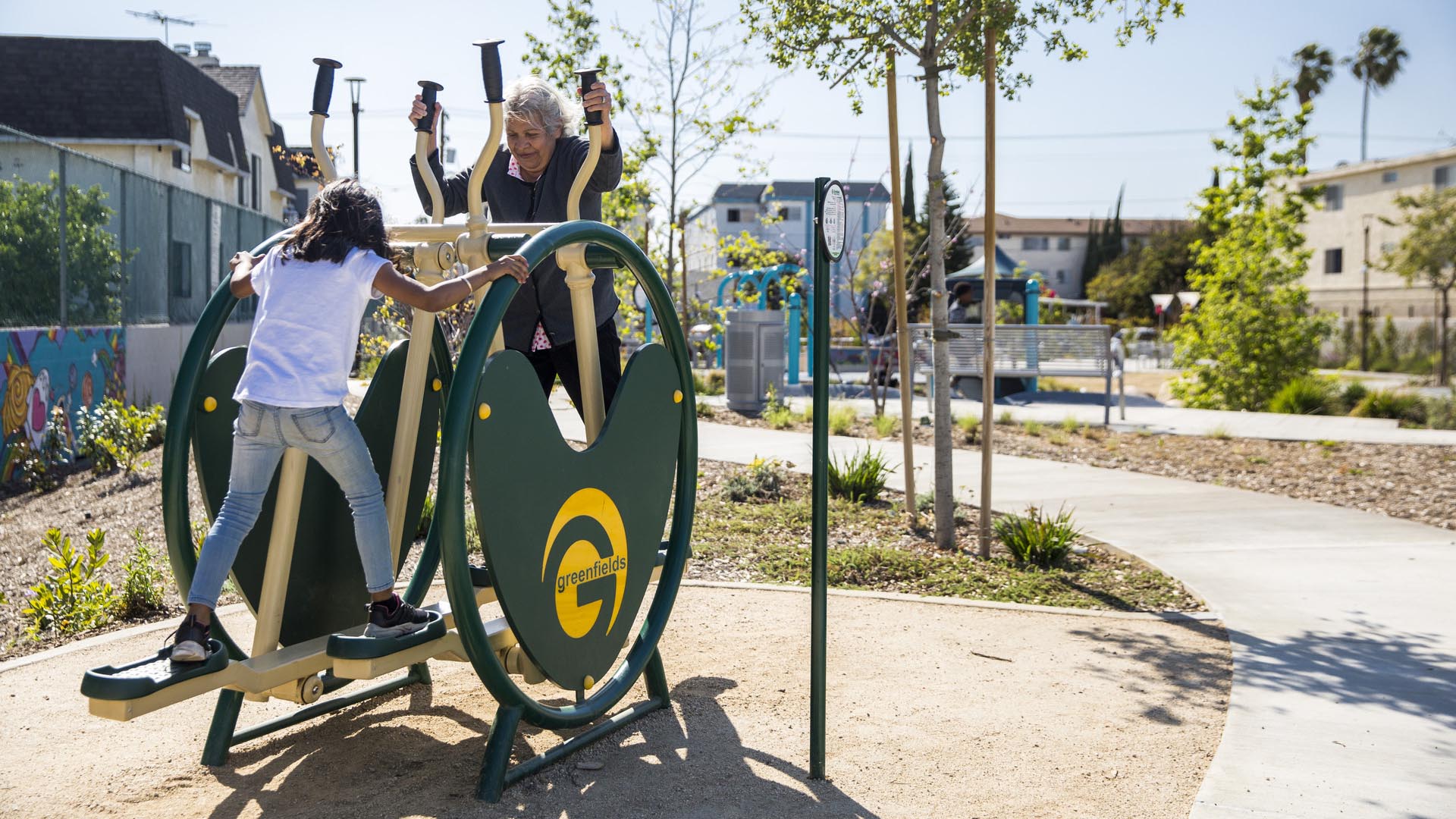


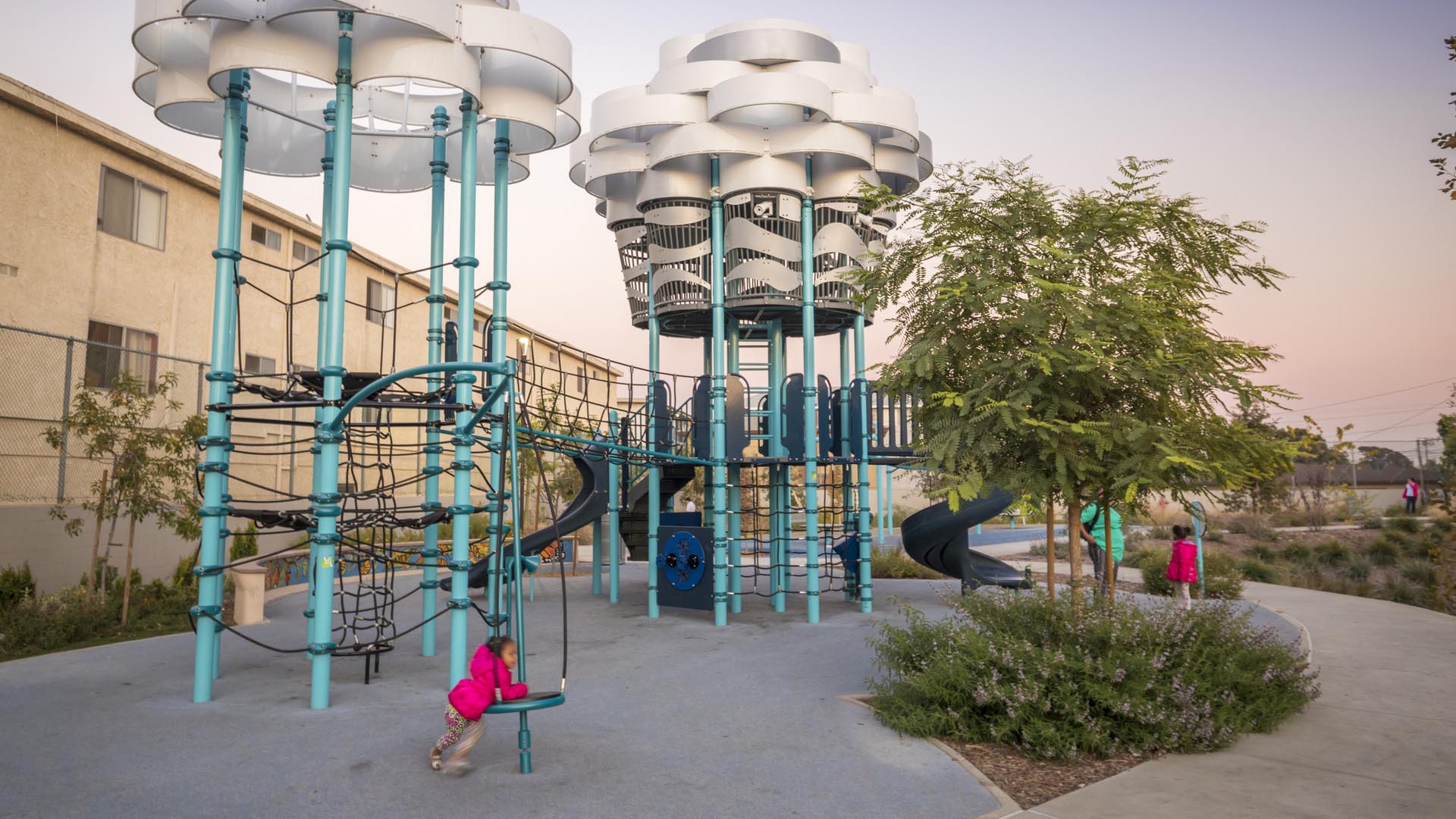
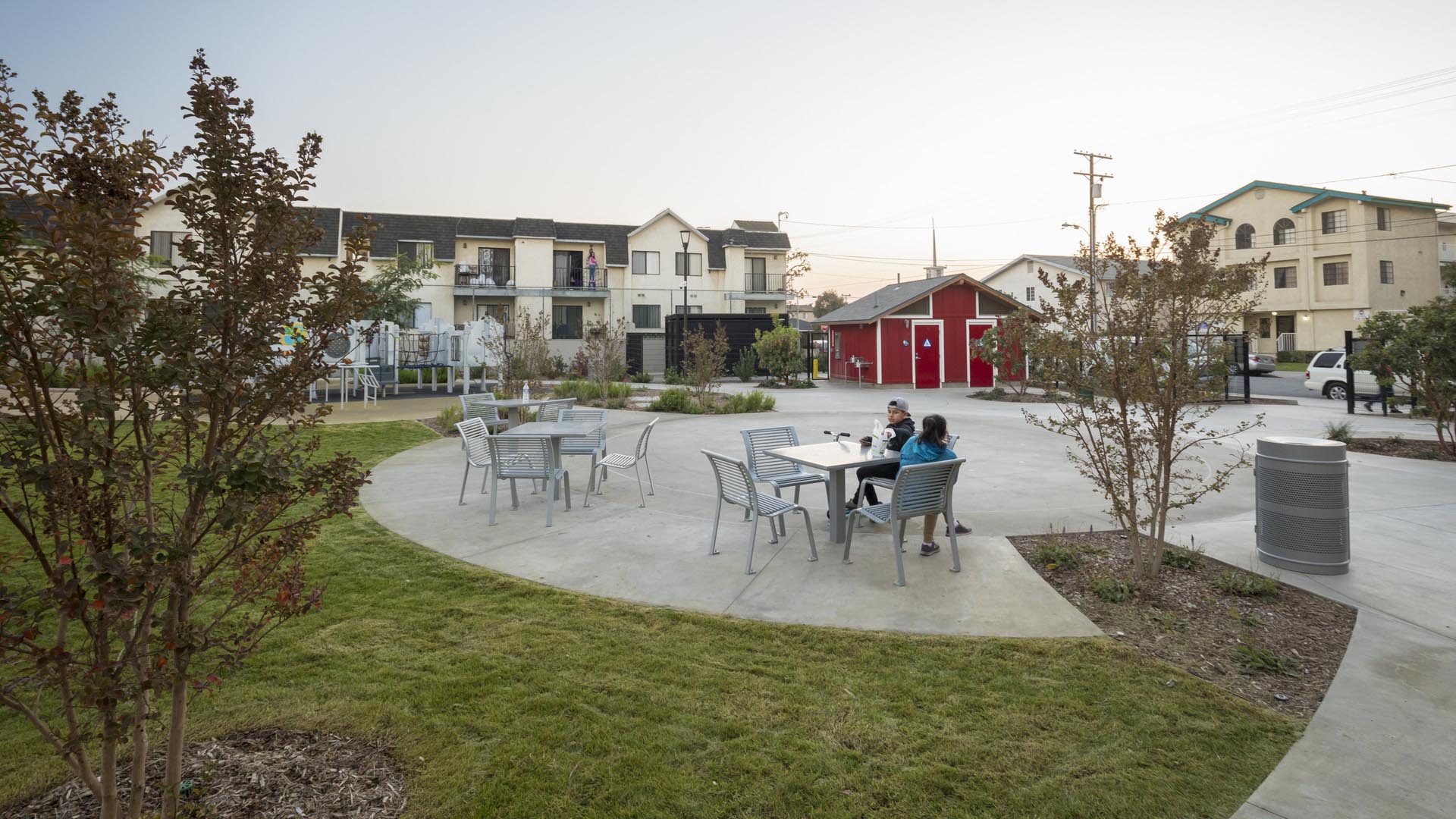

After nearly 15 years of being closed to the public, Bicentennial Park will soon provide a lively setting for neighborhood recreation. The City of Hawthorne has been home to many creative people throughout history: a legendary athlete and Olympian, Jim Thorpe; a world-famous movie star, Marilyn Monroe; and one of the most beloved American rock bands, The Beach Boys. The City is also at the center of the United States aerospace industry, home to Northrop Grumman and SpaceX. Hawthorne High School provides outstanding programs in engineering and manufacturing, promising a future generation of leading scientists. Yet today, more than 20 percent of the total population of Hawthorne lives below the poverty line and the community is victim to some of the worst environmental conditions in Southern California. In collaboration with The Trust for Public Land, the local community has worked for many years to redevelop the little-used and neglected Bicentennial Park property into a safe, welcoming recreational resource for city residents. Working closely with project stakeholders, SWA designers have developed a design for the park renovation inspired by Hawthorne s history and heritage. Focusing on the playground as a main feature of the park, SWA proposed the concept “Where Creative Minds Grow.” The park’s design concept features the history of aviation as a playful element, exposing generations young and old to the community’s unique history.
Tianjin Culture Park
In the strategy for the upcoming integration of Beijing, Tianjin and Hebei Province, the city of Tianjin has been identified as an advanced national manufacture and research base, as well as a core area of international shipping, a financial innovation demonstration zone, and a pilot region for the overall reformation of the area. The location of the SWA-desig...
Guiyang Hot Springs
Guiyang Hot Springs, located in Guiyang City, China, brings together the rhythm of the Nanming River, and surrounding trails and trees to create a new urban ‘living room’ in the interstitial space created by new development and roadway infrastructure. Nestled into a mountainous site, the master planning addressed elevation changes of up to 100 meters and the e...
Panyu Central Park
Panyu Central Park breaks the boundary of the traditional gated community and promotes sharing of open space among residents and visitors. This neighborhood development is the hub for a dense urban community, raising its visibility and value and setting a high standard for open space in the area. The park provides welcoming activity space for all ages with its...
Evelyn’s Park
In honor of their late matriarch Evelyn, the Rubenstein family donated a historically and geographically prominent five-acre tract on the busy Bellaire Boulevard and created a conservancy to fund a public park with primarily private funds, while engaging the public in its design and development. This park seeks to be reflective and adaptive to the local cultur...