

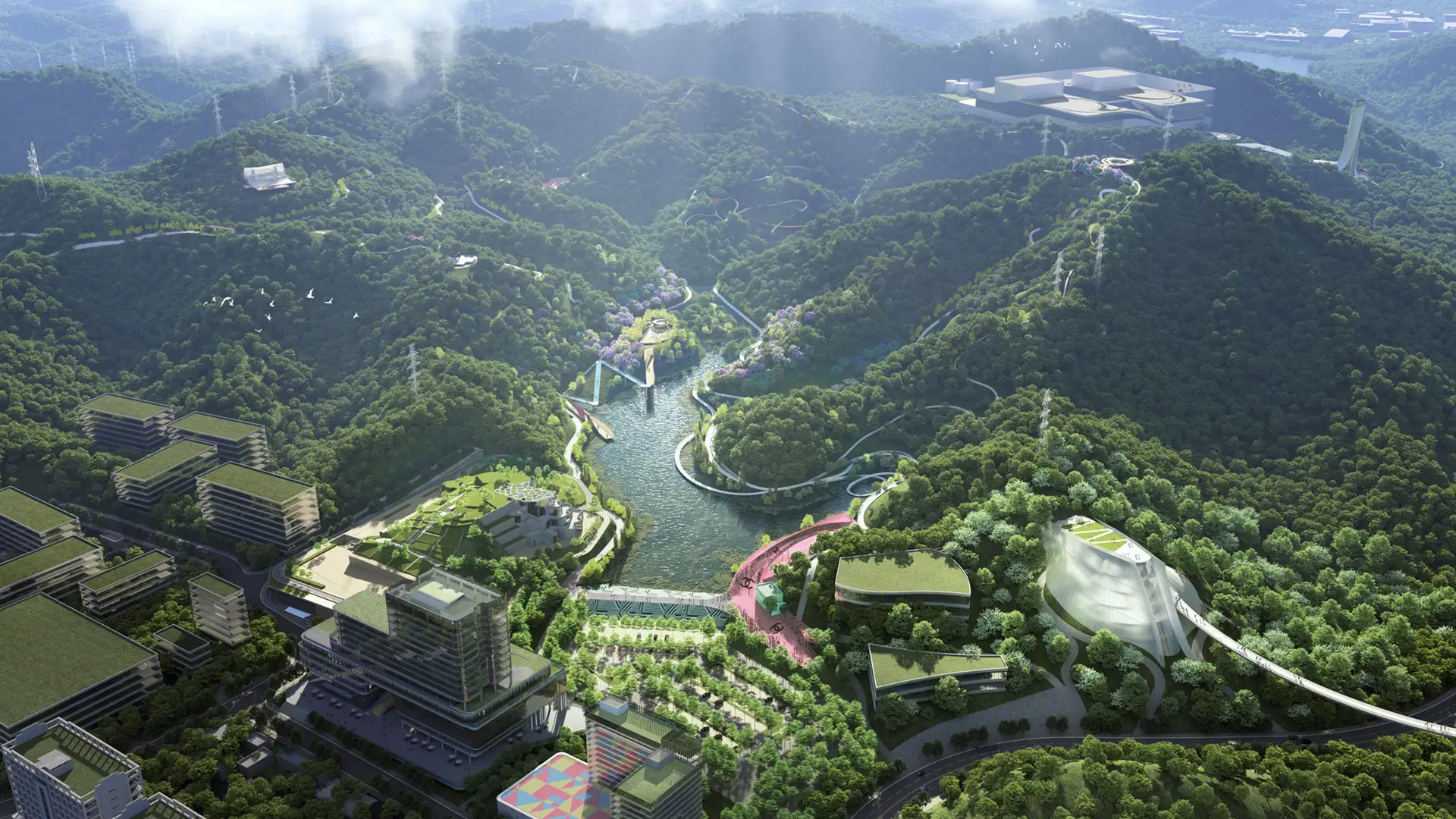

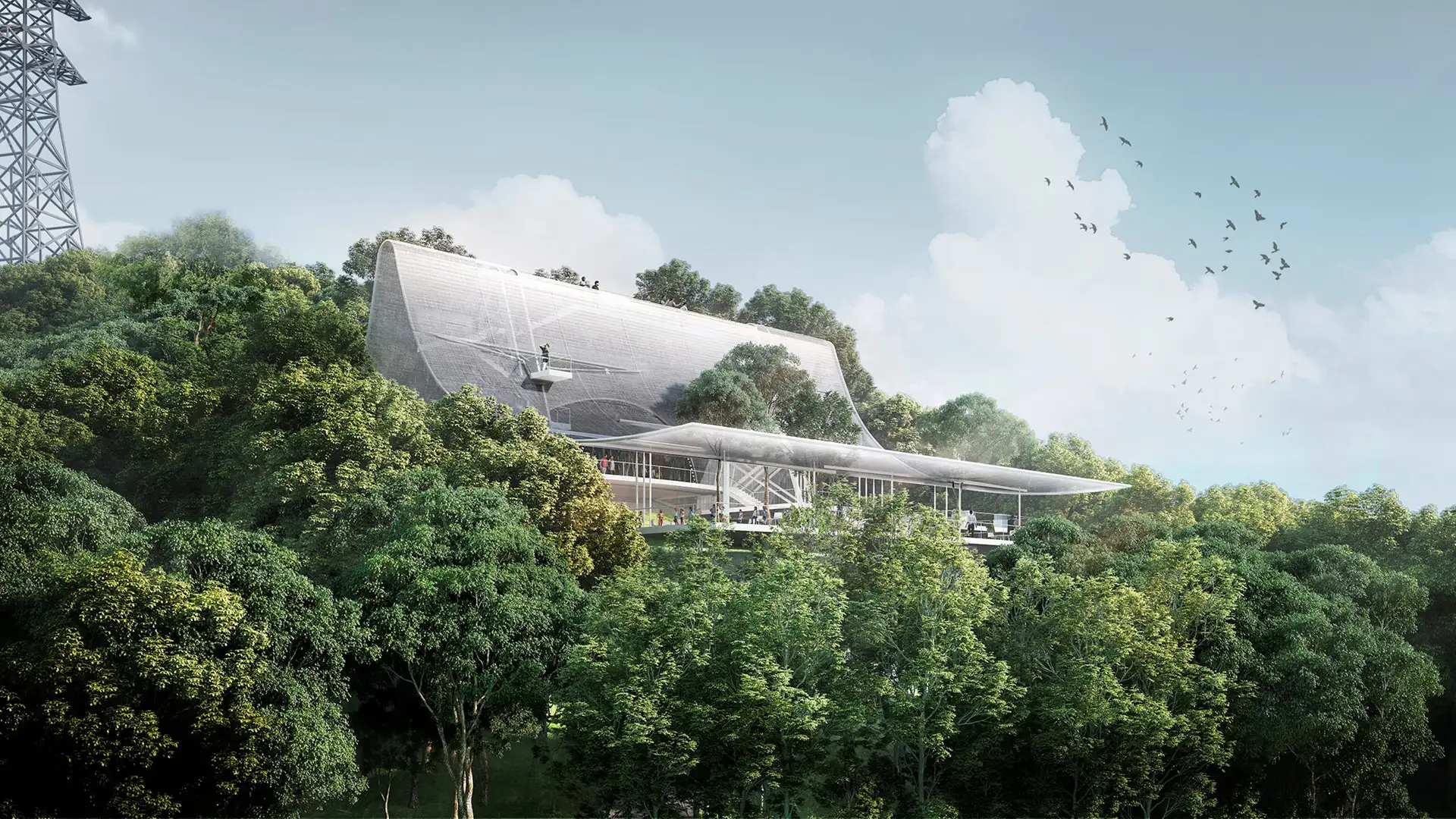
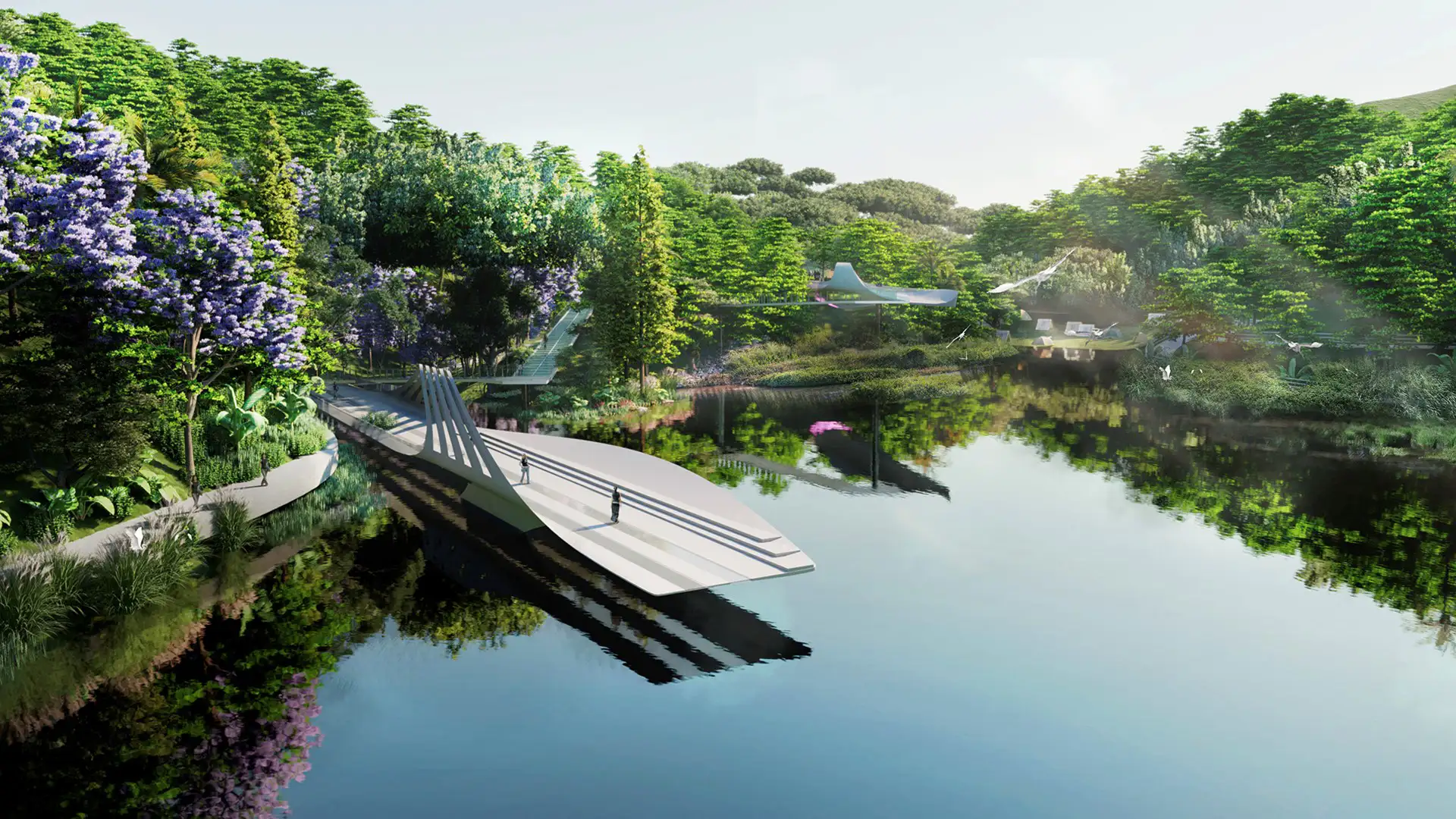
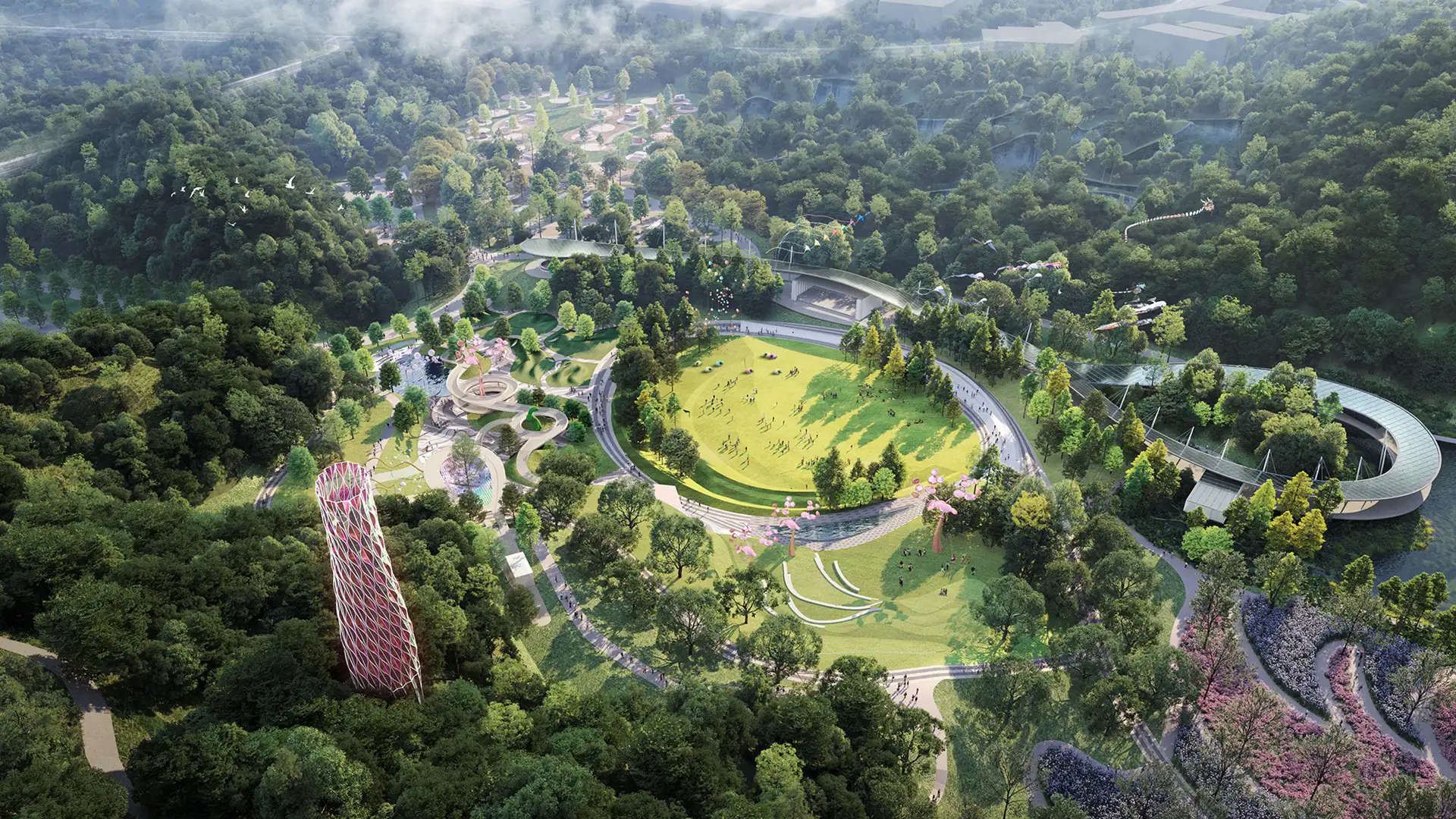
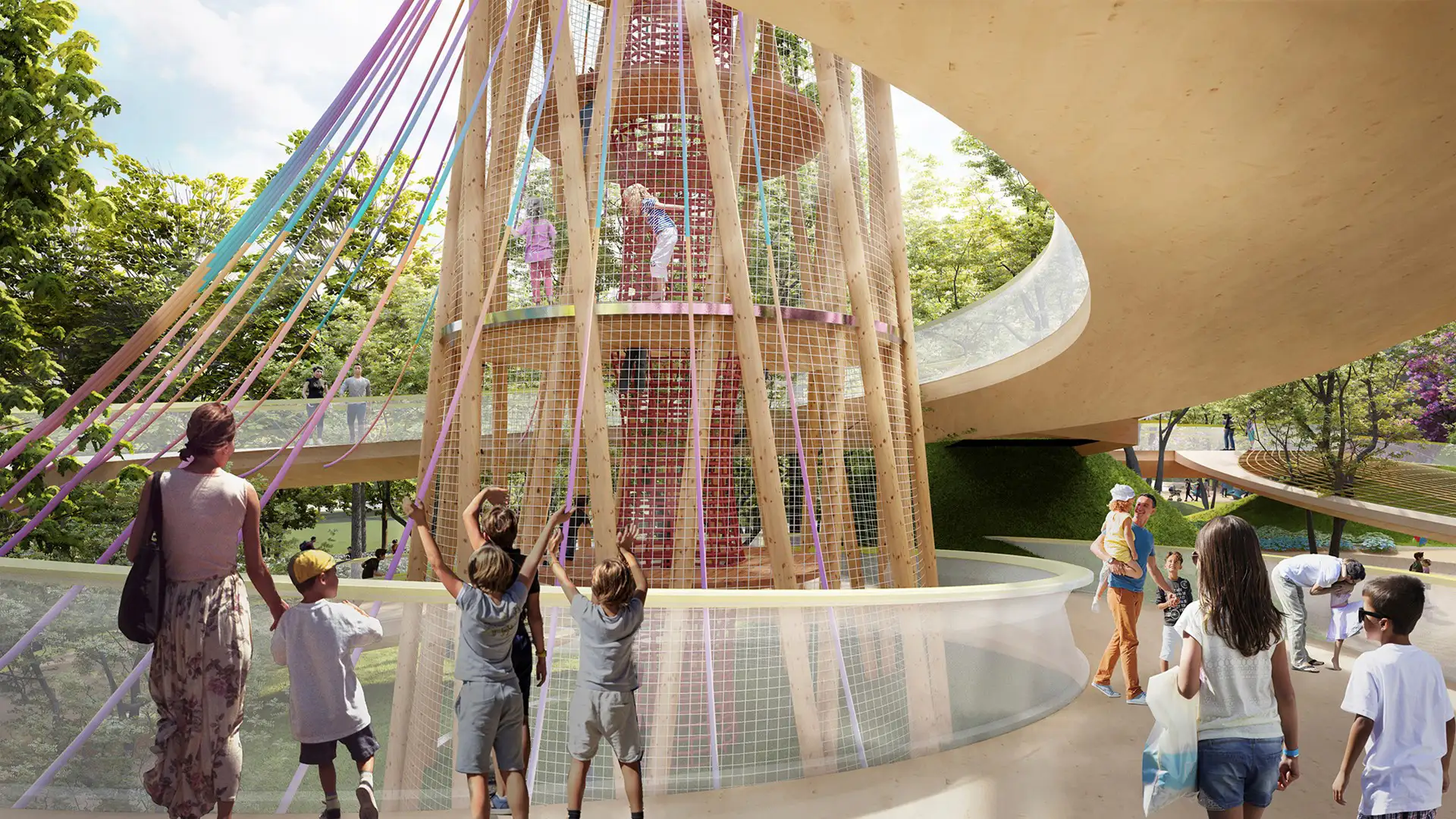
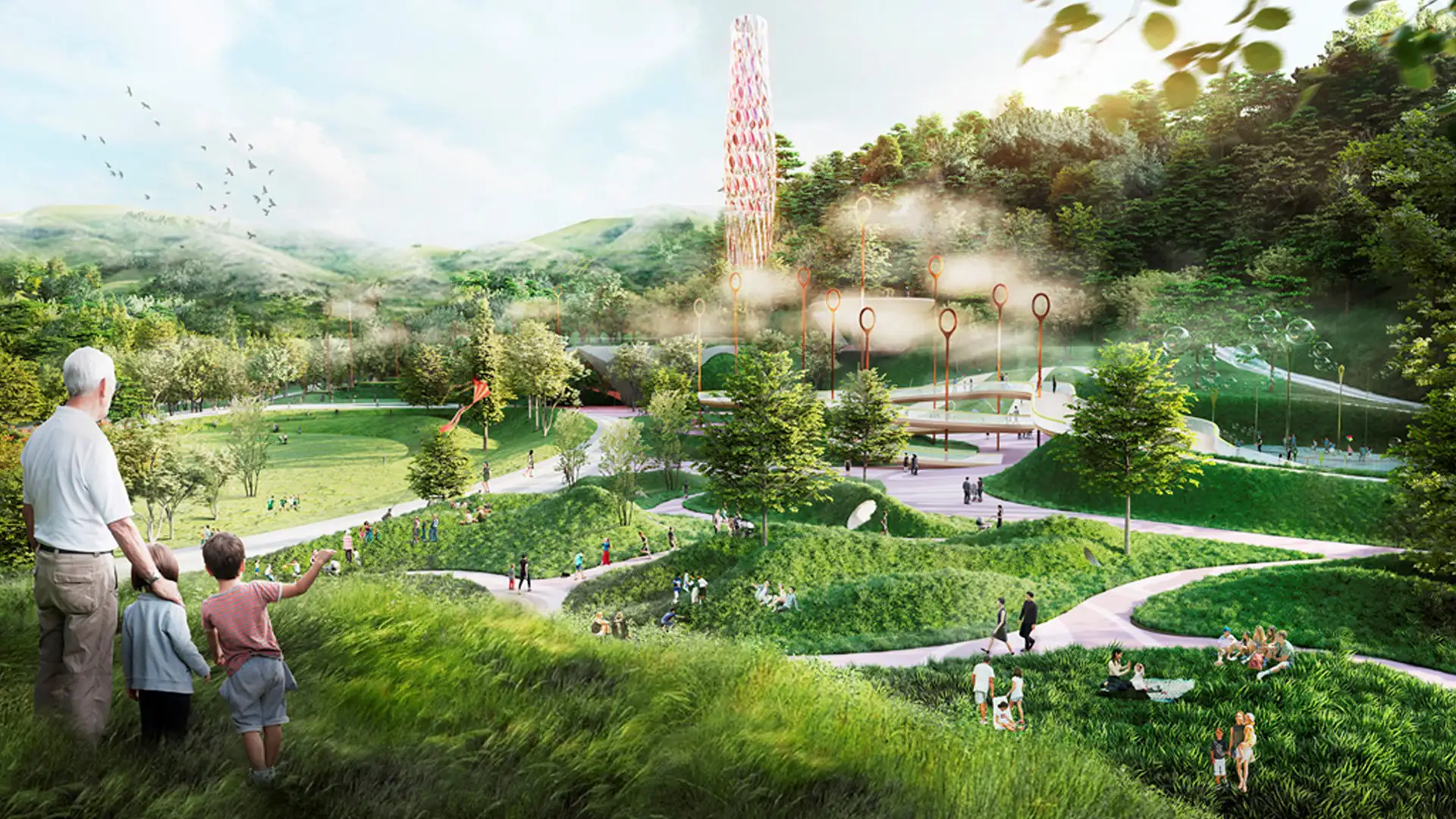
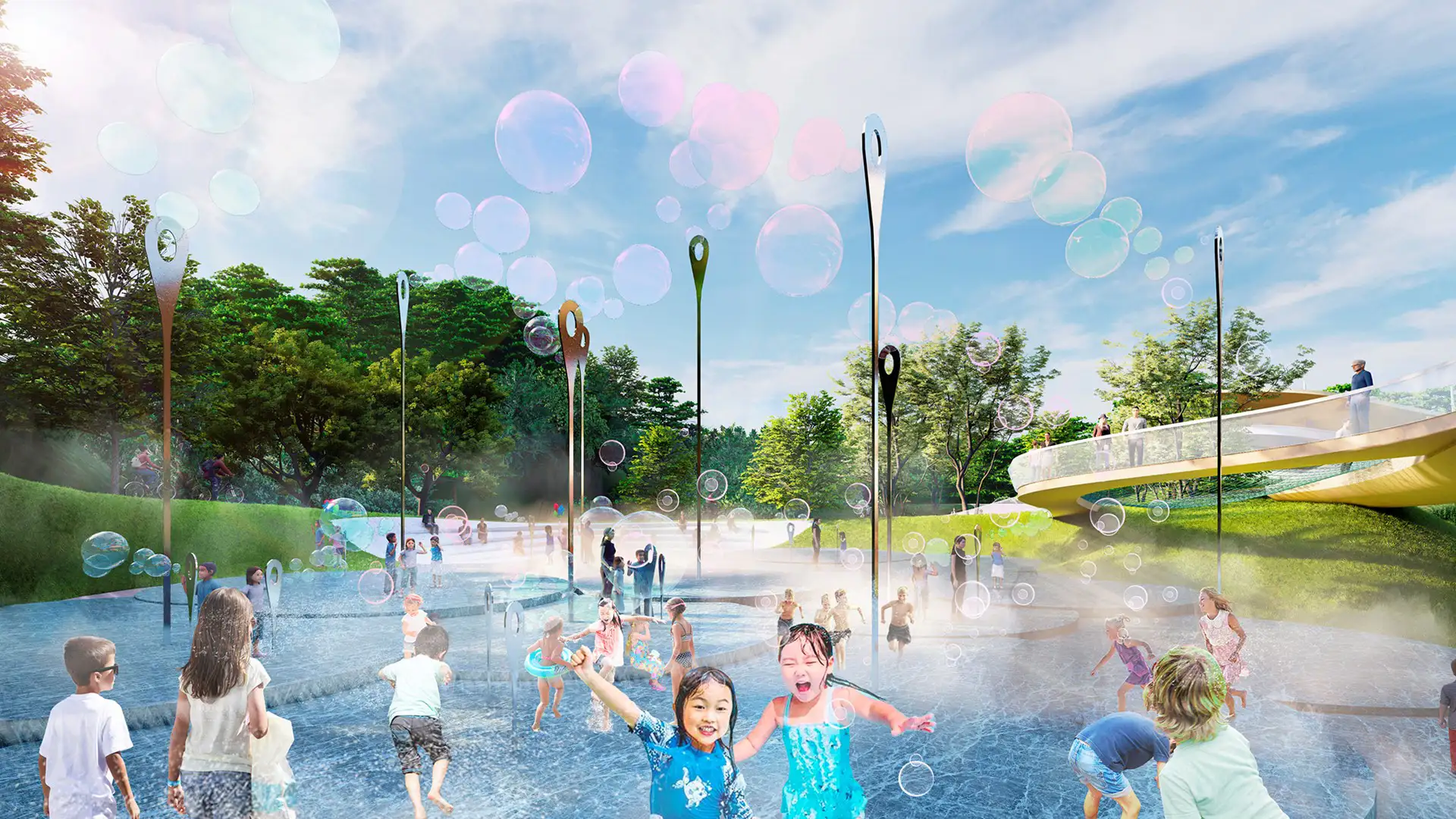
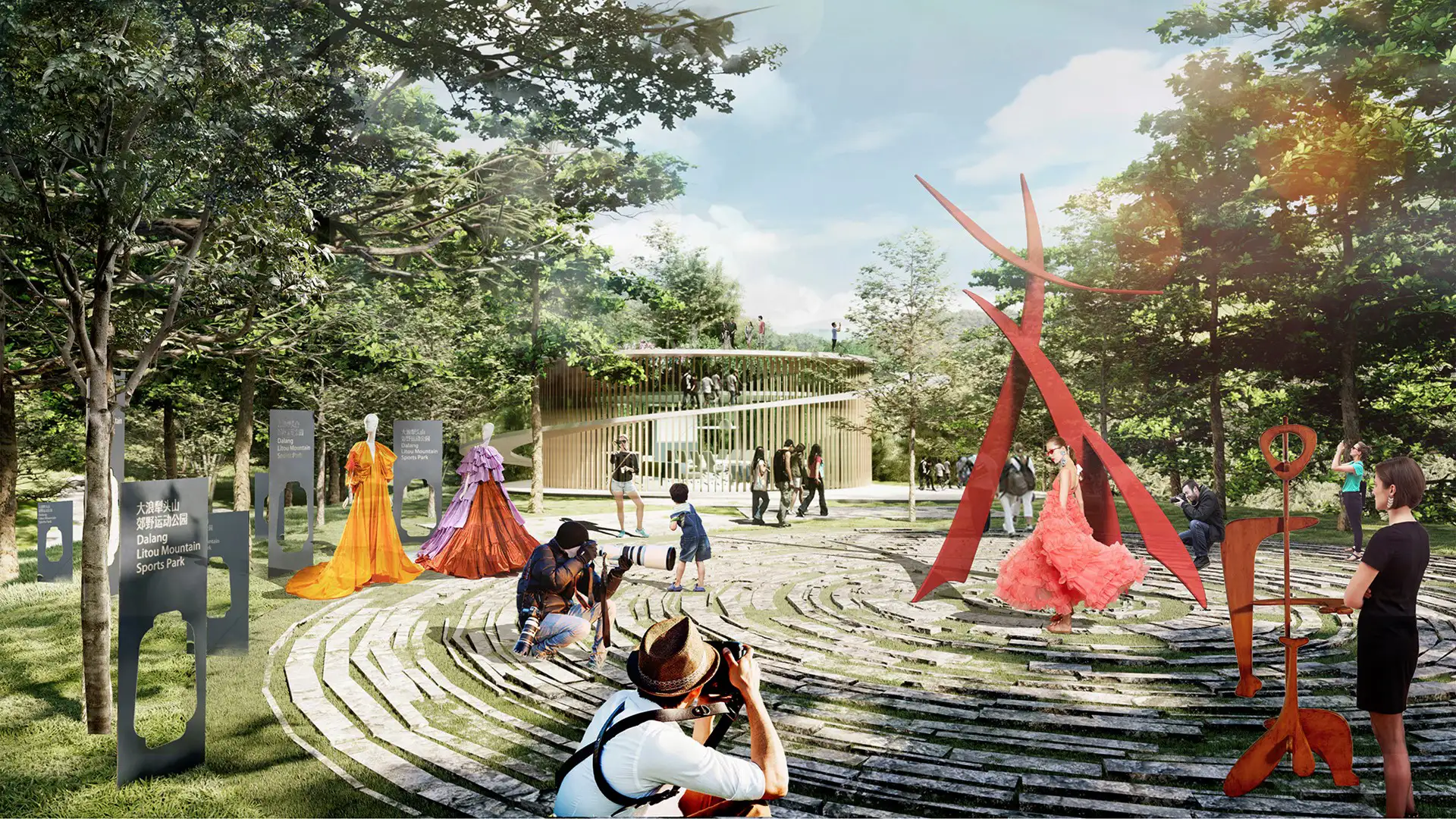
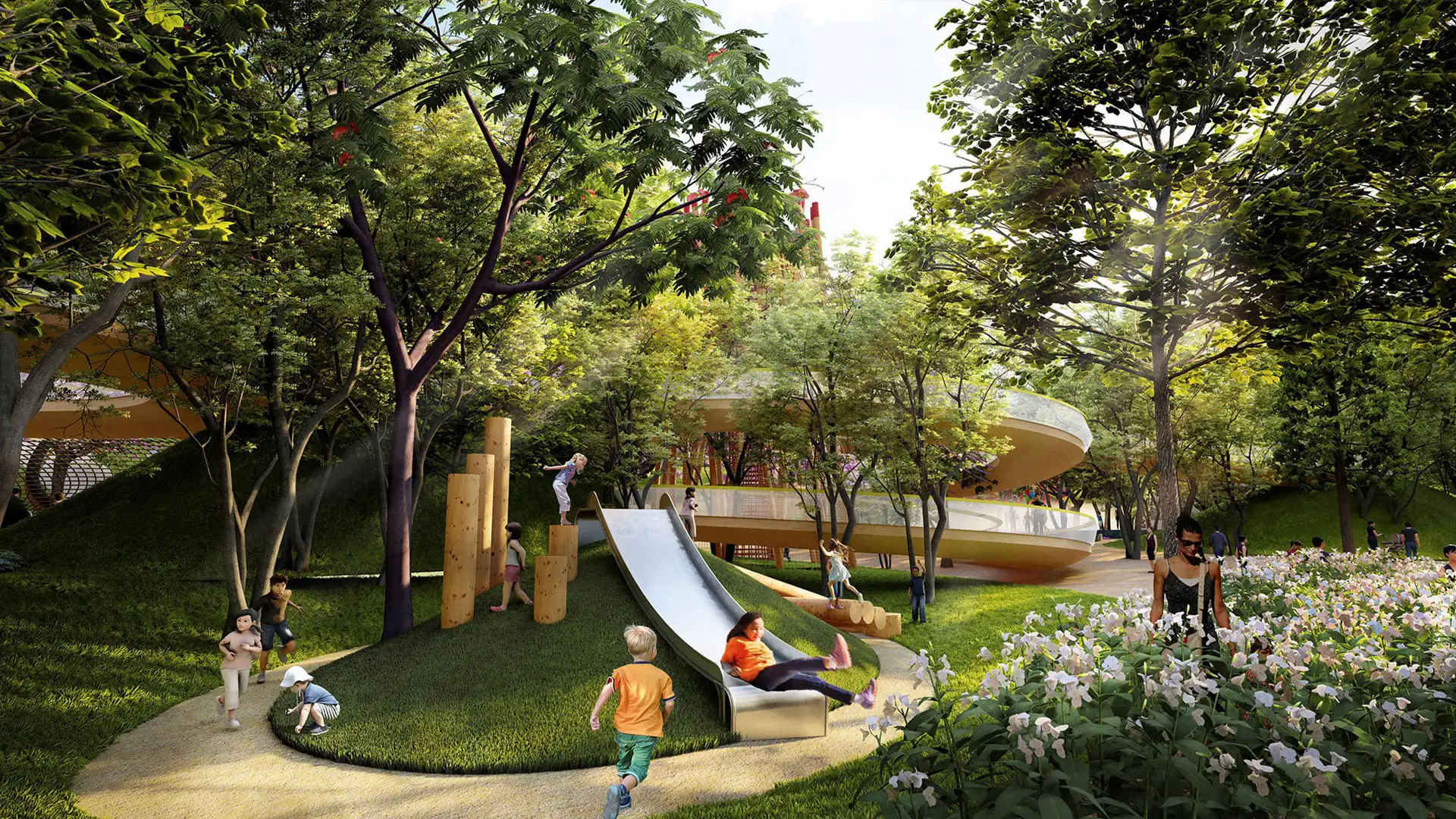
Within Guanlan Forest, an ecological heart of Shenzhen, Litou Mountain Park takes inspiration from the clothing design and production processes of Dalang Fashion Town. The town is a future gathering destination for fashion’s rising talents and a center for art. Blending nature and textiles, the project situates the park at the front of the fashion frontier.
SWA tailored details of Litou Mountain Park to evoke the grand gestures of haute couture. The resulting design is a country park that is both stylish and sporty with minimal construction. With only one main road in the whole park, the design had to accommodate strict fire protection and traffic requirements while also serving as the main path for sports and excursions. The amount of earthwork was minimized as much as possible by following the site’s original topography.
Guangzhou Steel Park
Along the Pearl River, this stretch of Guangzhou’s industrial belt produced steel for nearly seven decades. Following the factory’s decommissioning in 2013, the site has been transformed into a carbon-negative landscape that weaves its industrial past into every design decision. Guangzhou Steel Park reshapes a legacy of environmental degradation into a m...
Dubai Hills Boulevard and Public Realm
Envisioned as a garden oasis strategically situated where city meets desert, Dubai Hills will be a vibrant yet elegant mixed-use community for 21st-century living. The key public realm element of this massive 1,000-hectare development is a 5.6-kilometer urban boulevard lined with shops, residences, and offices along the district’s central spine. SWA/Balsley de...
Bayou Greenways
As one of the largest U.S. cities, Houston’s sprawling, car-centric infrastructure is underpinned by a vast arterial system of over 2,500 miles of bayous—an untapped ecological feature that could redefine urban life.
Recognizing this potential, the Houston Parks Board worked alongside SWA to develop a visionary plan for nine central bayous as an i...
King Salman Park
The largest urban public park ever built, King Salman Park is a defining element of Saudi Vision 2030—an ambitious effort to transform Riyadh into a more livable, sustainable, and globally competitive city. Envisioned as the “Green Lung of Riyadh,” the 16.6-square-kilometer park spans seven times the size of London’s Hyde Park and five times that of New York’s...